Electrical Service Mast Repair in Dallas
Storm damage or no power from a service mast in Dallas, TX (75247)? High Power Electrical Services repairs and replaces damaged service masts, weatherheads, and risers, coordinates the utility disconnect and reconnect, and handles the inspection so your power is restored safely and to code.
Quick Answer
The service mast is the metal riser pipe and weatherhead that carry the overhead utility wires down to your meter and panel. When wind, a fallen limb, or age damages it, the utility often has to cut power until a licensed electrician repairs the mast and it passes inspection. We make that repair, coordinate the disconnect and reconnect, and get your home safely powered again.
When your service mast fails, your power depends on a proper repair
The service mast is easy to overlook until something goes wrong. It is the sturdy metal pipe that rises from your meter, often through the roof, with a weatherhead on top where the utility's overhead wires connect to your home. That single assembly is the bridge between the power company's lines and everything electrical in your house, which is why damage to it takes the whole home offline.
Masts get damaged in predictable ways. High winds and storms pull the service wires hard enough to bend or lean the mast or tear it away from the wall, falling limbs strike the riser or weatherhead, and years of weather rust the pipe and straps or crack the seal where it passes through the roof. Sometimes the service drop is ripped off the house entirely. Any of these can expose live conductors and is dangerous.
Here is the part that surprises homeowners. When a mast is damaged, the utility usually disconnects power for safety, and they will not reconnect it until a licensed electrician has repaired the mast and the work has passed a city inspection. That sequence is exactly what we manage for you, so you are not left calling around while your home sits without power.
We repair or replace masts, weatherheads, risers, straps, and the roof seal, address any grounding and meter involvement, pull the permit, and coordinate the disconnect and reconnect with the utility. The goal is a safe, code-compliant service entrance and power restored as quickly as the process allows.
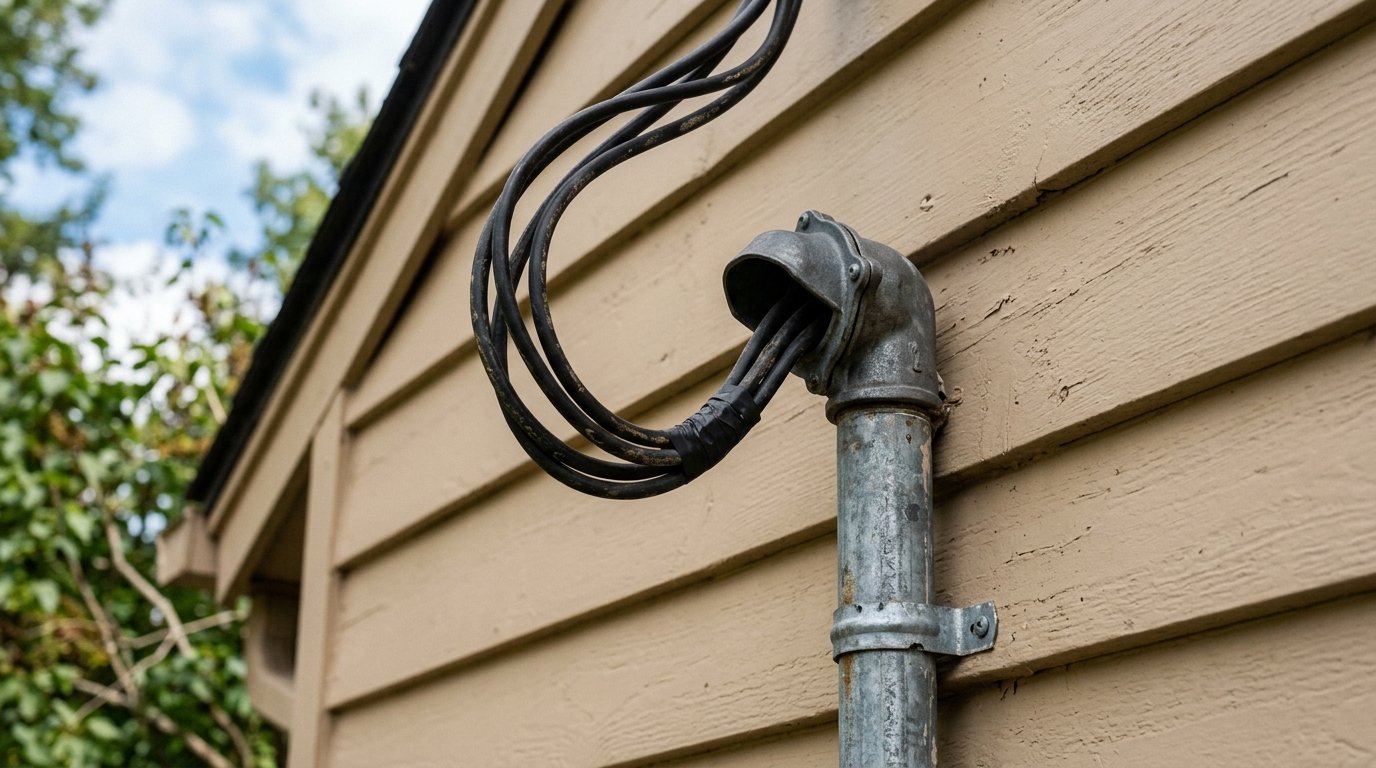
The mast and weatherhead carry the utility drop safely down to the meter.
Signs your service mast needs repair
Mast problems are a safety and power issue. If you see any of these, call promptly and stay clear of the wires.
Leaning or bent mast
A mast that is tilted, bent, or visibly pulled out of plumb has lost its support and needs repair.
No power after a storm
If your home lost power after wind or a storm while neighbors have power, mast or service damage is a likely cause.
Mast pulled from the wall
Straps or anchors torn loose, or the mast pulling away from the house, is an immediate hazard.
Drooping or detached wires
Service wires hanging low or torn off the weatherhead expose live conductors and are dangerous.
Leaks or rust at the roof
Water staining or rust where the mast passes through the roof means the seal or pipe has failed.
Damaged weatherhead
A cracked or broken weatherhead lets water into the service and must be repaired.
Why a proper mast repair matters
This is the connection point for your whole home's power. Here is what doing it right gives you.
Power restored safely
We repair the mast so the utility can reconnect your home.
Utility coordinated
We manage the disconnect and reconnect so you do not have to.
Hazard removed
Exposed or damaged service conductors are made safe.
Roof resealed
We seal the roof penetration to stop leaks and future rust.
Passes inspection
Work is done to code so the city inspection clears reconnection.
Right repair scope
We repair what can be repaired and replace what must be replaced.
Storm-ready
A solid mast and anchoring stand up to the next Texas storm.
Fast response
We prioritize loss-of-power and storm calls around the clock.
Storm took out your power or mast?
We repair the mast and coordinate the reconnect. Call now for fast 24/7 storm response.
(469) 327-8678How service mast repair actually works
The first step is safety and assessment. We evaluate the mast, weatherhead, conduit, straps, and the roof penetration, and we determine whether the utility has already disconnected the service or needs to. Because the overhead conductors are live utility wires, the work is coordinated so that power is safely cut at the right point before we begin on the service entrance.
Then we repair or replace. Depending on the damage, that can mean straightening or replacing the riser pipe, fitting a new weatherhead, re-anchoring the mast with proper straps, replacing damaged service entrance conductors, and resealing the roof penetration so it is watertight. We also check the grounding and the condition of the meter enclosure, since storm damage frequently affects more than the pipe alone.
Finally we close the loop with the city and the utility. We pull the permit, complete the work to code, and arrange the inspection that the utility requires before reconnection. Once it passes, we coordinate the reconnect so your power comes back on safely. Throughout, we keep you informed about where things stand, because the waiting is the hardest part of being without power.
Who is responsible, the utility or you
One of the most confusing parts of a mast problem is figuring out who fixes what. In simple terms, the utility owns the overhead service drop wires up to the point where they attach to your home. From that point of attachment inward, the weatherhead, the mast and riser, the service entrance conductors, and the meter enclosure are the homeowner's responsibility. That is why, even though the power company disconnects and reconnects, they will not repair your mast for you.
This division is exactly why a damaged mast can leave a home stuck. The utility cuts power for safety but cannot restore it until the customer-owned equipment is repaired by a licensed electrician and inspected. We step into that gap, handle the part you are responsible for, and coordinate the utility steps on either side so the process moves as smoothly as possible.
After a major storm, this plays out across whole neighborhoods at once. Knowing the sequence, who to call, and how to get an inspection scheduled quickly is what separates a fast restoration from days of frustration. Because we do this work regularly with the local utility and inspectors, we help you move to the front of that process rather than guessing your way through it.
A service mast repair
Every High Power mast repair is a complete, coordinated, code-compliant job, not a temporary patch.
- On-site safety assessment of the service entrance
- Coordination of the utility disconnect when needed
- Repair or replacement of the riser and mast
- New weatherhead and proper conduit as required
- Re-anchoring with correct straps and supports
- Replacement of damaged service entrance conductors
- Watertight resealing of the roof penetration
- Grounding and meter enclosure check
- City of Dallas permit and inspection handled
- Coordination of the utility reconnect
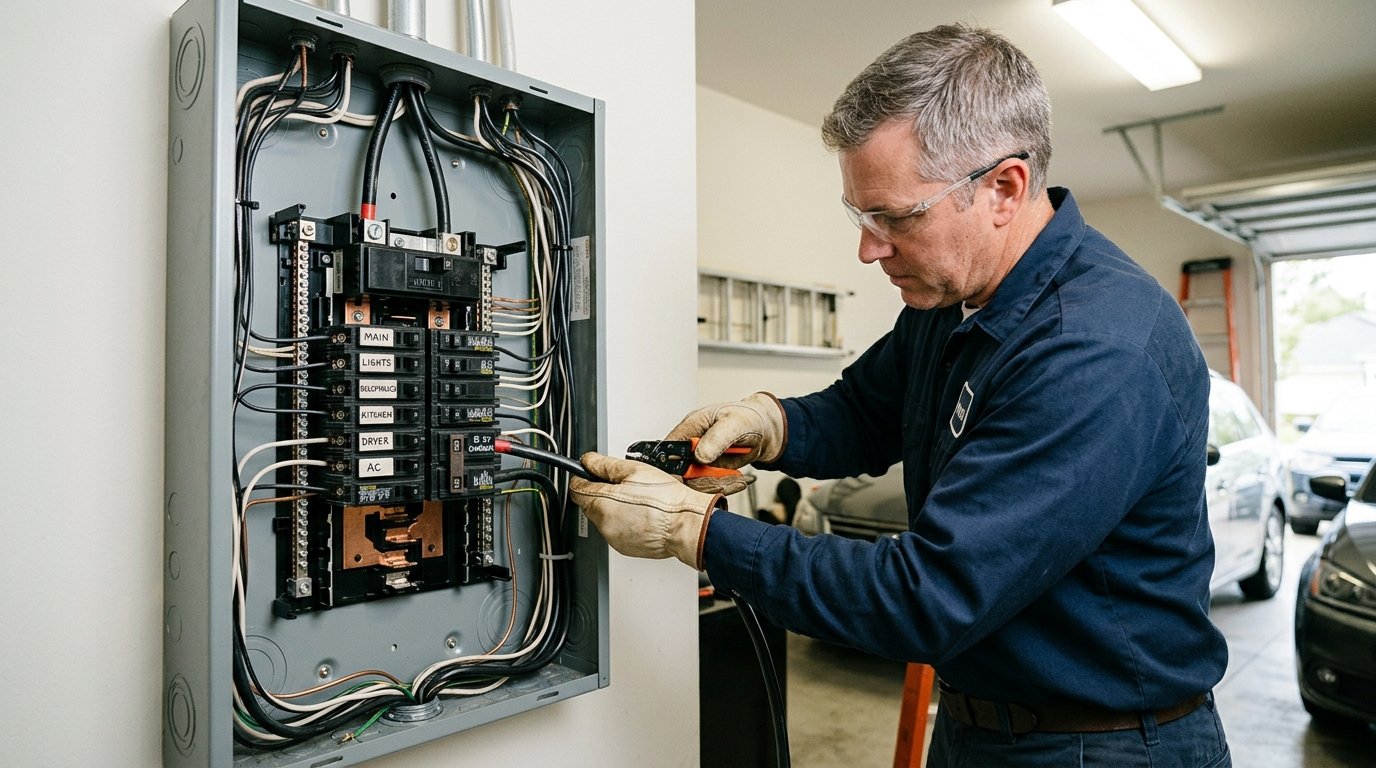
DIY versus a licensed mast repair
A service mast carries live utility power and requires inspection to reconnect. This is not a DIY repair.
DIY or unlicensed
- Working near live overhead utility conductors
- No way to coordinate a safe utility disconnect
- A repair the utility will not reconnect without inspection
- Improper anchoring that fails in the next storm
- Unsealed roof penetration that leaks and rusts
- Grounding or meter issues left unaddressed
Licensed electrician
- Work done after a coordinated, safe disconnect
- Utility disconnect and reconnect both managed for you
- Code-compliant repair that passes city inspection
- Proper straps and supports built to handle wind
- Roof penetration resealed watertight
- Grounding and meter condition checked and corrected
What affects the cost of mast repair
Pricing depends on the damage and the scope, not a flat fee. These are the main factors.
Repair or full replacement
Straightening and re-anchoring a mast costs less than replacing the riser and weatherhead.
Roof penetration work
Resealing or repairing where the mast passes through the roof adds to the job.
Conductor damage
Replacing damaged service entrance conductors increases parts and labor.
Meter involvement
If the meter enclosure is also damaged, that becomes part of the repair.
Utility coordination
Scheduling the disconnect and reconnect is part of the process and timeline.
Permit and inspection
City permit fees and the required inspection are part of compliant work.
These are general planning ranges for the Dallas area, not a quote. Every job is different, so we give you a free on-site assessment and an honest written price before any work starts.
Our service mast repair process
From your call to power restored, here is how we handle it.
Call and assess
We respond fast, evaluate the damage, and confirm the safety situation.
Coordinate disconnect
We arrange the utility disconnect when it is needed to work safely.
Permit filed
We pull the City of Dallas permit so the repair is documented and inspection-ready.
Repair the mast
We repair or replace the riser, weatherhead, straps, and conductors as needed.
Reseal and ground
We make the roof penetration watertight and verify the grounding.
Inspection
We schedule and pass the city inspection the utility requires for reconnection.
Reconnect
We coordinate the utility reconnect so your power is restored safely.
How long it takes and what to expect
The hands-on repair of a service mast is often completed in a day, but the full timeline depends on the utility and city steps around it. The disconnect, the inspection, and the reconnect each have to fall into place, and after a widespread storm those steps can take longer simply because the whole area is affected at once. We push the process along and keep you updated at every stage.
Because losing power is genuinely disruptive, we prioritize these calls and move as fast as the safety and inspection requirements allow. When the work is complete and reconnected, your service entrance is solid, sealed, grounded, and ready to handle the next storm rather than fail again.
Service mast damage in Dallas storms
North Texas gets the kind of weather that is hard on overhead electrical service. Strong straight-line winds, thunderstorms, and the occasional severe event regularly pull on service drops and send limbs into masts and weatherheads across the metro. After a big storm, mast and service damage is one of the most common reasons homes lose power even after the grid is back.
Many established Dallas neighborhoods have overhead service rather than underground, which means the mast is exposed to every storm that rolls through. Older masts with years of rust and weathered anchoring are especially vulnerable, and a single strong gust can be the final straw for a riser that was already corroded.
The local process matters as much as the repair itself. Power in most of the area runs through the regional utility, and getting a home reconnected means coordinating their disconnect and reconnect around a city inspection. Knowing how that sequence works locally is the difference between a quick turnaround and days of waiting.
Because we handle storm-damaged service entrances throughout Dallas, we know how to assess the damage fast, work safely with the utility steps, and get the inspection scheduled so your power comes back as soon as the process allows.
The licensed Dallas team homeowners trust
Licensed pros
Texas TECL #38291 electricians who handle service entrance work.
Utility coordination
We manage the disconnect and reconnect for you.
Code-first
Repairs done to code so the inspection clears reconnection.
24/7 storm response
Real people on the phone, with priority for loss-of-power calls.
Service mast repair FAQs
The service mast is the metal riser pipe and weatherhead that carry the utility's overhead wires down to your meter and panel. It is the connection point between the power company's lines and your home's electrical system, so damage to it can take your whole home offline.
That pattern often points to damage specific to your home, such as a bent mast, a torn service drop, or a damaged weatherhead. The utility may have disconnected your service for safety, and it cannot be restored until the mast is repaired and inspected. Call us and we will assess it.
The utility owns the overhead service drop wires up to where they attach to your home. From that point inward, the weatherhead, mast, riser, service entrance conductors, and meter enclosure are the homeowner's responsibility. That is why the utility disconnects and reconnects but does not repair your mast.
For safety, the utility will not reconnect to a damaged, customer-owned service entrance. They require that a licensed electrician repair the mast to code and that the work pass a city inspection first. We handle the repair, the permit, and the inspection, then coordinate the reconnect.
Yes. A damaged mast can expose live service conductors, drop wires within reach, or come loose entirely. Keep everyone away from any drooping or downed wires and call for professional help right away.
It depends on the damage. Minor issues may be repaired by straightening and re-anchoring, while a badly bent, corroded, or broken mast needs replacement of the riser and weatherhead. We assess it and recommend the right scope honestly.
Yes. Managing the disconnect before the repair and the reconnect afterward is part of the service. We work with the utility and the city inspection process so you are not left coordinating it yourself.
Yes. Service entrance work is permitted in the City of Dallas, and the utility requires an inspection before reconnecting. We pull the permit and schedule the inspection as part of the job.
Not when it is done right. Where the mast passes through the roof, we reseal the penetration to make it watertight, which also prevents the rust and corrosion that weaken a mast over time.
The repair itself is often a day, but the full timeline includes the utility disconnect, the inspection, and the reconnect. After a widespread storm those steps can take longer because the whole area is affected. We push the process and keep you updated.
Many policies cover storm damage to the service entrance, but coverage varies. We provide clear documentation of the damage and the repair that you can submit to your insurer, though you should confirm the specifics with your policy.
Yes. We answer the phone around the clock and prioritize loss-of-power and storm-damage calls, since being without power is urgent, especially in extreme Texas heat.