Circuit Breaker Replacement in Dallas
Need circuit breaker replacement in Dallas, TX (75247)? High Power Electrical Services replaces failed, tripping, hot, and obsolete breakers safely and to code, including upgrades to AFCI and GFCI protection and evaluations of older hazardous panels.
Quick Answer
A circuit breaker is the safety device that cuts power when a circuit overloads or faults. When a breaker trips repeatedly, will not reset, feels hot, or is part of an obsolete panel, it needs a licensed electrician to diagnose and replace it with the correct compatible breaker, torqued and tested. We also upgrade circuits to AFCI or GFCI protection where code calls for it.
Breakers are your home's safety net, so they have to work
Every circuit in your home runs through a breaker whose only job is to cut power before an overload or fault can start a fire. When that breaker is working, you barely think about it. When it is failing, it either trips when it should not, leaving you in the dark, or worse, it fails to trip when it should, quietly removing the protection the circuit depends on. Neither is acceptable, and both are reasons to call a licensed electrician.
Breakers wear out. Decades of heat, load cycling, and the occasional surge take a toll, and a breaker that no longer holds or no longer trips reliably needs to be replaced. The trick is that breakers are not universal. They must match the panel's make, model, and bus design, be the correct amperage for the wire they protect, and be installed and torqued correctly. The wrong breaker, or a loose one, becomes its own hazard.
Sometimes the breaker is not the real problem. A circuit that keeps tripping is often warning you about an overload or a fault on the line, not a faulty breaker, and simply swapping the breaker would hide a real danger. We diagnose why a breaker is acting up before we replace it, so we fix the cause rather than mask it.
We replace standard breakers, upgrade circuits to AFCI and GFCI breakers where code requires the added protection, and evaluate older panels that use breakers known for reliability problems. Whatever the situation, you get an honest assessment and code-compliant work.
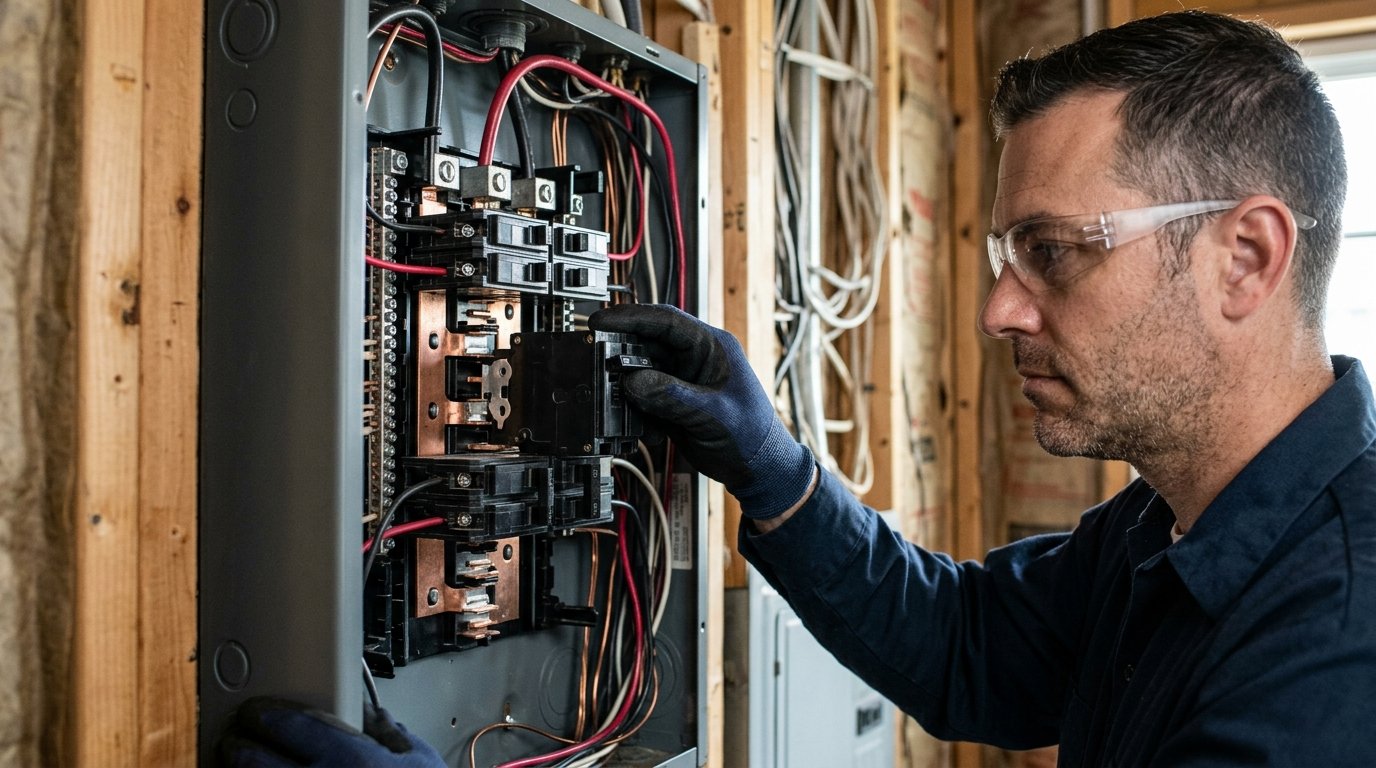
A replacement breaker must match the panel and be torqued to specification.
Signs a breaker needs to be replaced
A breaker problem is a safety problem. If you see any of these, have it checked promptly.
Breaker will not reset
A breaker that will not stay reset is either tripping on a real fault or has failed internally.
Repeated tripping
Frequent trips signal an overload or fault that needs diagnosis, not just a new breaker.
Hot breaker or panel
A breaker or panel that is warm or hot to the touch points to a loose or failing connection.
Burning smell at the panel
Any scorched smell or discoloration at the panel is urgent and needs immediate attention.
Buzzing or crackling
A panel that buzzes, hums loudly, or crackles has a connection or breaker problem inside.
Obsolete panel brand
Panels using certain older breaker brands have documented reliability concerns and should be evaluated.
Why proper breaker replacement matters
A breaker is not a part to guess at. Here is what doing it right gives you.
Restored protection
A correct, working breaker protects the circuit the way it is supposed to.
Right compatibility
We match the breaker to your panel's make, model, and amperage.
Torqued correctly
Connections set to specification avoid the heat that loose breakers create.
AFCI and GFCI options
We add arc-fault and ground-fault protection where code calls for it.
Cause diagnosed
We find why a breaker trips rather than just swapping it.
Lower fire risk
Correcting a failing breaker removes a real ignition source.
Panel evaluated
We flag obsolete or unsafe panels so you can plan ahead.
Code-compliant
Work meets current NEC and Dallas requirements.
Breaker tripping, hot, or buzzing?
Do not keep forcing it back on. We diagnose and replace it safely. Get a free assessment.
(469) 327-8678How circuit breaker replacement actually works
We start by diagnosing, not swapping. When a breaker misbehaves, we determine whether the breaker itself has failed or whether it is doing its job by responding to an overload, a short, or a ground fault on the circuit. That distinction matters, because replacing a breaker that is correctly tripping would remove your protection and leave the real fault in place. We test the circuit and the breaker before deciding.
When the breaker is the problem, we de-energize the panel, confirm the correct replacement by the panel's make and model and the circuit's amperage, and install it on the bus properly. We torque the connections to specification, because an under or over-tightened breaker is a leading cause of the heat and arcing that damages panels. Then we test the circuit under load to confirm it holds and protects as it should.
Where code calls for it, we upgrade to the right protective breaker. Arc-fault breakers, known as AFCI, guard against the kind of arcing in damaged wiring that starts fires, and ground-fault breakers, known as GFCI, protect against shock in wet or outdoor areas. We explain where these are required or worth adding so your home meets current safety standards, not just the standard of decades ago.
Obsolete panels and when replacement is not enough
Sometimes the smartest fix is not a new breaker but a new panel. Certain older panel and breaker brands, most notably Federal Pacific Stab-Lok and Zinsco, have well-documented histories of breakers that may fail to trip reliably under fault conditions. If your home has one of these, swapping a single breaker does not solve the underlying concern, and many electricians recommend evaluating the panel for replacement. We will tell you honestly if that is what we find.
Even setting brand aside, a panel can simply be at the end of its life. Rust and corrosion inside the cabinet, a bus that shows heat damage, double-tapped breakers feeding two circuits where one belongs, or a panel that is completely full with no room to add protection are all signs that a panel upgrade is the real answer rather than a breaker-by-breaker patch.
When a full panel upgrade is warranted, we lay it out clearly: what is wrong, why a replacement is safer than another breaker swap, and what the upgrade involves. There is no pressure. Plenty of breaker problems are exactly that, a breaker, and we are glad to simply replace it. We just will not let you spend money masking a panel that needs more attention.
Circuit breaker replacement
Every High Power breaker job is diagnosed and installed correctly, not a blind part swap.
- Diagnosis of why the breaker is tripping or failing
- Confirmation of the correct breaker for your panel
- Matched make, model, and amperage for the circuit
- Safe de-energizing and installation on the bus
- Connections torqued to manufacturer specification
- AFCI or GFCI upgrade where code requires it
- Inspection of the panel for heat or corrosion
- Honest flag if the panel itself needs attention
- Load test of the circuit after replacement
- Clear explanation of what was found and done
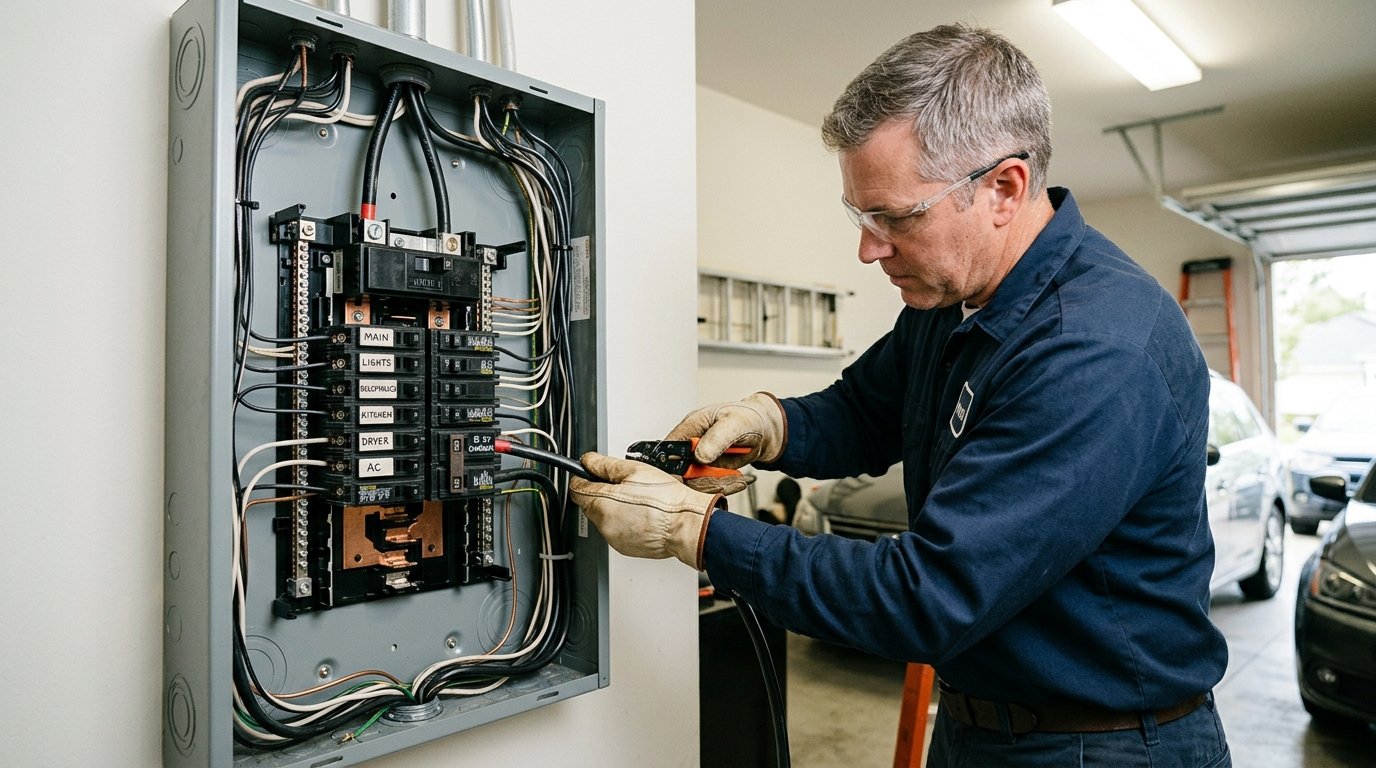
DIY breaker swap versus a licensed replacement
A panel is a live, dangerous environment, and breaker choice is not one-size-fits-all. Here is the honest comparison.
DIY or unlicensed
- Working near an energized bus without training
- Guessing at breaker compatibility and amperage
- No torque control, a top cause of panel heat
- Swapping a breaker that was tripping on a real fault
- Missing an obsolete or heat-damaged panel
- No AFCI or GFCI protection where code requires it
Licensed electrician
- Trained work around a safely de-energized panel
- Breaker matched to panel make, model, and amperage
- Connections torqued to specification
- Fault diagnosed first so the cause is fixed
- Panel evaluated for obsolete or unsafe conditions
- AFCI and GFCI added where code calls for it
What affects the cost of breaker replacement
Pricing depends on the breaker and the panel, not a flat fee. These are the main factors.
Breaker type
A standard breaker costs less than an AFCI or GFCI breaker with added protection.
Panel make and model
Some panel brands use harder-to-source or pricier compatible breakers.
Number of breakers
Replacing several breakers or whole-panel AFCI upgrades takes more parts and labor.
Diagnosis needed
Tracing why a breaker trips adds time versus a known failed breaker.
Panel condition
An obsolete or damaged panel may point to an upgrade, which is a larger project.
Permit if required
Where a permit applies, the fee and inspection are part of compliant work.
These are general planning ranges for the Dallas area, not a quote. Every job is different, so we give you a free on-site assessment and an honest written price before any work starts.
Our breaker replacement process
From the first call to a circuit you can trust, here is how we handle it.
Assess the symptom
We look at how the breaker is behaving and what is on the circuit.
Diagnose the cause
We test to confirm whether the breaker failed or is tripping on a fault.
Honest quote
You get a clear price, including any AFCI or GFCI upgrade, before we start.
De-energize safely
We shut down the panel and confirm the correct replacement breaker.
Install and torque
We seat the breaker on the bus and torque connections to specification.
Evaluate the panel
We check for heat, corrosion, or obsolete conditions and flag what we find.
Test and explain
We load-test the circuit, confirm protection, and walk you through it.
How long it takes and what to expect
A straightforward breaker replacement is usually a same-visit job, often under an hour once the cause is confirmed. Diagnosing an intermittent trip or upgrading multiple circuits to AFCI protection takes longer, and we give you a realistic estimate up front. Power to the panel is off only briefly while we make the swap safely.
If our evaluation turns up an obsolete or damaged panel, we will explain why a breaker swap alone is not the right fix and outline a panel upgrade as a separate, planned project. You are never pushed into more than the situation calls for, and a simple breaker problem is treated as exactly that.
Breaker and panel issues in Dallas homes
The age range of Dallas housing means we see a wide variety of panels, including older brands that are well past their prime. In homes built or updated during certain decades, panels using breakers with documented reliability concerns still turn up regularly, and homeowners are often surprised to learn their panel is one of them until an evaluation or an insurance review raises it.
Texas heat is hard on breakers and panels. A long summer of heavy air conditioning load means breakers cycle and warm repeatedly, which over the years loosens connections and wears out the internal mechanism. A breaker that trips for the first time during an August heat wave is a common call for exactly this reason.
Modern demand is the other pressure. Homes that were wired for a simpler era now run far more on the same panel, from multiple air conditioners to kitchens full of appliances and home offices. That added load exposes weak breakers and fills panels to capacity, which is when replacement and upgrade questions come up.
Because we work across the metro constantly, we know which panels tend to cause trouble, how to source the correct compatible breakers, and when a replacement is enough versus when it is time to talk about a safer panel.
The licensed Dallas team homeowners trust
Licensed pros
Texas TECL #38291 electricians working safely in your panel.
Upfront pricing
A clear written price, including any upgrade, before we start.
Code-first
Correct breakers, torqued and inspected to NEC and Dallas code.
We answer 24/7
Real people on the phone, with same-day availability.
Circuit breaker replacement FAQs
Usually because it is doing its job. Repeated tripping points to an overload, a short circuit, or a ground fault on the circuit, not always a bad breaker. We diagnose the cause first, because simply replacing a breaker that is tripping on a real fault would remove your protection and leave the danger in place.
We do not recommend it. A panel has an energized bus even with the main off in many cases, breaker compatibility is specific to the panel, and torque matters. A wrong or loose breaker is its own fire hazard. This is work for a licensed electrician.
Either the circuit still has a fault that the breaker is responding to, or the breaker itself has failed internally. Forcing it does not help. We test the circuit and the breaker to find out which it is, then fix the real issue.
AFCI breakers protect against arc faults, the kind of arcing in damaged wiring that can start fires, and are now required on many living-area circuits. GFCI breakers protect against shock in wet or outdoor areas. We add them where code requires or where the added safety makes sense.
These older brands have well-documented histories of breakers that may not trip reliably under fault conditions. Replacing a single breaker does not address the underlying concern, so many electricians recommend evaluating the panel for replacement. We will assess yours and give you an honest recommendation.
Yes. Decades of heat, load cycling, and the occasional surge wear out the internal mechanism, and a breaker can begin tripping too easily or fail to trip at all. A worn breaker should be replaced with the correct matching unit.
Yes. A breaker or panel that is warm or hot to the touch usually has a loose or failing connection generating heat, which can damage the panel and start a fire. Treat it as urgent and have it checked promptly.
Often just a breaker. But if the panel is obsolete, corroded, shows heat damage, is full, or has double-tapped breakers, an upgrade may be the safer answer. We diagnose honestly and only recommend a panel upgrade when it is truly warranted.
A straightforward replacement is usually done in the same visit, often under an hour once we confirm the cause. Diagnosing an intermittent trip or upgrading several circuits to AFCI takes longer, which we estimate up front.
Only briefly. We shut the panel down just long enough to make the swap safely, then restore power and test the circuit. We let you know the short window before we begin.
A simple like-for-like breaker replacement often does not, while larger changes or a panel upgrade do. Where a permit applies, we handle it and the inspection so the work is documented and compliant.
Yes. We provide a free assessment, diagnose why the breaker is acting up, and give you an honest written price, including any AFCI or GFCI upgrade, before any work begins.