Data and Low Voltage Wiring in Dallas
Need data or low-voltage wiring in Dallas, TX (75247)? High Power Electrical Services installs clean, tested structured cabling, Cat6 and Cat6a network drops, media panels, WiFi and camera wiring, and low-voltage runs for homes and businesses across the metro.
Quick Answer
Data and low-voltage wiring is the structured cabling behind reliable internet, networking, and connected devices: Cat6 and Cat6a network drops, a central media panel or rack, WiFi access point and camera cabling, and coax and audio runs. Done right, runs are routed away from interference, terminated cleanly, and tested. We handle it for homes and businesses.
The wired backbone behind a connected home or office
WiFi gets the attention, but a hardwired network is what makes a home or office truly fast and reliable. Structured data cabling delivers a stable, high-speed connection to the places that need it most, a home office, a media center, a desk, a server, or a WiFi access point, without the dropouts and slowdowns of relying on wireless alone. It is the quiet backbone that everything connected depends on.
Good structured wiring is more than pulling a cable. We run home runs from each location back to a central media panel or network rack, use the right grade of cable for the speeds you need, route it carefully away from electrical lines to avoid interference, and terminate it properly on jacks and patch panels. Then we test the runs so you know they actually perform, rather than discovering a bad connection after the walls are closed.
Low voltage covers a lot of ground beyond data. We wire coax for television and internet, speaker and audio runs, doorbells and intercoms, thermostat wiring, and the cabling for cameras and WiFi access points that draw power over the same Ethernet line. As homes and offices add more connected devices, this infrastructure becomes the foundation that ties it all together.
Whether you are fighting WiFi dead zones, setting up a home office, wiring a new build or remodel to be future-ready, or outfitting an office with network drops and a rack, we install clean, organized, tested cabling. We focus on the wiring infrastructure and coordinate with your internet, IT, or AV provider so everything connects and works.
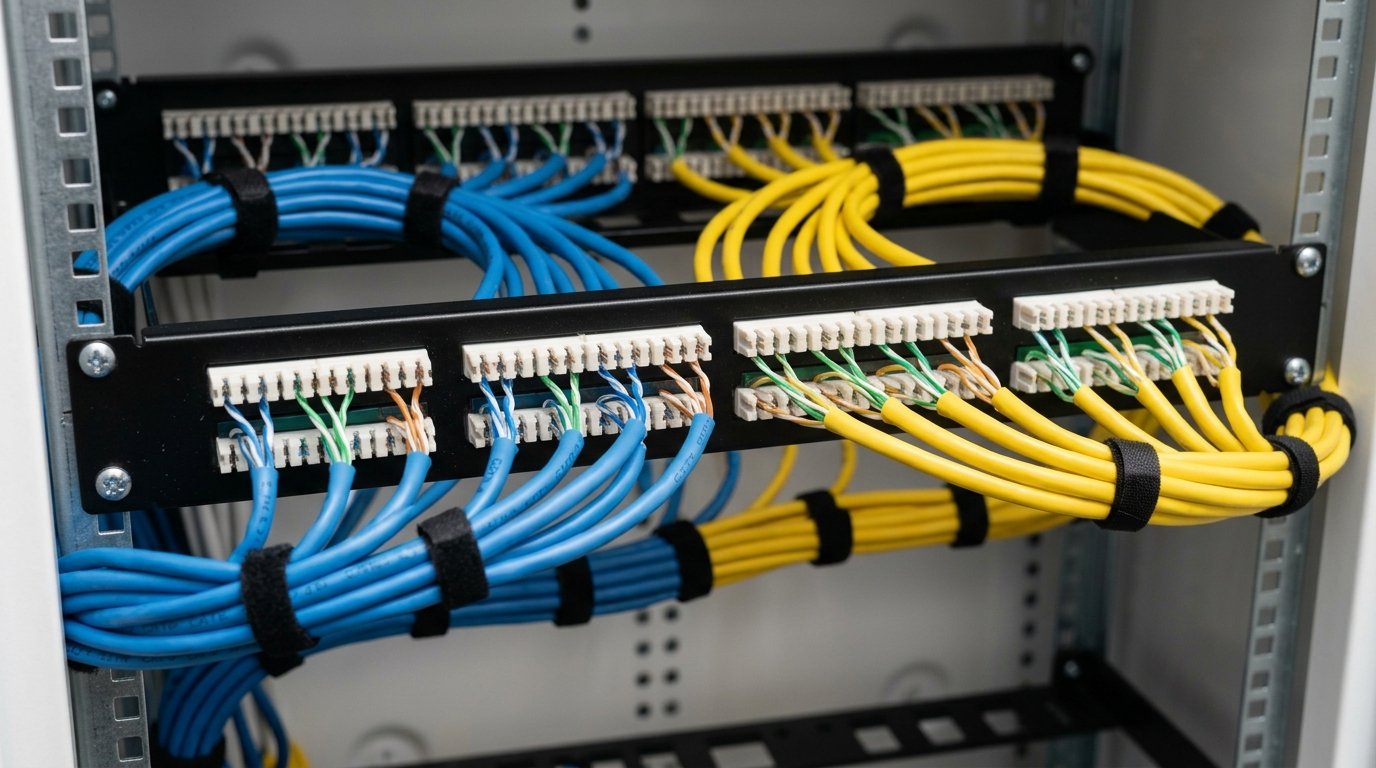
Clean termination on a patch panel is what makes structured cabling reliable and serviceable.
When you need data or low-voltage wiring
If any of these describe your home or office, structured cabling is the fix.
WiFi dead zones
Slow or dropped WiFi in parts of the building calls for hardwired access points.
Work-from-home needs
A home office runs better on a fast, stable wired connection than on WiFi alone.
Building or remodeling
New construction and remodels are the ideal time to wire structured cabling in.
Office network drops
Offices need organized data drops and a clean rack or panel for the network.
TV and AV wiring
Wall-mounted TVs, media centers, and audio benefit from concealed, proper cabling.
Cameras and access points
Security cameras and WiFi access points are cleanly powered over network cable.
Why professional structured wiring matters
Clean, tested cabling outperforms a tangle of improvised runs. Here is what you gain.
Fast, stable connections
Wired runs deliver speed and reliability WiFi alone cannot.
No more dead zones
Hardwired access points blanket the building in coverage.
Smart-home backbone
A wired foundation supports cameras, automation, and devices.
Clean, concealed runs
Cabling routed and terminated neatly, not draped along baseboards.
Future-ready cable
Cat6 and Cat6a support today's and tomorrow's speeds.
Tested performance
Runs tested so you know they perform before walls close.
PoE devices
Cameras and access points powered over the network cable.
Home and business
Structured cabling for residences and offices alike.
Tired of WiFi dead zones or messy cabling?
We install clean, tested data and low-voltage wiring. Get a free assessment and an honest quote.
(469) 327-8678How data and low-voltage wiring works
It starts with a central point and a plan. We establish a structured media panel in a home or a network rack in an office as the hub, then plan home runs, individual cables from each outlet location back to that central point. Home-run wiring is what makes a network organized and serviceable, since every drop terminates in one place where it can be patched, tested, and changed without guesswork.
Then we pull and route the cable correctly. We use the right grade, typically Cat6 or Cat6a for data depending on the speeds you want, and we route it away from electrical wiring to avoid the interference that degrades performance. We pull coax, speaker wire, and other low-voltage runs as needed on the same plan, keeping everything neat and labeled so the system makes sense later.
Finally we terminate and test. Each data run is terminated on keystone jacks and a patch panel for a clean, reliable connection, and we test the runs to confirm they perform at the intended speed rather than assuming they do. We mount and connect access points, cameras, and devices as needed, then coordinate with your internet, IT, or AV provider so the network comes alive. The result is fast, dependable connectivity on an organized backbone.
Wired versus WiFi, Cat6 versus Cat6a, and PoE
WiFi is convenient but it is not a replacement for wired connections where speed and stability matter. A hardwired drop gives a desk, server, or media device a dedicated, reliable connection free of the congestion and dropouts that affect wireless. The best setups use both: a wired backbone for fixed devices and for the access points that then broadcast strong WiFi everywhere. Hardwiring the access points is, in fact, how you eliminate dead zones rather than chasing them with extenders.
Cable grade is worth understanding. Cat6 supports very high speeds and is a strong choice for most homes and many offices, while Cat6a is built to carry the fastest current speeds over longer runs and is a common choice when you want maximum future headroom or for demanding commercial use. We help you choose the grade that fits your needs and budget so you are neither underbuilt nor overspending.
Power over Ethernet, or PoE, is a quiet game-changer. It lets a single network cable carry both data and power to devices like security cameras, WiFi access points, and some phones, so they do not need a separate outlet nearby. That simplifies installation and placement, especially for cameras and access points in spots where running power would be difficult. We wire for PoE where it makes the system cleaner and more flexible.
Data and low-voltage wiring
Every High Power cabling job is planned, routed cleanly, terminated properly, and tested.
- A structured media panel or network rack as the hub
- Home-run cabling from each location to the hub
- Cat6 or Cat6a data cable for the speeds you need
- Routing away from electrical lines to avoid interference
- Coax, speaker, and other low-voltage runs as needed
- Cabling for WiFi access points and cameras
- PoE wiring where it simplifies devices
- Clean termination on jacks and patch panels
- Testing of data runs for performance
- Coordination with your internet, IT, or AV provider
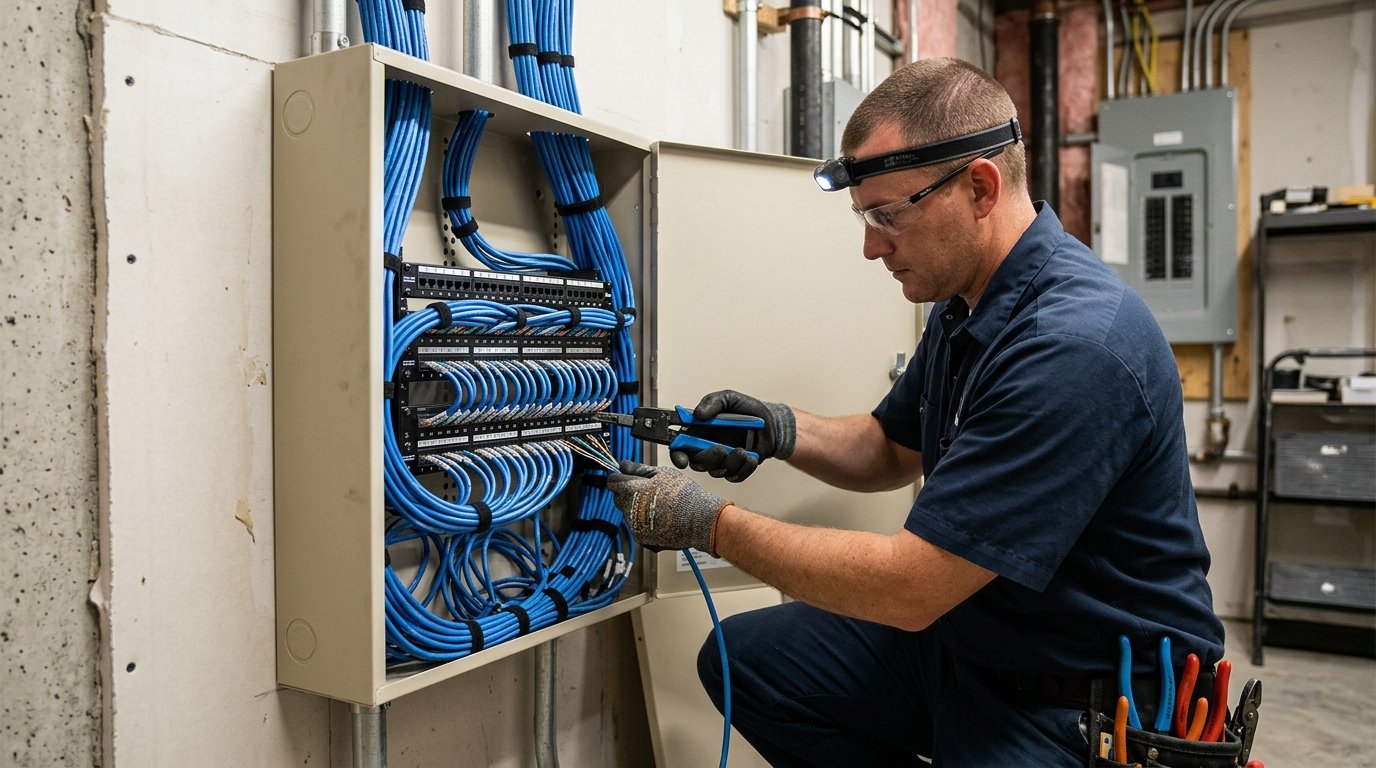
DIY runs versus professional structured cabling
Cabling is easy to pull badly and hard to fix later. Here is the honest comparison.
DIY or unlicensed
- Cables run alongside power, causing interference
- No central panel, so the network is a tangle
- Poor terminations that drop speed or fail
- Runs never tested, problems found too late
- Wrong cable grade for the speeds you need
- Devices needing outlets that PoE could power
Licensed electrician
- Runs routed away from power to avoid interference
- A central panel or rack for an organized network
- Clean terminations on jacks and patch panels
- Every run tested to confirm performance
- Cat6 or Cat6a matched to your needs
- PoE wiring so cameras and APs need no outlet
What affects the cost of structured wiring
Pricing depends on the drops and the routing, not a flat fee. These are the main factors.
Number of drops
More data and low-voltage locations mean more cable and termination.
Run length and routing
Long or hard-to-route runs through finished walls add labor.
New or existing construction
Wiring during construction is easier than fishing through finished walls.
Panel or rack
A structured media enclosure or network rack is part of an organized system.
Termination and testing
Proper termination and performance testing are part of quality cabling.
PoE and devices
Wiring and mounting cameras and access points affects the scope.
These are general planning ranges for the Dallas area, not a quote. Every job is different, so we give you a free on-site assessment and an honest written price before any work starts.
Our structured wiring process
From the first call to a connected building, here is how we handle it.
Free assessment
We review your needs, the building, and where drops should go.
Plan the system
We choose the hub location, cable grade, and run layout.
Honest quote
You get a clear written price before any work begins.
Pull the cable
We run home runs routed away from electrical interference.
Terminate cleanly
We terminate on jacks and a patch panel for reliable connections.
Test the runs
We test the data runs to confirm they perform as intended.
Connect and coordinate
We mount devices and coordinate with your internet or IT provider.
How long it takes and what to expect
A few data drops in accessible areas can often be done in a day, while whole-home structured wiring, an office network, or runs through finished walls take longer. Wiring during new construction or a remodel is the most efficient time to do it, since the walls are open. We give you a clear estimate during the assessment and route the work to keep it tidy.
We label and organize everything at the central panel or rack so the system is easy to understand and expand later, and we test the data runs before finishing. When we are done, you have fast, reliable wired connectivity and a clean backbone ready for the devices you use now and the ones you add next.
Structured wiring across Dallas
Connectivity demands have climbed across the Dallas area, with more people working from home, more connected devices in every household, and businesses that depend on solid network infrastructure. WiFi alone often cannot keep up, which is why structured data cabling has become a common request for both homes and offices throughout the metro.
New construction and remodels are prime opportunities. With walls open, wiring a home or office to be future-ready with Cat6 or Cat6a drops, a media panel, and access point cabling is far easier and cheaper than retrofitting later. Many homeowners and builders now treat structured wiring as standard infrastructure rather than an afterthought.
Existing buildings keep us busy too, whether it is eliminating WiFi dead zones with hardwired access points, adding drops for a home office, wiring cameras over PoE, or cleaning up a tangle of cabling in an office. Retrofitting through finished walls takes care, which is exactly the kind of work we handle cleanly.
Because we install data and low-voltage wiring throughout the metro for homes and businesses, we know how to plan an organized system, choose the right cable, route it to avoid interference, and test it so it performs. The goal is connectivity you can count on, on a backbone that is clean and ready to grow.
The licensed Dallas team homeowners trust
Licensed pros
Texas TECL #38291 electricians who do clean, tested cabling.
Upfront pricing
A clear written price before we start, with no surprises.
Tested runs
We verify performance rather than assuming it.
We answer 24/7
Real people on the phone, with easy scheduling.
Data and low-voltage wiring FAQs
WiFi is convenient but not a replacement for wired connections where speed and stability matter, like a home office, server, or media device. A hardwired drop gives a dedicated, reliable connection, and hardwiring your WiFi access points is actually how you eliminate dead zones rather than chasing them with extenders.
Both are high-speed network cables. Cat6 supports very fast speeds and suits most homes and many offices, while Cat6a carries the fastest current speeds over longer distances and offers more future headroom, common for demanding or commercial use. We help you choose the grade that fits your needs and budget.
Yes, and the reliable fix is hardwired access points. We run cabling to the right spots and install access points so strong WiFi reaches the whole building, rather than relying on extenders that often just repeat a weak signal. It is the proper solution to dead zones.
Power over Ethernet lets a single network cable carry both data and power to devices like security cameras, WiFi access points, and some phones, so they do not need a separate nearby outlet. It simplifies installation and placement, especially for cameras and access points in hard-to-power spots.
Absolutely. With walls open during construction or a remodel, running structured cabling, data drops, a media panel, and access point wiring, is far easier and cheaper than retrofitting later. It is smart, future-ready infrastructure that adds real convenience and value.
Yes. We terminate each data run properly and test it to confirm it performs at the intended speed, rather than assuming it works. Testing before walls close is what prevents the frustration of finding a bad run after the fact.
Yes. We wire data drops for home offices and cabling for security cameras and access points, often powered over the same Ethernet line with PoE. We plan the runs back to a central panel so everything is organized and reliable.
Yes. We install organized office data drops, network racks, and structured cabling for businesses, coordinating with your IT provider. A clean, tested cabling system is the foundation of a reliable office network.
Not when installed correctly. Running data cable too close and parallel to power can cause interference that degrades performance, so we route low-voltage runs away from electrical lines and follow good practice to keep the connections clean and fast.
Yes. We route and conceal cabling within walls and ceilings wherever possible and terminate it neatly at outlets and a central panel, rather than draping cable along baseboards. The result is clean and unobtrusive.
It depends on your devices and rooms, not a set number. We plan drops for the locations that benefit from a wired connection, offices, media areas, access points, and cameras, during a walkthrough, and give you an honest recommendation and quote.
Yes. We provide a free assessment of your connectivity needs and the building, so you get an accurate written quote before any work begins.