Electrical Safety and Code Inspection in Dallas
Need an electrical safety inspection in Dallas, TX (75247)? High Power Electrical Services performs a thorough, electrician-level evaluation of your system, the panel, wiring, grounding, and protection, and gives you a clear, prioritized report of any hazards and recommended fixes.
Quick Answer
An electrical safety inspection is a thorough evaluation of your property's electrical system against safety and code standards. A licensed electrician examines the service, panel, grounding, wiring, and protection, identifies hazards and deficiencies, and gives you a clear, prioritized report. It is the honest picture you need before a sale, for insurance, or simply for peace of mind.
A clear, honest picture of your electrical safety
Most electrical problems are invisible until they cause trouble. Behind your walls and inside your panel, aging wiring, loose connections, missing protection, and past do-it-yourself work can sit unnoticed for years. An electrical safety inspection brings a licensed electrician's trained eye to the whole system, so you understand its real condition rather than guessing or hoping.
This is a deeper look than a general home inspection. We focus specifically on the electrical system, evaluating the service and panel, grounding and bonding, the type and condition of the wiring, the presence of required shock and fire protection, the condition of outlets and switches, and the service entrance. Where a general inspector notes obvious concerns, an electrician can assess what they actually mean and how serious they are.
The point is information, not alarm. We tell you what we find honestly and put it in order of importance: genuine safety hazards that should be addressed promptly, code deficiencies worth correcting, and recommendations for improvement. We do not invent problems or pressure you into work you do not need, because a trustworthy report is the entire value of an inspection.
People request inspections for plenty of good reasons: buying or selling a home, an insurance requirement, taking ownership of an older property, planning a remodel, after an electrical scare, or simply wanting peace of mind. Whatever brings you to it, you come away knowing exactly where your system stands and what, if anything, to do next.
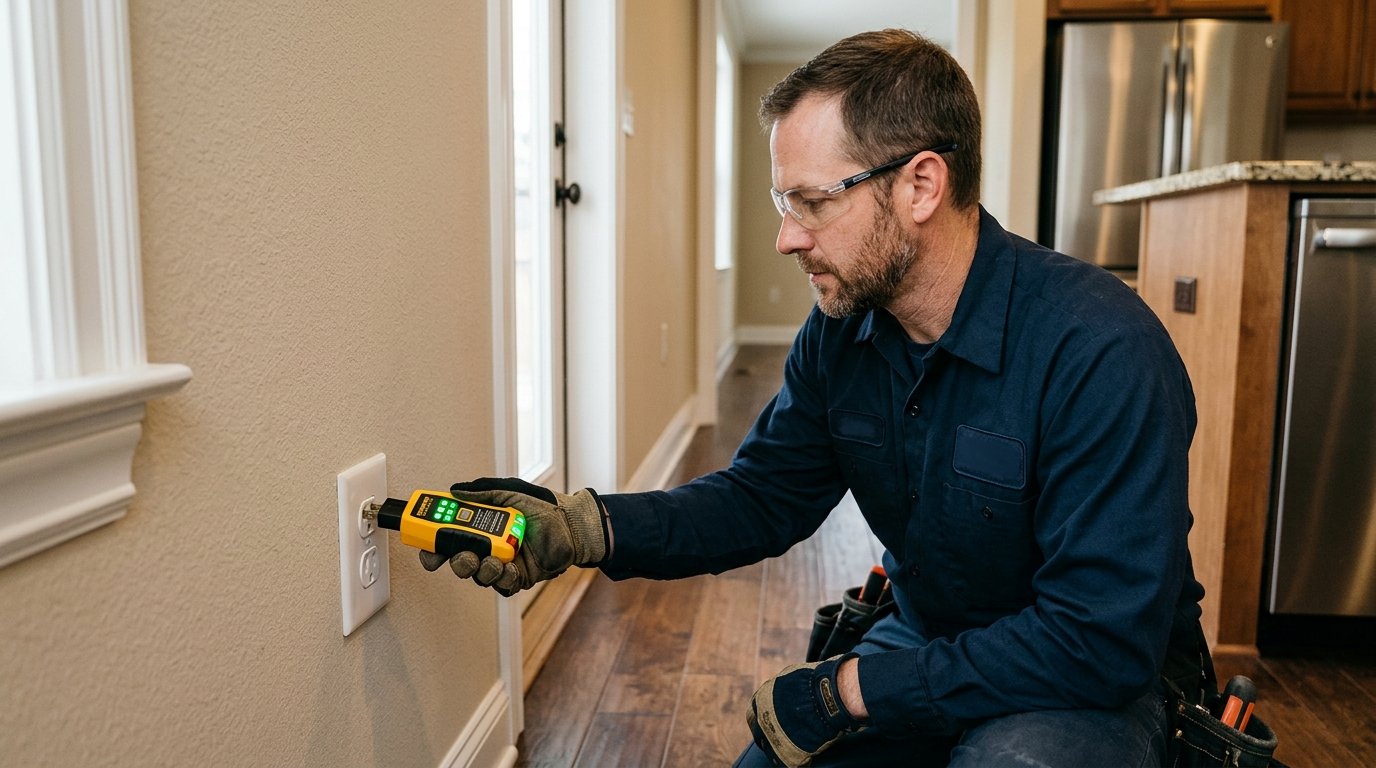
We test outlets, protection, and connections, not just glance at the panel.
When an electrical inspection makes sense
Any of these is a good reason to have your system professionally evaluated.
Buying or selling a home
An electrical inspection informs buyers and helps sellers address issues before listing.
Insurance requires it
Insurers often ask for an inspection, especially on older homes or specific wiring types.
You own an older home
Older systems may have outdated wiring, panels, or missing protection worth evaluating.
Planning a remodel
Knowing the system's condition and capacity helps plan a renovation correctly.
After a scare
Burning smells, shocks, or repeated tripping are reasons to have the system checked.
Rental or landlord check
Landlords use inspections to confirm a property is safe and up to standard.
Why an electrician-level inspection matters
A proper inspection gives you clarity and confidence about your system. Here is what you gain.
Find hidden hazards
We surface problems before they become dangerous or costly.
Prioritized findings
Issues sorted by safety, code, and recommendation, not a vague list.
Sale and insurance support
A clear report helps with transactions and insurer requests.
Peace of mind
Know your system is safe, or exactly what to address.
A plan for repairs
Understand what to fix now and what can wait.
Catches DIY work
We flag unpermitted or improper past work others miss.
Code awareness
Learn where your system meets current standards and where it does not.
Honest guidance
No scare tactics, just a trustworthy assessment.
Want to know where your electrical really stands?
We provide thorough, honest electrical inspections with a clear report. Get yours scheduled today.
(469) 327-8678What an electrical safety inspection covers
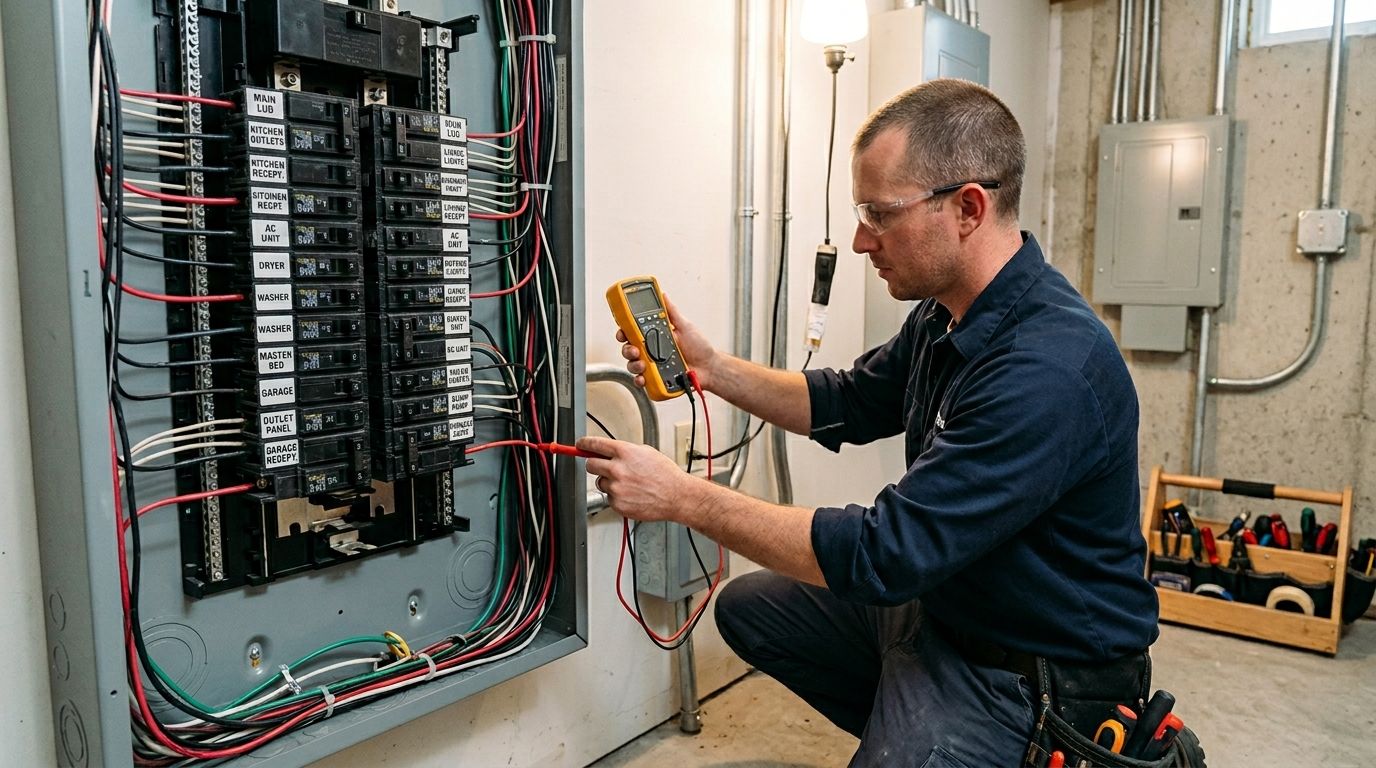
We work through the whole system methodically. At the service and panel, we look at capacity, condition, and brand, since some older panels use breakers with documented reliability concerns, and we check for proper breakers, signs of heat or corrosion, double-tapped connections, and a panel that is overloaded or full. The panel tells us a great deal about the health of the system as a whole.
Then we evaluate grounding and bonding, the wiring, and the protection. We confirm the system is properly grounded and bonded, assess the type and condition of the wiring, including older aluminum, knob-and-tube, or cloth-insulated wiring where present, and check that required ground-fault and arc-fault protection is in place in the areas that need it. We test outlets and switches for issues like reverse polarity, open grounds, and scorching, and we look at junction boxes and accessible connections.
We also examine the service entrance, from the mast and meter to how power enters the home, and we look for the fingerprints of past do-it-yourself or unpermitted work, which is a common source of hidden hazards. Throughout, we note what is a true safety concern versus a code item versus a recommendation, so the final report is organized and genuinely useful rather than an undifferentiated pile of observations.
What the report tells you, and how it helps
The deliverable is a clear, prioritized report. Rather than a confusing list, we organize findings into what they mean for you: safety hazards that warrant prompt attention, code deficiencies worth correcting, and improvements worth considering. For each, we explain what it is and why it matters in plain language, so you can make informed decisions about what to do and when. If everything checks out, we tell you that too, which is its own kind of valuable.
For real estate, the report is a practical tool. Buyers use it to understand what they are taking on and to inform negotiations, and sellers use it to address issues before listing so the electrical does not become a sticking point at closing. Because it comes from a licensed electrician, it carries more weight on electrical specifics than a general inspection note.
For insurance and older homes, an inspection often answers a direct question. Insurers may want confirmation about wiring type, panel brand, or the presence of certain protection before they write or renew a policy, particularly on older properties. Our report gives you documented findings to work with, and if corrections are needed, we can perform them as licensed electricians and document the work.
An electrical safety inspection
Every High Power inspection is thorough, honest, and delivered as a clear, prioritized report.
- Evaluation of the service and panel condition
- Check of panel brand, breakers, and capacity
- Grounding and bonding verification
- Assessment of wiring type and condition
- Check of GFCI and AFCI protection where required
- Testing of outlets and switches
- Review of the service entrance, mast, and meter
- Identification of past DIY or unpermitted work
- Findings prioritized by safety, code, and recommendation
- A clear written report with plain-language guidance
A quick look versus an electrician's inspection
Not all inspections are equal. Here is the honest comparison.
DIY or unlicensed
- A glance that misses hidden hazards
- Generalist notes without electrical depth
- No testing of outlets, grounds, or protection
- Obsolete panels or wiring not recognized
- Findings with no priority or explanation
- No ability to perform the needed corrections
Licensed electrician
- A methodical, full-system electrical evaluation
- Electrician-level assessment of what findings mean
- Outlets, grounding, and protection actually tested
- Obsolete panels and aging wiring identified
- Findings prioritized and explained clearly
- A licensed electrician who can also do the repairs
What affects the cost of an inspection
Pricing depends on the property and the scope, not a flat fee. These are the main factors.
Home size
A larger home has more circuits, outlets, and area to evaluate.
System complexity
Multiple panels, subpanels, or complex wiring take longer to assess.
Age of the home
Older systems have more to examine, from wiring type to panel condition.
Residential or commercial
Commercial properties involve more systems and code considerations.
Scope
A full-system inspection differs from a focused check of a specific concern.
Report detail
The depth of documentation needed can affect the scope.
These are general planning ranges for the Dallas area, not a quote. Every job is different, so we give you a free on-site assessment and an honest written price before any work starts.
Our inspection process
From scheduling to a clear report, here is how we handle it.
Schedule the visit
We set a time and learn why you want the inspection.
Evaluate the panel
We assess the service, panel, breakers, and capacity.
Check grounding and wiring
We verify grounding and assess the wiring type and condition.
Test protection and devices
We check GFCI and AFCI protection and test outlets and switches.
Review the service entrance
We examine the mast, meter, and how power enters.
Prioritize findings
We sort issues into safety, code, and recommendations.
Deliver the report
We provide a clear written report and explain it in plain language.
How long it takes and what to expect
A typical residential inspection takes a few hours depending on the size and age of the home and the complexity of the system, with larger or older properties and commercial spaces taking longer. We are thorough rather than rushed, because the value of an inspection is in catching what a quick look would miss.
After the visit, we provide a clear, prioritized written report and walk you through it in plain language, answering your questions. If corrections are warranted, we explain your options honestly, and as licensed electricians we can perform and document the work, though there is never any pressure to use us for repairs.
Electrical inspections across Dallas
Dallas has a wide range of housing ages, and that diversity is exactly why inspections matter here. Older neighborhoods hold homes with outdated panels, aluminum or knob-and-tube wiring, and missing modern protection, while even newer homes can hide improper do-it-yourself work or overloaded circuits. An inspection cuts through the uncertainty for any property.
Real estate is a frequent driver. In an active market, buyers want to understand the electrical condition of a home before they commit, and sellers benefit from addressing issues before they surface during a transaction. A licensed electrician's inspection carries real weight on the electrical specifics that general inspections only touch on.
Insurance is the other common reason. Carriers are increasingly attentive to older wiring and panels, and an inspection provides the documented answers they look for. When corrections are needed, having a licensed electrician who can both inspect and perform the work, then document it, streamlines the whole process.
Because we inspect homes and commercial properties throughout the metro, we know the issues common to local housing, what insurers and buyers tend to ask about, and how to deliver a report that is honest, clear, and genuinely useful. The goal is simple: you understand your electrical system and exactly where it stands.
The licensed Dallas team homeowners trust
Licensed pros
Texas TECL #38291 electricians, not generalist inspectors.
Clear reports
Prioritized, plain-language findings you can act on.
Honest assessment
No scare tactics, just a trustworthy picture.
We can fix it
If corrections are needed, we can perform and document them.
Electrical inspection FAQs
A thorough evaluation of your system: the service and panel, grounding and bonding, wiring type and condition, GFCI and AFCI protection, outlets and switches, and the service entrance. We identify hazards and deficiencies and deliver a clear, prioritized report of what we find.
A general home inspector reviews the whole house at a high level, while a licensed electrician performs a deeper, electrical-specific evaluation and can assess what findings actually mean. For electrical concerns, an electrician's inspection goes well beyond what a general inspection covers.
Common reasons include buying or selling a home, an insurance requirement, taking ownership of an older property, planning a remodel, experiencing an electrical scare, or simply wanting peace of mind. Each leaves you knowing exactly where your system stands.
No. The value of an inspection is an honest report, so we tell you what we find without inventing problems or pressuring you. If everything checks out, we say so. If corrections are warranted, we explain them clearly and you decide how to proceed.
Yes. Sellers use an inspection to address electrical issues before listing so they do not become a sticking point at closing, and the report reassures buyers. Because it comes from a licensed electrician, it carries weight on electrical specifics.
Possibly. Insurers are increasingly attentive to older wiring types and panel brands and may request an inspection before writing or renewing a policy, especially on older homes. Our report gives you documented findings to provide.
Frequent findings include obsolete or overloaded panels, missing GFCI or AFCI protection, grounding and bonding issues, aging aluminum or knob-and-tube wiring, scorched or improperly wired outlets, and past unpermitted do-it-yourself work. We prioritize whatever we find.
A typical home takes a few hours depending on size, age, and system complexity, with larger or older properties and commercial spaces taking longer. We are thorough rather than fast, since the point is catching what a quick look would miss.
Yes. You receive a clear, prioritized written report that sorts findings into safety hazards, code deficiencies, and recommendations, with plain-language explanations. We also walk you through it and answer your questions.
Yes. As licensed electricians we can perform and document any needed corrections, which is convenient and streamlines insurance and resale. That said, there is no obligation to use us for the repairs.
Yes. We inspect both residential and commercial properties. Commercial spaces involve more systems and code considerations, which we account for in the scope and the report.
Just reach out and let us know the property and why you want the inspection, and we will set a time. We will give you a clear scope and price up front before the visit.