GFCI Outlet Installation in Dallas
Need GFCI outlet installation in Dallas, TX (75247)? High Power Electrical Services installs and replaces GFCI outlets that protect against shock in kitchens, bathrooms, garages, and outdoor areas, wired correctly to code so the protection actually works.
Quick Answer
A GFCI, or ground-fault circuit interrupter, is the outlet with test and reset buttons that protects you from electric shock. It senses tiny imbalances in current and cuts power in milliseconds if electricity starts leaking to ground, such as through water or a person. Code requires GFCI protection in kitchens, bathrooms, garages, outdoors, and other damp areas, and a licensed electrician wires it so it protects correctly.
The outlets that protect your family from electric shock
A GFCI outlet looks like an ordinary receptacle with two small buttons marked test and reset, but it does something an ordinary outlet cannot. It constantly compares the current flowing out on the hot wire with the current returning on the neutral. If even a small amount goes missing, which means it is leaking to ground, often through water or a person, the device trips in a fraction of a second and cuts the power. That speed is what prevents a shock from becoming an electrocution.
Because water and electricity are the dangerous combination, code requires GFCI protection anywhere those two are likely to meet. That includes kitchen countertop outlets, bathrooms, garages, unfinished basements and crawlspaces, laundry areas, and all outdoor receptacles, as well as anything near pools and spas. Older homes often predate these rules, which is exactly why so many need GFCIs added.
There are two ways to provide the protection. A GFCI receptacle installs at the outlet and, wired correctly, can also protect other standard outlets downstream of it on the same circuit. A GFCI breaker installs in the panel and protects the entire circuit. We choose the approach that fits your home, your wiring, and the locations that need coverage.
We install new GFCIs where they are missing, replace failed units that will not reset or test, and make sure the wiring is correct so the protection is real rather than a false sense of security. We also handle the special case of older homes with no ground wire, where a GFCI can still provide shock protection when installed and labeled properly.
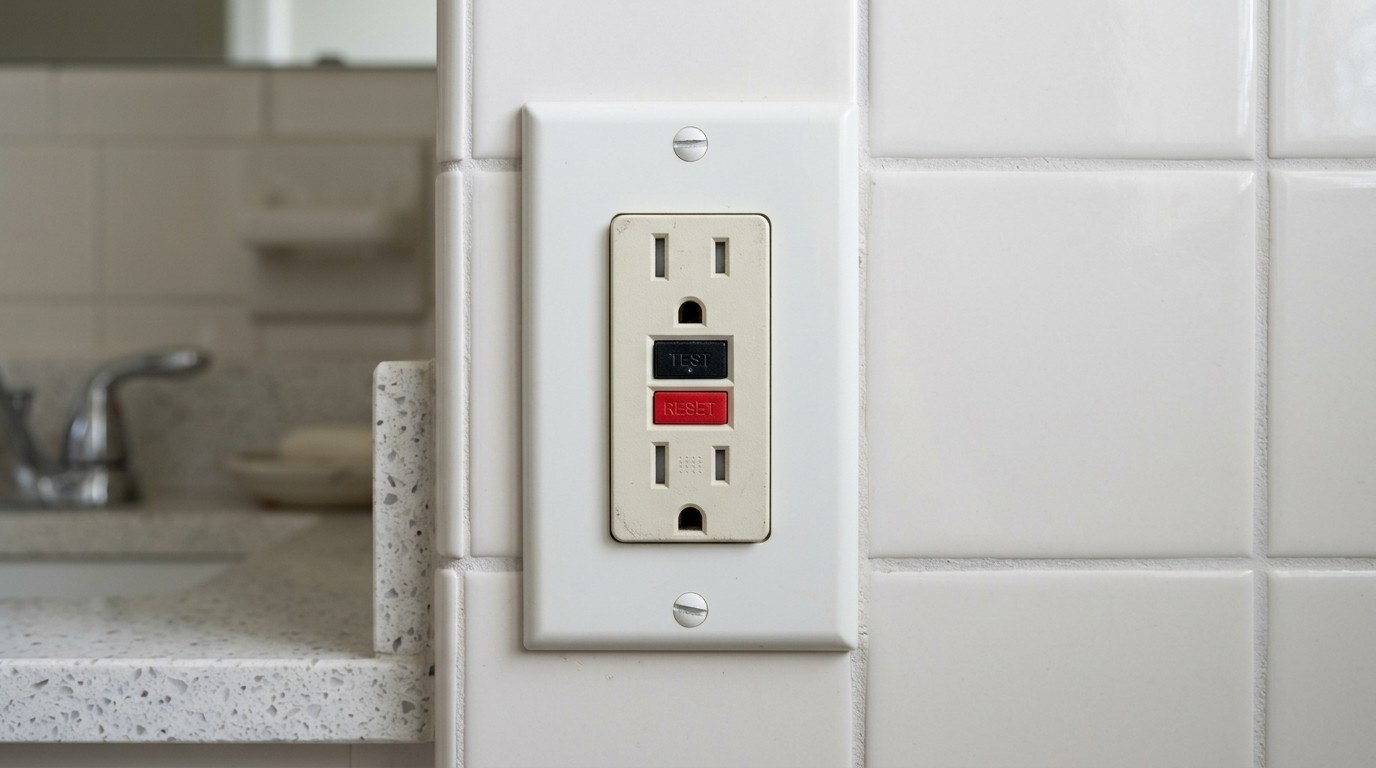
The test and reset buttons are the sign of a GFCI that guards against shock.
When you need GFCI outlets
If any of these apply, GFCI protection is missing, failed, or required. Have it addressed.
No GFCI in wet areas
Kitchens, bathrooms, garages, and outdoor outlets require GFCI protection that older homes often lack.
GFCI will not reset
A GFCI that trips and will not reset is either protecting against a real fault or has failed and needs replacing.
Two-prong outlets near water
Ungrounded two-prong outlets near sinks or outdoors are unsafe and can be made safer with a GFCI.
Buying or selling a home
Inspections routinely flag missing GFCI protection, which must be added to pass.
Unprotected outdoor outlets
Exterior receptacles exposed to weather need GFCI protection to be safe and compliant.
Shocks or tingles
Any tingle or shock from an appliance near water is a warning that needs prompt attention.
Why proper GFCI protection matters
GFCIs are a small device with a big safety job. Here is what correct installation gives you.
Shock protection
Cuts power in milliseconds when current leaks to ground.
Safe in wet areas
Protects kitchens, baths, garages, and outdoor spaces.
Code compliance
Meets NEC and Dallas requirements for required locations.
Passes inspection
Clears the GFCI items inspectors check during a sale.
Downstream coverage
One correctly wired GFCI can protect other outlets on the circuit.
Safer ungrounded outlets
Adds shock protection to older two-prong circuits where there is no ground.
Correct line and load wiring
Wired so the protection actually works, not just looks right.
Pool and spa safety
Provides the protection these high-risk areas require.
Missing or failed GFCIs in your home?
We install and replace them correctly to code. Get a same-day visit and an honest quote.
(469) 327-8678How GFCI installation actually works
We begin by identifying where protection is needed and what you already have. Code-required GFCI locations include kitchen countertops, bathrooms, garages, outdoors, laundry, and unfinished basements and crawlspaces, plus pool and spa areas. We check which of these are protected and which are not, and we test existing GFCIs, since a unit that will not trip on its test button is no longer doing its job.
Then we install the right protection the right way. A GFCI receptacle has line and load terminals, and wiring them correctly is what lets a single device protect additional standard outlets downstream on the same circuit. Reversing those connections is a common DIY mistake that leaves outlets unprotected while looking finished. Where protecting a whole circuit makes more sense, we install a GFCI breaker at the panel instead.
Finally we test everything. We confirm the device trips and resets properly, verify that the outlets it is meant to protect are actually covered, and label as required. For older homes with no equipment ground, we install GFCIs that still provide shock protection and label them correctly, since a GFCI does not require a ground wire to sense a fault, which is a safe, code-recognized way to improve protection in ungrounded homes.
GFCI, AFCI, dual-function, and testing your devices
It helps to know what each device protects against. A GFCI guards against shock by detecting current leaking to ground, which is why it lives in wet areas. An AFCI, or arc-fault breaker, guards against fire by detecting the dangerous arcing that happens in damaged wiring, which is why it covers living-area circuits. Some locations now call for dual-function devices that do both. When we evaluate your home, we make sure the right type of protection is in the right places, not just any outlet swapped in.
Testing matters more than people realize. A GFCI is a mechanical device that can wear out, typically over about a decade, and a worn one may still pass power while no longer providing protection. That is why GFCIs have a test button, and why they should be tested monthly by pressing test, confirming the power cuts, and pressing reset. If a GFCI will not trip when tested or will not reset, it needs replacement.
We are glad to show you how to test your devices and which outlets each one protects, so you are not guessing. A GFCI that quietly failed is a hidden gap in your safety, and a quick monthly test keeps that protection honest between our visits.
GFCI outlet installation
Every High Power GFCI job is wired and verified so the protection is real, not just installed.
- Assessment of required and missing GFCI locations
- Testing of existing GFCI devices
- GFCI receptacle or breaker as best fits the circuit
- Correct line and load wiring for downstream protection
- Whole-circuit protection where a breaker suits better
- Shock protection for ungrounded older circuits
- Proper labeling where code requires it
- Verification that protected outlets are truly covered
- Test and reset confirmation on every device
- Guidance on monthly testing and device lifespan
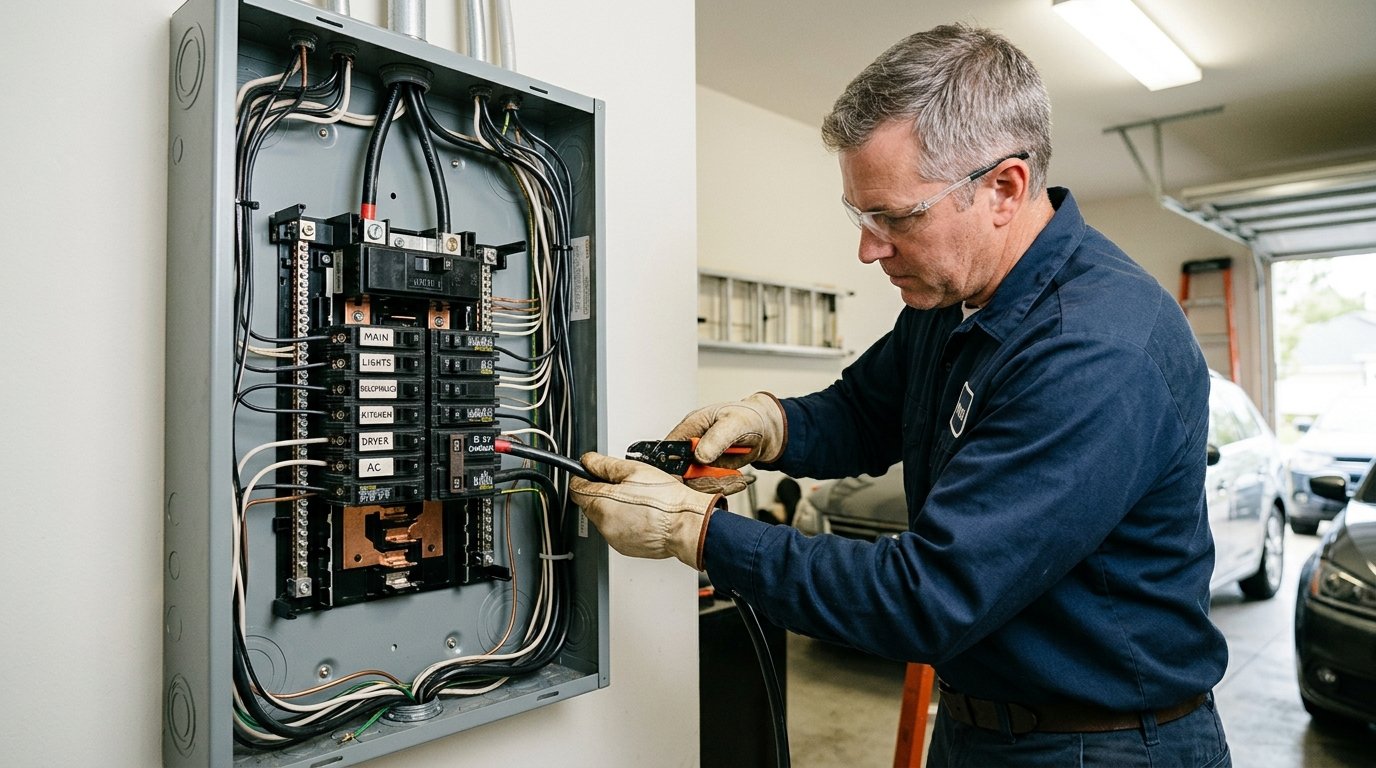
DIY swap versus a licensed GFCI install
A GFCI that looks installed can still leave outlets unprotected. Here is the honest comparison.
DIY or unlicensed
- Line and load terminals reversed, breaking protection
- Downstream outlets left unprotected by mistake
- No verification that protection actually works
- Ungrounded outlet given a false grounded appearance
- Required locations missed or mislabeled
- A failed GFCI left in service unknowingly
Licensed electrician
- Line and load wired for correct downstream coverage
- Protected outlets confirmed by testing
- Every device tested for trip and reset
- Ungrounded circuits protected and labeled correctly
- All code-required locations covered
- Worn or failed devices identified and replaced
What affects the cost of GFCI installation
Pricing depends on how many and how accessible, not a flat fee. These are the main factors.
Number of outlets
Adding protection in several locations is more than a single receptacle.
Receptacle or breaker
A GFCI breaker for a whole circuit differs in cost from individual receptacles.
Access
Easy-to-reach outlets are quicker than those behind cabinets or fixtures.
Wiring condition
Old or crowded boxes and ungrounded circuits can add a bit of work.
Circuit layout
Whether one device can protect downstream outlets affects how many are needed.
Permit if required
For larger work a permit may apply, with the fee part of compliant work.
These are general planning ranges for the Dallas area, not a quote. Every job is different, so we give you a free on-site assessment and an honest written price before any work starts.
Our GFCI installation process
From the first call to verified protection, here is how we handle it.
Assess locations
We identify required, missing, and failed GFCI protection in your home.
Recommend approach
We advise receptacles or a breaker for the best, most economical coverage.
Honest quote
You get a clear written price before any work begins.
Install correctly
We wire line and load properly so downstream outlets are protected.
Cover ungrounded outlets
Where there is no ground, we add and label GFCI protection correctly.
Test every device
We confirm each GFCI trips and resets and that protected outlets are covered.
Show you how
We explain monthly testing and which outlets each device protects.
How long it takes and what to expect
Most GFCI work is quick. Replacing a failed device or adding protection in a few locations is typically a same-visit job, often an hour or two depending on how many outlets and how accessible they are. Larger jobs across many rooms or a whole-home GFCI update take a bit longer, and we give you a clear estimate up front.
Power is off only briefly at the circuits we work on. When we finish, every device is tested, the outlets meant to be protected are confirmed covered, and you know how to run the simple monthly test that keeps your protection reliable between visits.
GFCI protection in Dallas homes
A great many Dallas homes were built before GFCI requirements expanded to all the wet areas we now protect, so it is common to find kitchens, bathrooms, garages, and especially older outdoor outlets with no ground-fault protection at all. Adding it is one of the most cost-effective safety upgrades a homeowner can make.
Pools and outdoor living are a big part of life here, and both raise the stakes. Outdoor receptacles take sun, rain, and humidity, and pool and spa areas combine water and electricity in exactly the way GFCIs are designed to guard against. Weather-exposed outdoor GFCIs also tend to wear out sooner, so they are worth checking.
Home sales are another frequent reason GFCIs come up. Inspectors routinely flag missing or non-working ground-fault protection, and buyers expect it, so updating GFCIs is a common step when preparing an older Dallas home to sell.
Because we handle outlet safety across the metro, we know where older homes typically fall short, how to add protection to ungrounded circuits correctly, and how to make sure the coverage is real. The goal is simple: the outlets near water in your home should protect the people using them.
The licensed Dallas team homeowners trust
Licensed pros
Texas TECL #38291 electricians who wire it to actually protect.
Upfront pricing
A clear written price before we start, with no surprises.
Code-first
Protection in every required location, wired and labeled to code.
We answer 24/7
Real people on the phone, with same-day availability.
GFCI outlet FAQs
A GFCI compares the current leaving on the hot wire with the current returning on the neutral. If even a small amount leaks to ground, such as through water or a person, it cuts power in milliseconds. That speed is what prevents a shock from becoming a serious or fatal electrocution.
Code requires GFCI protection in kitchens at countertop outlets, bathrooms, garages, outdoors, laundry areas, unfinished basements and crawlspaces, and near pools and spas, among other damp locations. Older homes often predate these rules, which is why many need GFCIs added.
It is detecting current leaking to ground somewhere on the circuit, which is its job. The cause may be a faulty appliance, a wiring or device problem, or moisture. If it trips repeatedly, the fault should be located rather than ignored. A GFCI that will not reset at all may also have failed.
Yes, when wired correctly. A GFCI receptacle has line and load terminals, and using the load terminal lets it protect standard outlets downstream on the same circuit. Wiring this correctly is important, since a common mistake leaves those outlets unprotected while appearing finished.
A GFCI protects against shock by detecting current leaking to ground, which is why it is used in wet areas. An AFCI protects against fire by detecting dangerous arcing in damaged wiring, which is why it covers living-area circuits. Some locations now require dual-function devices that do both.
Yes. A GFCI does not need an equipment ground to sense a fault, so it can be installed on an ungrounded circuit to add shock protection, and it must be labeled accordingly. It is a recognized, safe way to improve protection in older homes without rewiring.
About once a month. Press the test button to confirm the power cuts off, then press reset. If a GFCI does not trip when tested or will not reset, it has likely failed and should be replaced, since a worn unit can still pass power while no longer protecting you.
Roughly a decade, though it varies, and outdoor units exposed to weather often wear out sooner. Because a failed GFCI can look and work like a normal outlet while no longer protecting you, monthly testing and periodic replacement matter.
Often, in practice, yes. Home inspectors routinely flag missing or non-working GFCI protection in required locations, and buyers expect it. Adding GFCIs is a common and worthwhile step when preparing an older home for sale.
Any tingle or shock from an appliance, especially near water, is a warning sign of a ground fault and should be addressed promptly. A properly installed GFCI is designed to cut power before such a leak can harm you. We can diagnose the source.
Both work. A GFCI receptacle is ideal for protecting one location plus downstream outlets, while a GFCI breaker protects an entire circuit from the panel. We recommend the approach that gives the best coverage for your wiring and the least cost.
Yes. Most GFCI work is quick, and we offer same-day availability. Call and tell us what you need, whether it is replacing a failed unit or adding protection where it is missing.