Aluminum Wiring in Older Dallas Homes: Is It Safe, and What to Do?
If your Dallas home dates to the late 1960s or 1970s, here is what aluminum wiring means, and the affordable fix that is rarely a full rewire.
Quick Answer
Many Dallas homes built between about 1965 and 1973 have aluminum branch wiring, and the concern is real: aluminum connections can loosen and overheat over time, a recognized fire risk. The reassuring news is that the fix is usually not a full rewire. It is remediation, pigtailing the aluminum to copper at each connection with approved connectors. A licensed electrician can confirm whether you have it and make it safe, often for far less than homeowners fear.
Why so many older Dallas homes have aluminum wiring
If your Dallas home was built in the late 1960s or early 1970s, there is a real chance it has aluminum branch wiring. When copper prices spiked in that era, builders across the country, and across Dallas's mid-century neighborhoods, turned to aluminum for the small branch circuits that feed outlets, switches, and light fixtures. For a few years it was everywhere, and a lot of those homes are still standing and still wired the same way.
It helps to be precise about what is and is not a concern. Large-gauge aluminum used for a home's main service entrance, or for dedicated circuits like a range or air conditioner, is completely normal and still used today without issue. The concern is specifically the smaller-gauge aluminum branch wiring that runs to ordinary outlets and switches, where the many connections are where problems develop.
So aluminum wiring is not a reason to panic, but it is a reason to pay attention. Below we explain why those connections can become a hazard, how to tell whether your home has aluminum branch wiring, the approved fix that is rarely a full rewire, and what it means for insuring and selling a home in Dallas.
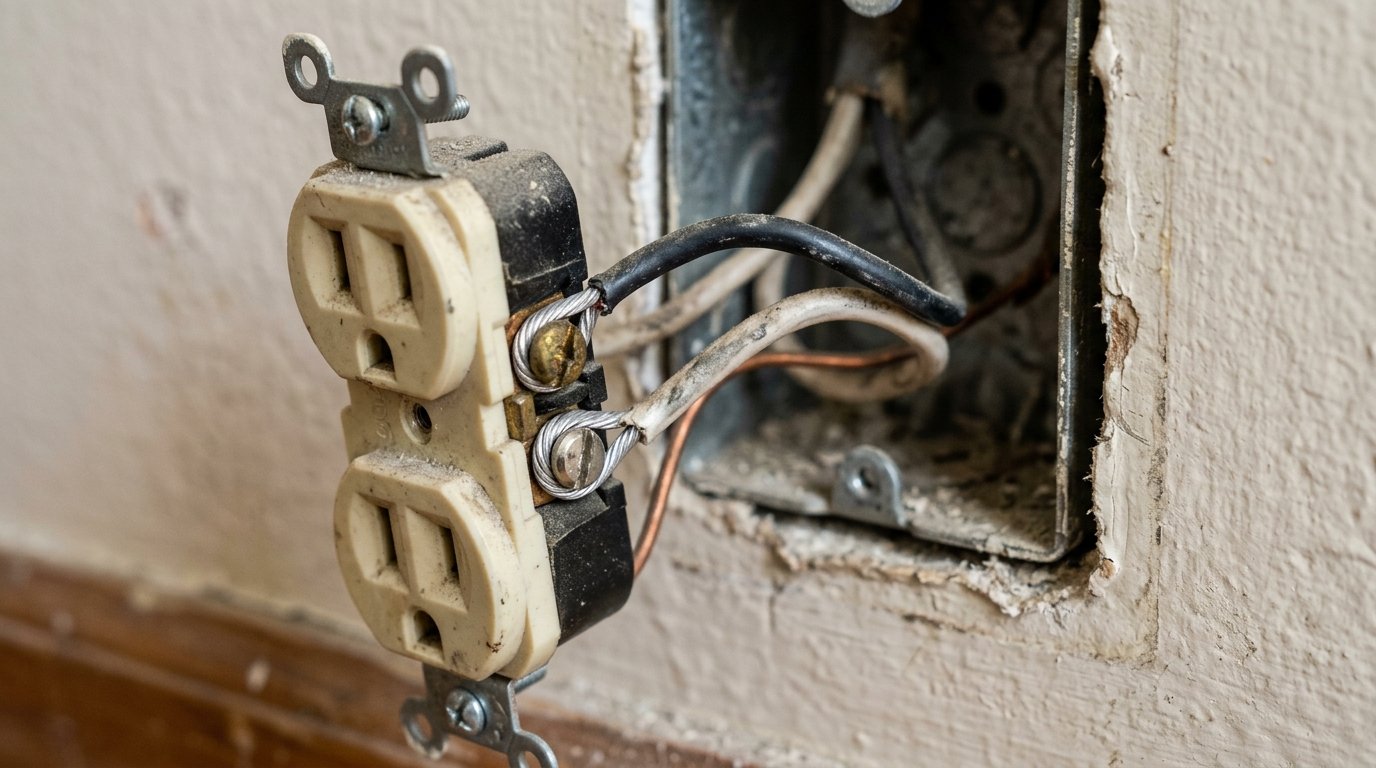
The concern is small-gauge aluminum branch wiring to outlets and switches, not large service cable.
Warning signs of aluminum wiring problems
Aluminum trouble shows up at the connections. Watch for these signs.
Warm outlet or switch covers
Cover plates that feel warm to the touch can mean a connection behind them is loose and overheating, a classic aluminum warning sign.
Flickering or dimming lights
Lights that flicker or dim without a bad bulb, especially on several fixtures, can point to failing aluminum connections.
A smell of hot plastic
A faint burning or hot-plastic odor near outlets or switches is a serious sign. Stop using the circuit and call an electrician right away.
Outlets that stop working
Outlets or switches that go dead, sometimes intermittently, can signal a connection that has loosened or burned at an aluminum termination.
Unexplained breaker trips
Repeated tripping with no clear overload can trace back to faults at deteriorating aluminum connections.
Discoloration or scorching
Darkened, discolored, or scorched outlets, switches, or cover plates indicate heat damage that needs prompt professional attention.
Is aluminum wiring actually dangerous?
Aluminum itself is a perfectly good conductor, so the wire is not the problem. The trouble lives at the connections. Aluminum expands and contracts more than copper as it heats and cools, it oxidizes in a way that resists current flow, and when it meets dissimilar metals at a screw terminal it can corrode. Over years of normal use, those forces work connections loose, and a loose connection arcs and overheats, which is the recognized fire concern.
This is not hype. Federal safety researchers found that homes with aluminum branch wiring were far more likely to reach fire-hazard conditions at their connections than homes wired in copper, which is why the issue is taken seriously by electricians, inspectors, and insurers alike. At the same time, it is important not to overstate it: a home with aluminum wiring is not destined to catch fire, and millions of them are lived in safely every day.
The honest takeaway is that aluminum branch wiring is a manageable risk, not an emergency, provided it is addressed properly. Left ignored for decades it deserves concern; assessed and remediated by a licensed electrician, it becomes a non-issue. The goal is simply to make the connections sound.
Not sure if your home has aluminum wiring?
We inspect it honestly, tell you straight what it needs, and remediate it safely, with a clear written quote.
(469) 327-8678How to tell if your home has aluminum wiring
There are a few clues you can look for safely. The biggest is age: homes built between roughly 1965 and 1973 are the prime candidates. Beyond that, the cable jacket on branch wiring is often stamped with the word ALUMINUM or AL, and at the panel a trained eye can see the dull silver of aluminum conductors rather than the orange of copper. Some outlets and switches are also stamped CO/ALR, a sign aluminum was used.
What you should not do is open outlets, switches, or the panel to probe live wiring yourself. The very connections in question can be hot or failing, and this is exactly where the risk lives. The safe, definitive way to know is a licensed electrician, who can confirm aluminum branch wiring during an electrical safety inspection and tell you how much of the home is affected.
If you are buying an older Dallas home, this is worth knowing before you close. A standard home inspection may note aluminum wiring but rarely evaluates its condition, so a dedicated electrical inspection gives you a clear, honest picture and the leverage to plan, or negotiate, accordingly.
The fix: remediation, not a full rewire
Here is the part that surprises most homeowners: aluminum branch wiring almost never needs a full rewire. The proven, widely accepted solution is remediation, adding a short length of copper, a pigtail, to each aluminum connection using a specially approved connector, so that only copper meets the device. This makes every connection sound while leaving the existing aluminum runs in the walls in place.
The method matters. The connectors recognized for this work, such as COPALUM crimp sleeves and AlumiConn lugs, are designed specifically for joining aluminum to copper reliably, which ordinary wire nuts are not. Our aluminum wiring remediation uses approved connectors at every outlet, switch, and fixture, so the fix lasts rather than simply resetting the clock on a loose terminal.
Because it avoids opening walls and rerunning circuits, remediation is dramatically less expensive and less disruptive than a rewire, often a fraction of the cost. Occasionally a home with badly damaged wiring or a larger renovation underway is a better candidate for partial rewiring, and we will tell you honestly when that is the case, but for most homes, proper pigtailing is the right answer.
Patch fixes vs proper remediation
Shortcuts can leave the hazard in place. Approved remediation makes it safe for good.
DIY or unlicensed
- Just retorquing the existing aluminum screw terminals
- Joining aluminum to copper with standard wire nuts
- Ignoring it because the lights still work
- Treating one bad outlet and assuming the rest are fine
Licensed electrician
- Pigtail every connection with approved connectors
- Inspect the whole home, not just the obvious spots
- Use methods recognized for aluminum-to-copper joints
- Document the remediation for insurers and buyers
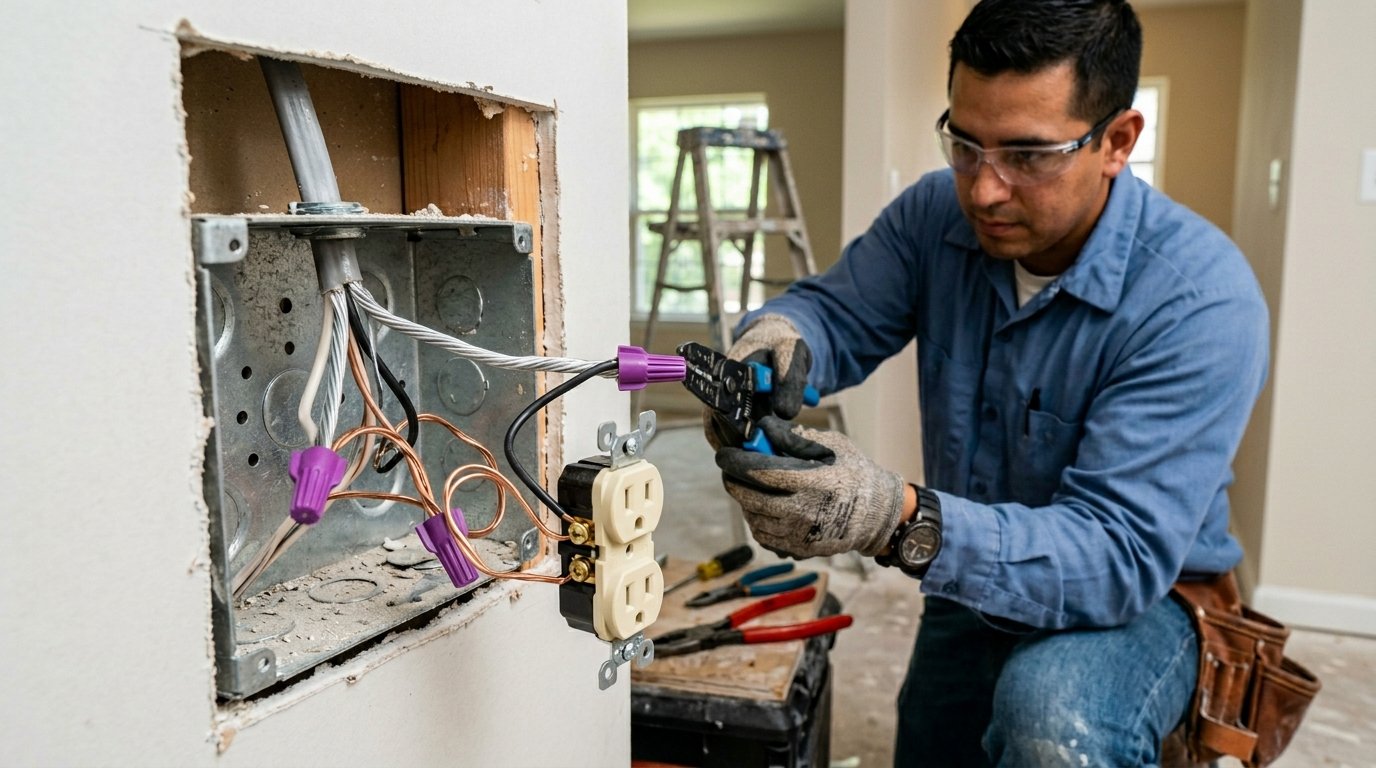
Remediation pigtails each connection to copper, making it safe without a full rewire.
Aluminum wiring, insurance, and selling in Dallas
Aluminum wiring is not just a safety matter in Dallas; it is increasingly a financial one. Many home insurers now ask whether a home has aluminum branch wiring, and some will decline coverage, charge more, or require remediation before they will write a policy. Documented remediation by a licensed electrician answers that question and often satisfies the insurer.
It matters at sale time too. Buyers' inspectors flag aluminum wiring, and an unaddressed finding can stall a deal or become a negotiating point against you. Homes in established neighborhoods like Northwood Hills and Pleasant Grove, full of homes from the aluminum era, see this regularly. Remediating proactively, with documentation, protects both your safety and your home's value.
Whether your goal is peace of mind, an insurance requirement, or a smooth sale, the path is the same: a licensed electrician confirms what you have, remediates it with approved connectors, and gives you documentation you can hand to an insurer or a buyer. It is one of the most worthwhile, and most affordable, safety investments an older Dallas home can make.
Our aluminum wiring process
A clear, honest path from inspection to documented remediation.
Inspect and confirm
We verify whether your home has aluminum branch wiring and check the condition of the connections.
Assess the scope
We map every outlet, switch, and fixture affected and give you a clear, honest written quote.
Remediate to standard
We pigtail each connection to copper with approved connectors, the method built to last.
Document the work
We provide documentation of the remediation for your records, your insurer, or a future buyer.
Aluminum wiring FAQs
The wire itself is fine; the risk is at the connections, which can loosen and overheat over time, a recognized fire concern. A home with aluminum branch wiring is not destined to have a fire, and millions are lived in safely, but the connections should be assessed and remediated by a licensed electrician to remove the risk.
Aluminum branch wiring was most common in homes built between roughly 1965 and 1973, when copper prices spiked. If your Dallas home dates to that era, there is a real chance it has aluminum branch circuits, and it is worth confirming.
Clues include the home's age, the word ALUMINUM or AL stamped on the cable jacket, and outlets or switches marked CO/ALR. The safe, definitive way to know is to have a licensed electrician confirm it during an inspection rather than probing live wiring yourself.
Almost never. The accepted fix is remediation, pigtailing each aluminum connection to copper with approved connectors, which makes the connections safe without opening walls or rerunning circuits. It is far less expensive and disruptive than a full rewire, and we will tell you honestly in the rare case a rewire is the better option.
Pigtailing adds a short length of copper to each aluminum connection so only copper meets the device. COPALUM crimp sleeves and AlumiConn lugs are connectors recognized specifically for joining aluminum to copper reliably, unlike ordinary wire nuts. We use approved connectors at every connection.
It can. Many insurers ask about aluminum branch wiring and may decline coverage, charge more, or require remediation first. Documented remediation by a licensed electrician usually answers the insurer's concern. We provide documentation you can share with your insurer.
Yes, but buyers' inspectors will flag it, and an unaddressed finding can stall a sale or become a negotiating point. Remediating proactively, with documentation, removes the obstacle and protects your home's value.
It depends on how many connections your home has, but because remediation avoids opening walls and rewiring, it is far less expensive than a rewire, often a fraction of the cost. Every home is different, so we give a free assessment and an honest written price before any work begins.
We strongly advise against it. The connections in question can be hot or failing, the work requires approved connectors and proper technique, and incomplete or improper fixes can leave or even worsen the hazard. This is licensed work, and doing it right matters for both safety and insurance.