Backup Power for Your Dallas Home: Generators vs Batteries
From surge protection to whole-home generators, here is how to keep your home running through North Texas storms and outages.
Quick Answer
When the grid goes down, your options run from a whole-home standby generator, the most coverage, automatic, with long runtime, to a home battery, silent, instant, and great with solar, to a portable generator, the cheapest but manual and limited. The right choice depends on what you need to keep running and for how long. Whichever you pick, a licensed electrician sizes it and installs the transfer switch that makes it safe and automatic.
Why backup power matters in North Texas
North Texas weather makes backup power more than a luxury. Spring brings severe thunderstorms and the occasional tornado, summer heat pushes the grid to its limits, and winter can deliver ice storms and hard freezes, as the February 2021 storm reminded every Dallas homeowner. Outages here are not rare, and when they hit, they can last from hours to days.
The stakes are real. A long outage in July means no air conditioning in dangerous heat; in January it means no heat and the risk of frozen pipes. Add spoiled food, a dark home office, medical equipment that needs power, and a sump pump that has to keep running, and reliable backup power becomes about safety and comfort, not just convenience.
The good news is that there is a backup option for every home and budget, from a simple surge protector to a whole-home standby generator. This guide explains the choices, compares generators and batteries head to head, and covers sizing, fuel, and the safety details that matter, so you can keep your Dallas home running no matter what the weather does.
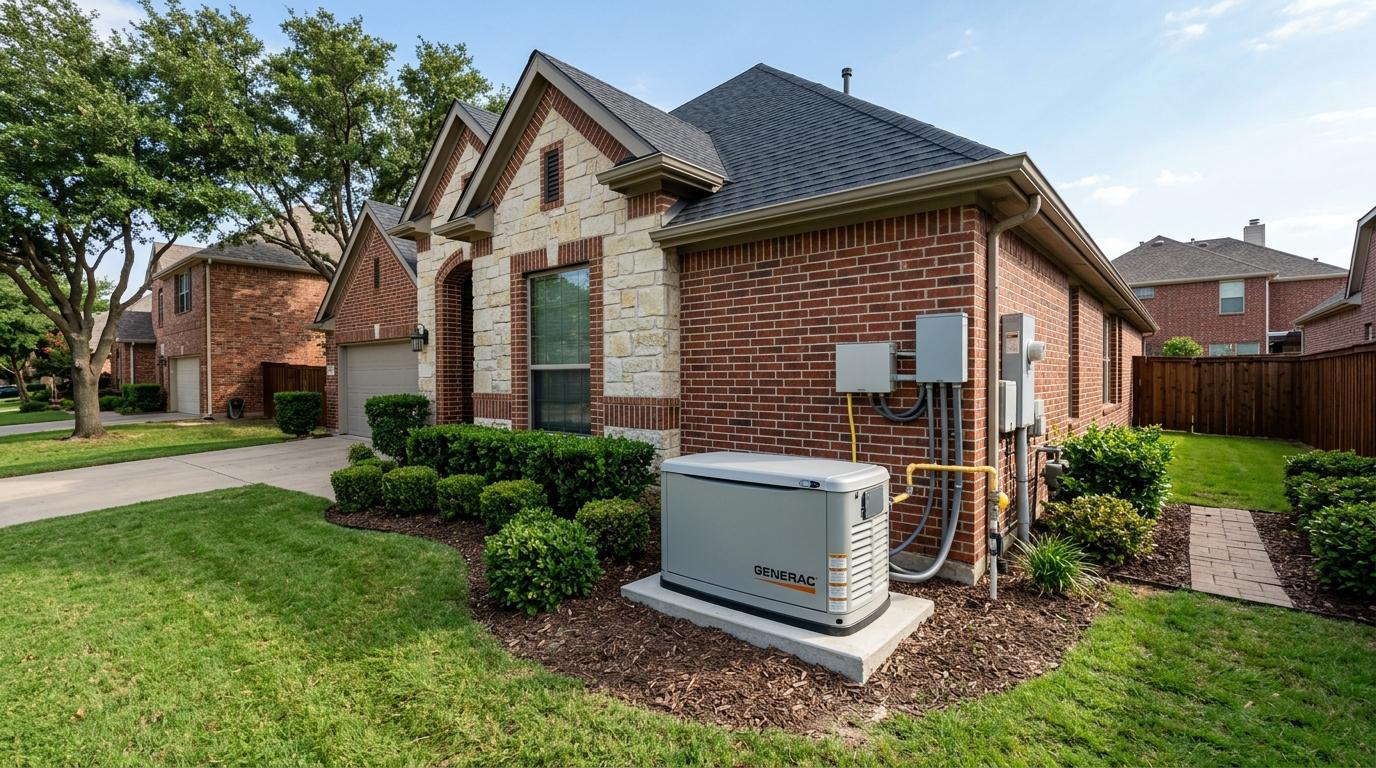
A standby generator switches on automatically and can power a home for days.
Your backup power options
Four ways to stay powered, from the simplest safeguard to full coverage.
Surge protection
The cheapest first layer. It guards appliances and electronics from the surges storms send, though it does not keep the power on by itself.
Portable generator
The lowest-cost backup. It powers a few items through heavy cords, but it is manual, must run outdoors, and cannot safely feed your panel without a proper interlock.
Home battery
Silent, instant, and clean. It powers essential circuits the moment the grid drops and pairs beautifully with solar, with runtime set by its capacity.
Whole-home generator
The most coverage. Running on natural gas or propane, it starts automatically and can power your whole home or its essentials for days on end.
Generator vs battery: which is right for you?
The two heavyweight options, a whole-home generator and a home battery, solve the same problem in different ways. A standby generator wins on runtime and capacity: fed by natural gas or propane, it can power a whole house for days, which is exactly what a multi-day winter outage demands. The trade-offs are fuel, some noise, and periodic maintenance.
A home battery wins on everything quiet and clean. It kicks in instantly with no gap, runs silently, produces no fumes, needs little maintenance, and pairs naturally with solar so it can recharge itself by day. Its limit is runtime: a battery powers your essentials for hours, and through a long outage it depends on solar or careful rationing to keep going.
For many Dallas homeowners the best answer is not either-or. A battery handles the instant, silent coverage for short outages and the daily ups and downs, while a generator stands ready for the long, grid-down events. Whichever path you choose, the piece that makes it safe and automatic is the transfer switch, which we will come to next.
Want to keep the power on through the next storm?
We assess your needs, size the right backup system, and install it safely, with an honest written quote.
(469) 327-8678Sizing, fuel, and the transfer switch
The first decision is how much you want to power. A whole-home system runs everything, while an essentials system covers the circuits that matter most, the AC or heat, refrigerator, key outlets, and lights, for a smaller, more affordable install. We help you decide based on your home and what you cannot do without, and size the generator in kilowatts or the battery in kilowatt-hours to match.
Fuel matters for generators. Most Dallas homes with natural gas service choose a natural-gas standby generator, since it draws from the existing supply and never needs refilling, while propane is a strong option for homes without gas. Portable units run on gasoline that you have to store and refill, which is part of why they are a stopgap rather than a true solution.
The component that ties it all together is the transfer switch. An automatic transfer switch senses an outage, disconnects from the grid, and starts your backup, all on its own and, crucially, without ever feeding power back onto utility lines. That last point is not optional: it protects your home, your equipment, and the utility crews working to restore power. It is the heart of a safe backup installation.
Portable generator safety: do it the safe way
Portable power is fine done right. Backfeeding a panel is a deadly shortcut.
DIY or unlicensed
- Plug appliances into a portable generator with heavy cords
- Run a portable generator outdoors, far from windows
- Decide what circuits you most need to keep on
- Keep fuel and maintenance up to date
Licensed electrician
- Install an automatic transfer switch or interlock, never a backfeed
- Size and install a standby generator or battery to code
- Connect backup safely to your panel with a permit
- Prevent deadly backfeed onto utility lines
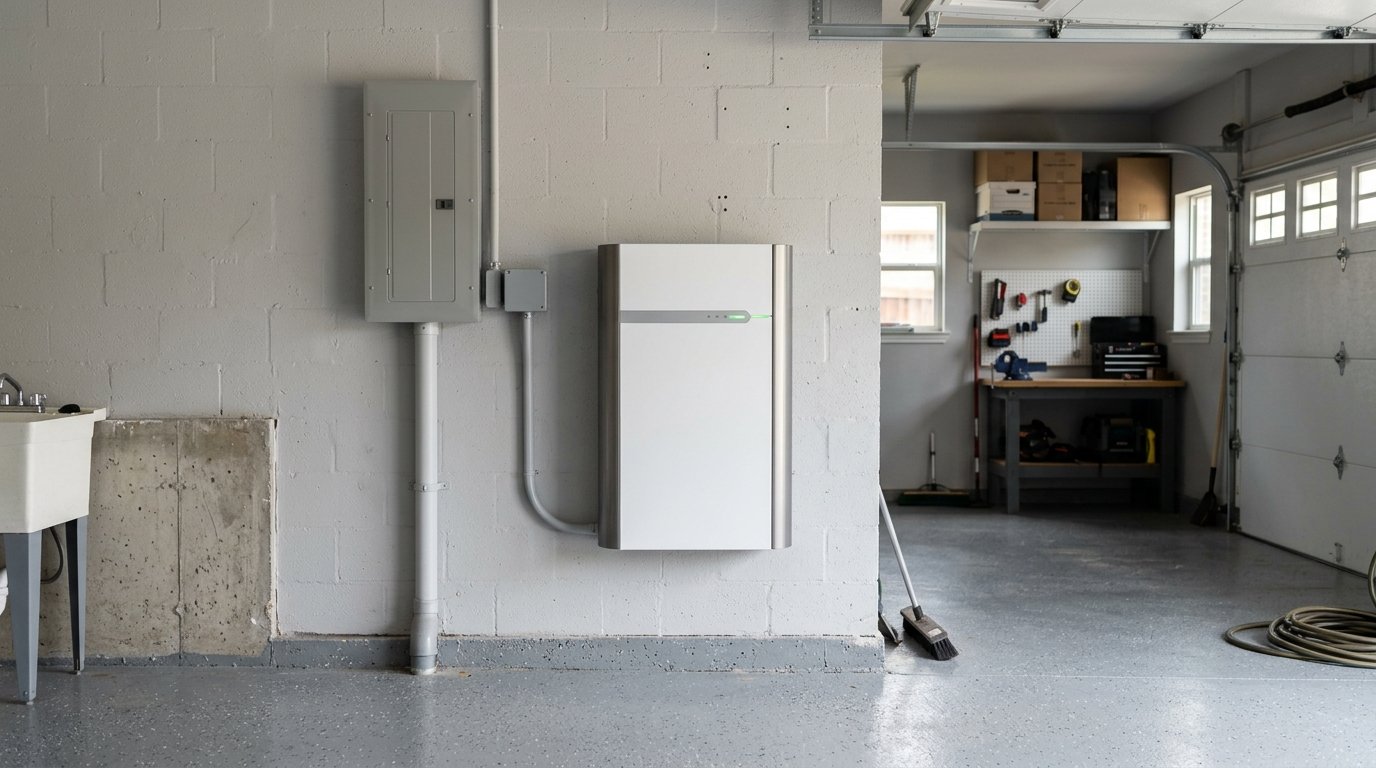
A home battery delivers silent, instant backup and pairs naturally with solar.
Backup power and Texas storms: local notes
Dallas backup power planning should start with the threats we actually face. Summer heat strains the grid just when losing AC is most dangerous, and winter freezes like the 2021 storm can knock out power for days when heat is critical, which is why runtime, and a generator's ability to run for days, weighs heavily here. The cheapest first step against storms, though, is whole-house surge protection, which guards your electronics from the surges storms push through the lines.
Local practicalities shape the install. Natural gas is widely available in Dallas, making natural-gas standby generators a popular, refill-free choice, and a proper installation is permitted and may involve coordinating with the utility on the connection. Generators also need periodic maintenance to be ready when you need them, which we can handle so yours is not a surprise during the next outage.
And when a storm has already done damage, we are here for that too. Our storm damage electrical repair restores service masts, panels, and wiring after high winds, ice, and lightning, across every Dallas neighborhood we serve. Whether you are preparing ahead or recovering after, we help keep your home safe and powered.
How we set up your backup power
A clear path from planning to a backup system you can count on.
Assess your needs
We learn what you must keep running and for how long, and look at your panel, gas service, and space.
Recommend and size
We recommend a generator, battery, or both, sized correctly, with an honest written quote and no overselling.
Install with a transfer switch
We install the system and an automatic transfer switch to code, with a permit, and coordinate the utility where needed.
Test and maintain
We test it under a simulated outage, show you how it works, and can keep it maintained for the long haul.
Backup power FAQs
Both are valid. A whole-home system powers everything, while an essentials system covers the circuits that matter most, the AC or heat, refrigerator, and key outlets, for a smaller, more affordable install. We help you decide based on your home and what you cannot do without.
A generator wins on runtime and can power a whole home for days, ideal for long winter outages, while a battery is silent, instant, clean, and pairs with solar but has limited runtime. Many homeowners use a battery for short outages and a generator for long ones. We help you choose for your needs.
It depends on whether you want to run the whole home or just essentials, and on your largest loads like air conditioning. We perform the calculation and size the generator correctly, so it starts and runs everything you need without being oversized and overpriced.
If your home has natural gas service, a natural-gas standby generator is usually the easy choice, since it draws from the existing supply and never needs refilling. Propane is a strong option for homes without gas. We help you pick based on what your home has.
No, and this is critical. Backfeeding a portable generator into an outlet or panel without a proper transfer switch or interlock is extremely dangerous, risking fire and sending deadly power onto utility lines toward crews. Portable generators should power devices through proper cords, or feed your panel only through a transfer switch or interlock we install.
For any backup that connects to your home's wiring, yes. A transfer switch safely disconnects from the grid before your backup powers the home, which protects your equipment and, importantly, the utility workers restoring power. An automatic transfer switch does it all on its own. We install it as part of the job.
It depends on the battery's capacity and how much you are running. A battery typically powers essential circuits for hours, and when paired with solar it can recharge by day and stretch much further. We size the battery to your priorities and explain realistic runtimes.
Yes, when it is sized for it. Air conditioning is a large load, so we size the generator to start and run your AC along with your other essentials. This is exactly why proper sizing matters, especially for Texas summers.
Yes. After high winds, ice, or lightning, we repair damaged service masts, meter bases, panels, and wiring to restore power safely, across every Dallas neighborhood we serve, and we answer the phone around the clock for storm emergencies.