Home Battery Backup Installation in Dallas
Want home battery backup in Dallas, TX (75247)? High Power Electrical Services installs home battery and energy storage systems that deliver silent, automatic backup power during outages, store solar energy, and tie into your panel, all sized and wired safely to code.
Quick Answer
A home battery stores electricity, from the grid or from solar, and delivers it back when you need it, most importantly during an outage. Unlike a generator, it is silent, instant, and uses no fuel, automatically powering your home when the grid goes down. Runtime depends on the battery's capacity and your loads. A licensed electrician sizes and wires it safely to code.
Silent, automatic backup power for your home
A home battery backup system, also called energy storage, is a quiet, modern alternative to a generator. It stores electricity in a battery, charged from the grid or from solar panels, and uses an inverter and a backup gateway to manage that energy. When the grid goes down, the system automatically switches your home over to battery power, often so smoothly that you barely notice the outage happened.
The appeal compared to a generator is real. A battery makes no noise, produces no fumes, needs no fuel to store and stockpile, and responds instantly rather than starting up. The tradeoff is runtime: a battery delivers power until its stored energy runs out, which depends on its capacity and how much you are running, whereas a fueled generator can run as long as it has fuel. We are honest about that tradeoff so the system fits your real expectations.
How much it backs up is a design choice. Some homeowners back up only essential circuits, the refrigerator, some lights, internet, a few outlets, and medical or sump equipment, which stretches the stored energy much further during an outage. Others want whole-home backup for full comfort. We help you decide based on your priorities and the battery capacity, often using a dedicated backup loads panel for the circuits that matter most.
Battery systems also pair naturally with solar. With the right equipment, solar can keep charging the battery during a daytime outage, extending your backup well beyond what the battery alone holds, and on normal days the battery can store solar energy for use after sunset. Whether you have solar now, plan to add it, or simply want grid backup, we install and wire the system to do its job safely.
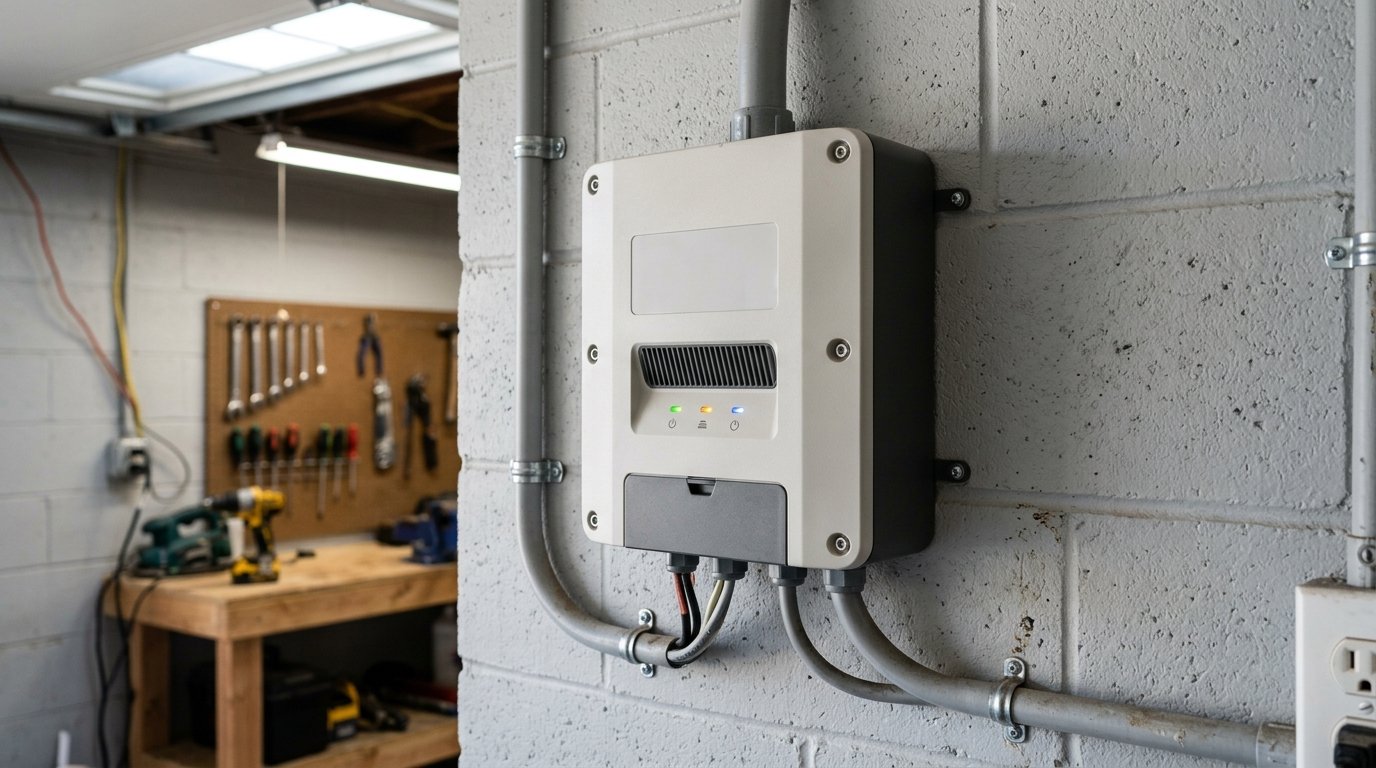
A battery, inverter, and gateway store energy and switch your home over automatically.
When home battery backup makes sense
If any of these describe you, an energy storage system is worth considering.
Frequent outages
If Texas storms, heat, or freezes leave you without power, stored backup keeps essentials running.
You have or want solar
A battery stores your solar energy and keeps it available at night and during outages.
Want silent backup
A battery is quiet and fume-free, unlike a running generator.
Need resilience
Medical equipment, a home office, or peace of mind make reliable backup valuable.
Manage energy use
Stored energy can be used strategically depending on your rate plan.
Building or upgrading
A build, remodel, or solar project is an ideal time to add storage.
Why home battery backup is worth it
Energy storage brings resilience without the downsides of a generator. Here is what you gain.
Instant backup
Switches to battery automatically the moment the grid drops.
Silent and clean
No noise, no fumes, no fuel to store or run.
Solar storage
Stores solar energy for use at night or during outages.
Automatic operation
No starting, switching, or refueling on your part.
Energy resilience
Keeps essentials, or the whole home, running through outages.
Energy management
Use stored energy strategically based on your needs.
Low maintenance
No engine to service, unlike a generator.
Scalable
Many systems let you add capacity as your needs grow.
Want backup power that is silent and automatic?
We size and install home battery systems to code. Get a free assessment and an honest quote.
(469) 327-8678How a home battery system works
A battery system has a few core parts: the battery that stores energy, an inverter that converts between the battery's stored power and the alternating current your home uses, and a backup gateway that monitors the grid and manages the system. On a normal day, the battery charges from the grid or your solar, and the gateway keeps an eye on everything. When the grid fails, the gateway disconnects from the utility and switches your home onto battery power automatically, a process called islanding, so your lights stay on.
Sizing is where the design happens. Two numbers matter: capacity, how much energy the battery holds, which determines how long it lasts, and power output, how much it can deliver at once, which determines what it can run simultaneously. We match both to what you want to back up. Backing up essential circuits through a dedicated backup loads panel stretches the stored energy much further, while whole-home backup needs more capacity. We help you choose the right balance.
The installation itself is licensed electrical work. We mount the battery and equipment safely, wire the inverter and gateway, set up the backup loads panel or whole-home connection, tie into your electrical service, and integrate solar where present. We pull the permit and handle the utility interconnection requirements, then test the system, including simulating an outage so you can see it switch over. The result is backup that simply works when you need it.
Battery versus generator, and pairing with solar
Batteries and generators both provide backup, but they suit different needs, and being honest about the difference matters. A battery is silent, instant, fume-free, and maintenance-light, and it pairs beautifully with solar, but its runtime is limited by its stored capacity and your usage. A fueled generator can run as long as it has fuel, making it strong for long multi-day outages, but it is noisy, needs fuel and maintenance, and starts up rather than responding instantly. Neither is simply better, they are different tools.
Many homeowners find the best answer is matching the solution to the outages they actually face, or even combining approaches. For frequent short outages and everyday energy resilience, a battery is often ideal. For rare but long outages, a generator may make more sense, and some homes use both, with a battery for instant, smooth coverage and a generator for extended runtime. We help you weigh it for your situation rather than pushing one product.
Solar is where batteries truly shine. With the right equipment, solar can recharge the battery during a daytime outage, dramatically extending your backup beyond the battery's own capacity, and on normal days the battery banks solar energy generated during the day for use in the evening. If you have solar or plan to add it, a battery turns that investment into round-the-clock, outage-resilient power.
Home battery backup installation
Every High Power battery install is sized to your needs, wired to code, and tested for real backup.
- Assessment of your backup goals and loads
- Battery sized for capacity and power output
- Inverter and backup gateway installation
- Critical-loads panel or whole-home backup setup
- Tie-in to your electrical service
- Solar integration where present or planned
- Safe mounting of the battery and equipment
- Permit and utility interconnection handled
- Outage simulation to confirm automatic switchover
- Walkthrough of monitoring and operation
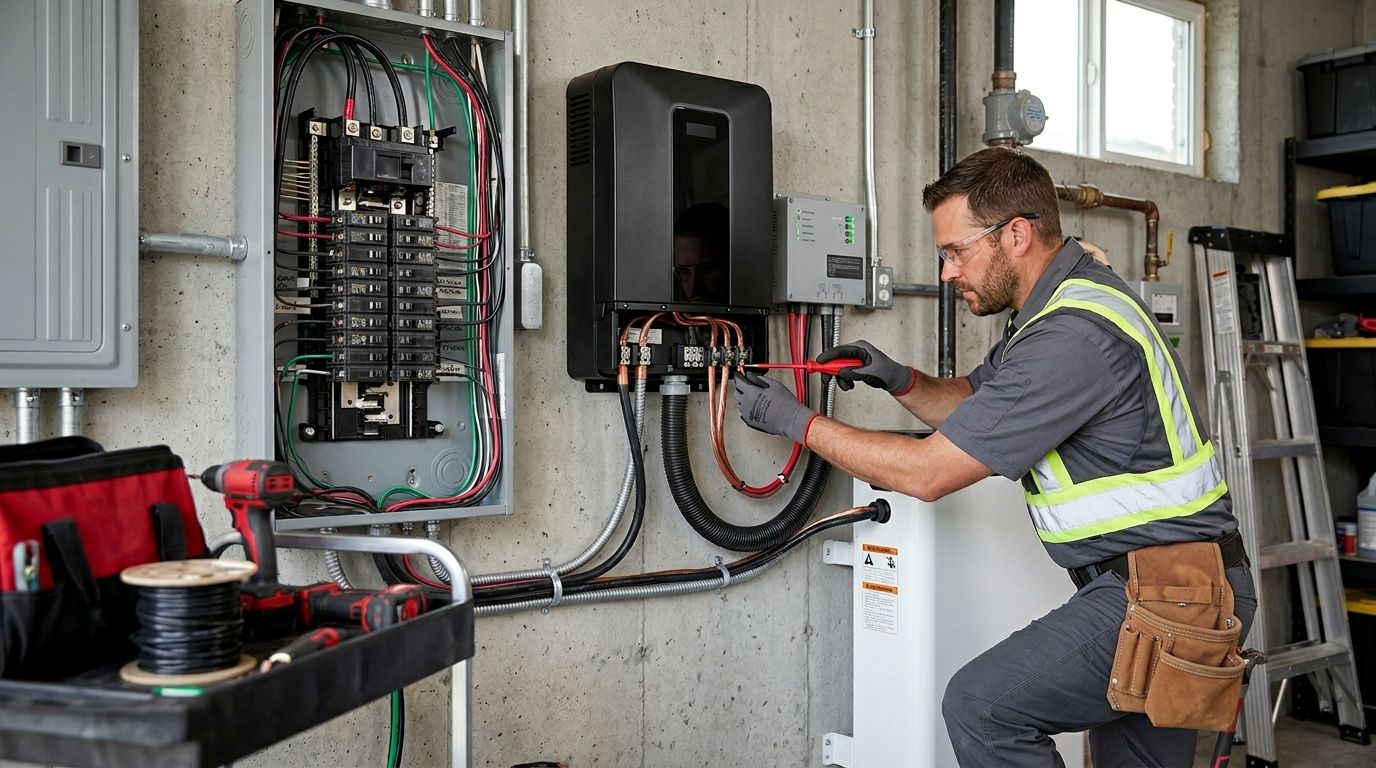
DIY versus a licensed battery install
Energy storage ties into your service and the grid, so it is firmly professional work. Here is the honest comparison.
DIY or unlicensed
- High-voltage battery wiring without training
- A system that does not island safely from the grid
- Backup sized wrong for the loads it must carry
- No permit or utility interconnection approval
- Unsafe mounting of heavy battery equipment
- Solar integration done incorrectly
Licensed electrician
- Battery and inverter wired safely by a licensed pro
- Proper islanding that protects the grid and your home
- Capacity and output sized to your backup goals
- Permitted with utility interconnection handled
- Equipment mounted safely and correctly
- Solar integrated to extend your backup
What affects the cost of battery backup
Pricing depends on the system and the scope, not a flat fee. These are the main factors.
Capacity
More stored energy and additional battery units increase the system size.
Backup scope
Backing up essential circuits costs less than whole-home backup.
Solar integration
Tying into existing or new solar adds equipment and wiring.
Gateway and backup panel
The backup gateway and a critical-loads panel are part of the system.
Electrical and panel work
Tie-in and any panel upgrades affect the scope.
Permit and interconnection
Permitting and utility interconnection are part of a compliant install.
These are general planning ranges for the Dallas area, not a quote. Every job is different, so we give you a free on-site assessment and an honest written price before any work starts.
Our battery backup process
From the first call to working backup power, here is how we handle it.
Free assessment
We review your backup goals, loads, and any solar.
Size the system
We match capacity and output to what you want to back up.
Clear quote
You get a written price for the system and electrical work before we start.
Permit and interconnect
We handle the permit and utility interconnection requirements.
Install and wire
We mount the battery, wire the inverter and gateway, and set the backup panel.
Integrate and tie in
We connect to your service and integrate solar where present.
Test and train
We simulate an outage, confirm switchover, and walk you through monitoring.
How long it takes and what to expect
A typical home battery installation is completed in a day or two for the hands-on work, with the overall timeline depending on the system size, any panel work, and the permit and utility interconnection steps, which can add lead time. We give you a realistic schedule during the assessment and keep you informed as the approvals move along.
Power is interrupted only briefly during the tie-in. When the work is complete and approved, we simulate an outage so you can watch the system switch over automatically, and we walk you through the monitoring app or display. From then on, your battery quietly stores and delivers energy, ready to keep your home running the next time the grid goes down.
Home battery backup in Dallas
Grid reliability is on the minds of a lot of Texas homeowners. Severe storms, intense summer demand, and the occasional winter freeze have all caused outages across the region, and that has driven strong interest in backup power that works automatically and silently. A home battery answers that need without the noise, fuel, and maintenance of a generator.
Solar adoption across the metro makes batteries especially compelling here. Pairing storage with solar lets homeowners keep their own generated power available after sunset and during outages, turning a solar array into a round-the-clock resource. Even without solar, a battery provides clean, instant grid backup for the outages the region sees.
The Texas climate shapes the install. Battery equipment performs best when mounted thoughtfully, and the heat is a factor in placement, which we account for. We also handle the permitting and utility interconnection steps that come with tying energy storage into your service, so the system is compliant and approved.
Because we install and wire energy storage throughout the metro, we know how to size systems for the outages homeowners here actually face, integrate them with solar, and handle the local approval process. The goal is resilient, silent backup power that is ready the moment you need it.
The licensed Dallas team homeowners trust
Licensed pros
Texas TECL #38291 electricians who wire energy storage to code.
Honest sizing
A clear written price and realistic backup expectations before we start.
Safe and compliant
Proper islanding, permitting, and utility interconnection.
We answer 24/7
Real people on the phone, with easy scheduling.
Home battery backup FAQs
A battery stores electricity from the grid or solar, an inverter converts it to the power your home uses, and a backup gateway monitors the grid. When the grid fails, the gateway disconnects from the utility and switches your home onto battery power automatically, so your lights stay on with little or no interruption.
It depends on the battery's capacity and how much you are running. Backing up essential circuits like the refrigerator, lights, and internet stretches the stored energy much further than running the whole home. We size the system to your goals and are honest about the realistic runtime.
They are different tools. A battery is silent, instant, fume-free, and pairs with solar, but its runtime is limited by capacity. A fueled generator runs as long as it has fuel, which suits long outages, but it is noisy and needs fuel and maintenance. Some homes use both. We help you choose for your situation.
Yes, and it is a great pairing. With the right equipment, solar can recharge the battery during a daytime outage, extending your backup well beyond the battery alone, and on normal days the battery stores solar energy for use at night. Storage turns a solar array into round-the-clock power.
No, and often you should not. Backing up essential circuits through a dedicated backup loads panel makes the stored energy last much longer during an outage. Whole-home backup is possible with enough capacity. We help you decide based on your priorities and budget.
No. Energy storage involves high-voltage battery wiring, must island safely from the grid to protect utility workers, and requires permitting and utility interconnection. It is firmly licensed-electrician work, both for safety and to meet the approval requirements.
Yes. The backup gateway detects the outage and switches your home to battery power automatically and smoothly. There is nothing to start or switch by hand, unlike a portable generator.
Many battery systems are scalable, allowing you to add capacity as your needs grow or your budget allows. We can plan an installation with future expansion in mind so adding storage later is straightforward.
Yes. Installing energy storage is permitted electrical work, and it also requires utility interconnection approval since it ties into your service and the grid. We handle the permit and the interconnection steps as part of the project.
A battery's primary value is backup and resilience, and with solar it lets you use more of your own generated energy. Whether it reduces your bill depends on your solar, your rate plan, and how the system is used, which we can discuss honestly for your situation.
Very little compared to a generator, since there is no engine to service. Battery systems are largely maintenance-free and self-monitoring, typically with an app or display so you can see status and performance.
Yes. We provide a free assessment of your backup goals, loads, and any solar, so you get an accurate written quote and realistic expectations before any work begins.