Generator Transfer Switch Installation in Dallas
Need a generator transfer switch installed in Dallas, TX (75247)? High Power Electrical Services installs automatic and manual transfer switches and interlock kits so your standby or portable generator powers your home safely, without the deadly risk of back-feeding the grid.
Quick Answer
A transfer switch is the device that safely connects a generator to your home's wiring. It isolates your house from the utility grid before generator power flows, which prevents dangerous back-feed, protects utility workers, and keeps your equipment safe when power returns. Whether you have a standby or a portable generator, a licensed electrician installs the right transfer switch to code.
The safe, legal way to power your home with a generator
A generator is only as safe as the way it connects to your home. The transfer switch is that connection. It is a device installed at or beside your panel that lets you switch your circuits between utility power and generator power, and critically, it makes sure those two sources can never be connected at the same time. That single function is what stands between a useful generator and a deadly hazard.
Without a transfer switch, people improvise, and the improvisations are dangerous. Running a generator into a wall outlet with a double-male cord, sometimes called a suicide cord, back-feeds power onto the utility lines. That can electrocute a lineman working to restore power, start a fire, and destroy your generator and appliances when grid power suddenly returns. It is illegal, and it kills people. A transfer switch eliminates the risk entirely.
There is more than one right answer depending on your setup. A standby generator pairs with an automatic transfer switch that senses an outage and switches over on its own. A portable generator pairs with a manual transfer switch or a code-approved interlock kit and an exterior inlet, so you can power chosen circuits safely by hand. We help you pick the option that fits your generator and your budget.
We size the switch to your generator and the loads you want to run, install it to code with the proper inlet and wiring, verify grounding, and pull the permit. The result is a generator you can actually rely on, connected the safe and legal way, ready before the next outage rather than scrambling during one.
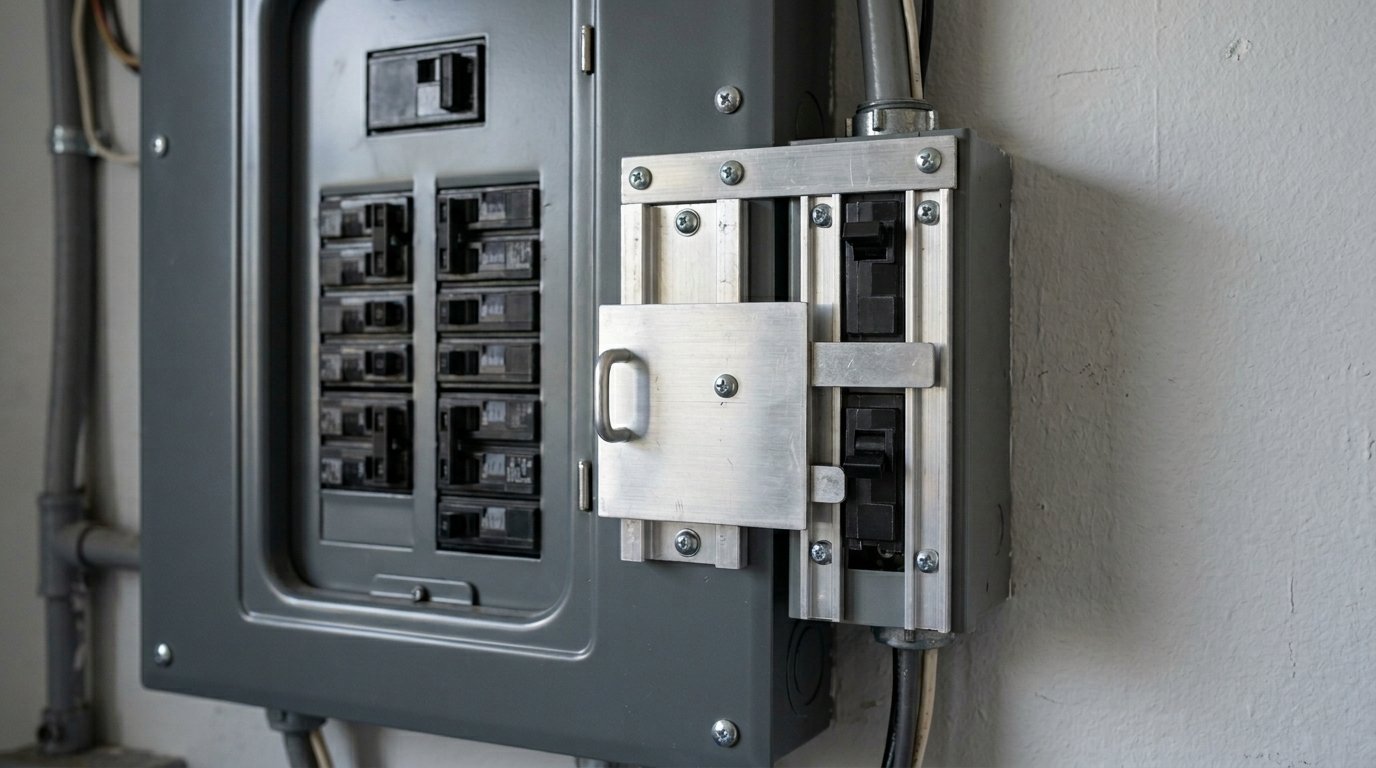
A transfer switch or interlock makes it impossible to back-feed the grid.
When you need a transfer switch
If any of these describe you, a transfer switch is the safe next step.
You own a portable generator
If you have a portable unit but no safe way to connect it, a manual switch or interlock is essential.
You are back-feeding now
Running a generator into an outlet with a cord is deadly and illegal. Stop and get a transfer switch.
Installing a standby generator
A standby unit needs an automatic transfer switch to start and switch over on its own.
Frequent Texas outages
If storms and grid events leave you without power often, a safe generator connection is worth having ready.
Cords running through windows
Extension cords snaking through doors and windows are a trip, fire, and weather hazard a switch removes.
No inlet or switch installed
A generator with no proper inlet box and transfer switch cannot power your home circuits safely.
Why a proper transfer switch matters
A transfer switch turns a generator into safe, usable backup power. Here is what you gain.
No deadly back-feed
The grid is isolated before generator power flows, protecting linemen and you.
Powers real circuits
Run furnace, fridge, and lights from your panel, not a tangle of cords.
Simple switchover
Manual switches make starting backup power a clear, safe routine.
Automatic option
An automatic switch restores power in seconds with no action from you.
Protects equipment
Prevents the damage that happens when grid power returns mid-generator.
Weather-safe inlet
A proper exterior inlet keeps cords and connections out of the weather.
Code and legal
Installed to code and permitted, unlike a back-feed setup.
Ready before the storm
Set up in advance so you are not improvising during an outage.
Have a generator but no safe way to connect it?
We install transfer switches and interlocks to code. Get a free assessment and an honest quote.
(469) 327-8678How a transfer switch installation works
We start by matching the switch to your generator and goals. For a standby generator, that is an automatic transfer switch sized to your service that senses an outage, isolates the utility, starts the generator, and switches your panel over, then reverses when power returns. For a portable generator, it is typically a manual transfer switch with a selection of circuits, or a code-approved interlock kit on your main panel paired with an exterior inlet.
Then we install it correctly. We mount the switch at or beside your panel, run the wiring for the circuits it will control, and for portable setups we install a weatherproof inlet box on the exterior where you will connect the generator cord. The whole point of the device is mechanical and electrical certainty that the utility and the generator can never energize your wiring at the same time, so we verify that interlock works exactly as it should.
Finally we ground it, label the controlled circuits clearly so anyone can operate it in an emergency, test the switchover, and pull the permit for inspection. For a manual setup we walk you through the simple sequence to start backup power safely. For an automatic system we simulate an outage so you can see it work. Either way, you finish with a generator connection that is safe, legal, and ready.
Automatic, manual, or interlock, and why back-feeding kills
The right transfer solution depends on your generator. An automatic transfer switch is for standby generators and is completely hands-off, ideal if you travel or simply want power restored in seconds. A manual transfer switch is the common choice for portable generators, giving you a clear panel of switches for selected circuits. An interlock kit is a code-approved, lower-cost option that physically prevents the main breaker and the generator breaker from being on at the same time, letting you back-feed your own panel safely through a dedicated breaker and inlet. We explain the tradeoffs so you choose what fits.
It is worth being blunt about why this matters. Connecting a generator without a transfer device, by running a cord into an outlet or wiring it straight to the panel, sends power backward onto the utility lines. A worker repairing those lines can be electrocuted by your generator, and when the utility restores power it collides with your running generator and destroys equipment, sometimes violently. This is not a theoretical risk, and it is why the code and the law require proper isolation.
Every option we install shares the same core guarantee: the grid and the generator are never connected at once. That is the difference between backup power you can trust and a setup that endangers your family and your neighbors.
A transfer switch installation
Every High Power transfer switch install is code-compliant and clearly labeled, not an improvised hookup.
- Assessment of your generator and the circuits to back up
- Right transfer solution: automatic, manual, or interlock
- Switch sized to your generator and service
- Wiring of the controlled circuits to the switch
- Weatherproof exterior inlet for portable generators
- Verified interlock so grid and generator never mix
- Grounding and bonding checked
- Clear labeling of controlled circuits for emergencies
- City of Dallas permit and inspection handled
- Switchover test and a walkthrough of safe operation
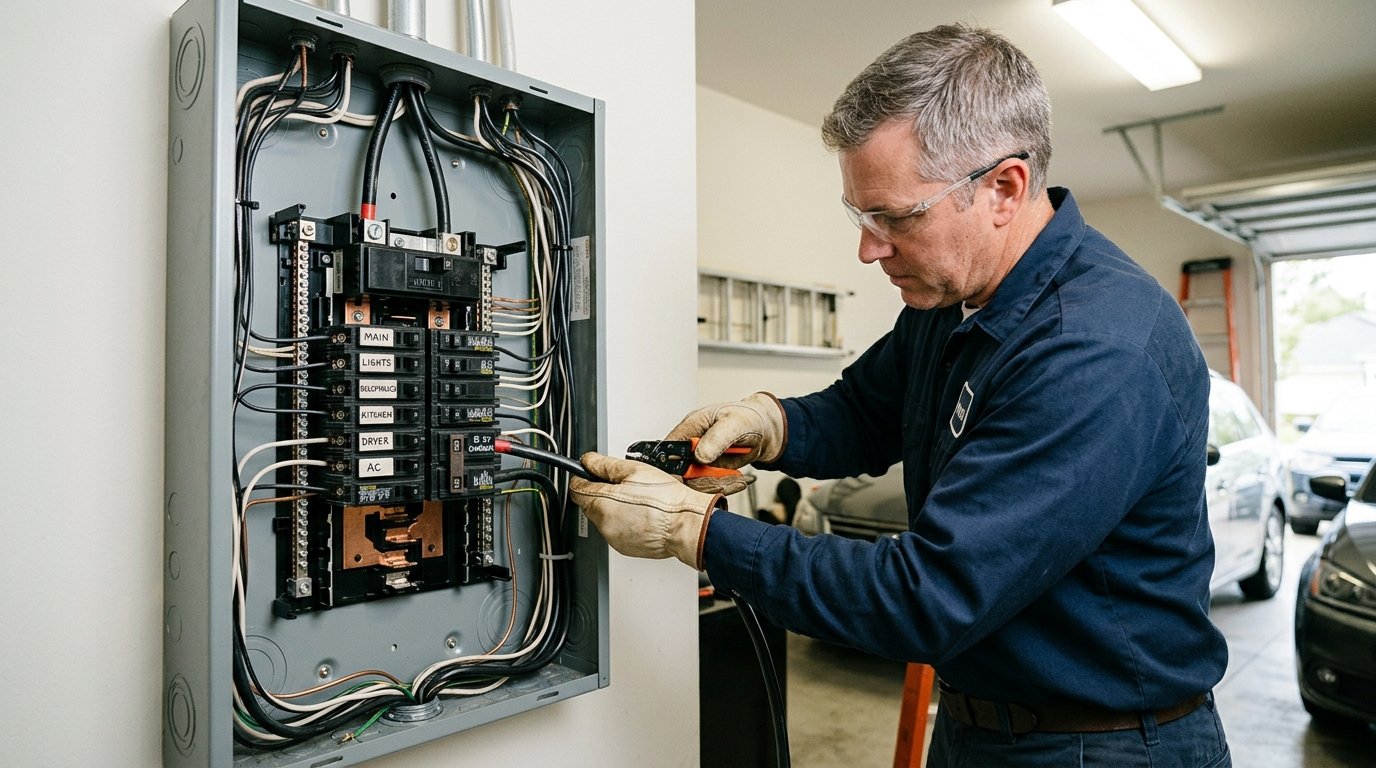
Back-feeding versus a proper transfer switch
There is no safe shortcut for connecting a generator. Here is the honest comparison.
DIY or unlicensed
- A double-male cord that energizes utility lines
- Risk of electrocuting a lineman restoring power
- Equipment destroyed when grid power returns
- No overload protection on improvised connections
- Cords through windows, a trip and fire hazard
- Illegal and uninsurable if something goes wrong
Licensed electrician
- The grid isolated before generator power flows
- Linemen and your family kept safe
- Equipment protected when utility power returns
- Proper breakers and overload protection in place
- A weatherproof inlet instead of cords through windows
- Code-compliant, permitted, and inspected
What affects the cost of a transfer switch
Pricing depends on the type and scope, not a flat fee. These are the main factors.
Switch type
An interlock kit is the most economical, a manual switch is mid-range, and an automatic switch costs more.
Circuits covered
Backing up a few essential circuits is less than a whole-home automatic system.
Generator size
A larger generator and service need a higher-rated switch.
Inlet and location
The exterior inlet box and the distance to the panel affect labor.
Panel condition
An older or full panel may need work to add the switch or interlock cleanly.
Permit and inspection
City permit fees and inspection are part of compliant work.
These are general planning ranges for the Dallas area, not a quote. Every job is different, so we give you a free on-site assessment and an honest written price before any work starts.
Our transfer switch installation process
From the first call to safe backup power, here is how we handle it.
Free assessment
We review your generator and the circuits you want to back up.
Pick the solution
We recommend automatic, manual, or interlock based on your setup and budget.
Honest quote
You get a clear written price before any work begins.
Permit filed
We pull the City of Dallas permit so the install is documented and inspection-ready.
Install the switch
We mount the switch, wire the circuits, and add the exterior inlet for portable units.
Verify isolation
We confirm the grid and generator can never be connected at once.
Test and train
We test the switchover, label the circuits, and walk you through safe operation.
How long it takes and what to expect
Most transfer switch installations are completed in a single visit, often a half to a full day depending on the type of switch, the number of circuits, and the inlet location. An interlock with an inlet is typically the quickest, while a whole-home automatic transfer switch tied to a standby generator takes longer. We give you a realistic estimate during the assessment.
Power is interrupted only briefly while we tie into the panel. When we finish, you have a labeled, tested transfer setup and a clear understanding of how to bring backup power online safely. For automatic systems we simulate an outage so you can watch it switch over before we leave.
Why Dallas homeowners add transfer switches
Outages are simply part of life in North Texas. Severe storms, high winds, summer grid strain, and the occasional winter freeze all knock out power across the metro, sometimes for hours and sometimes for days. Many Dallas homeowners already own a portable generator for exactly these moments, but a surprising number have no safe way to connect it.
That gap is where the danger lives. During an outage, the temptation to run a cord into an outlet or wire a generator straight to the panel is strong, and it is exactly the improvisation that endangers utility crews and destroys equipment. Installing a transfer switch or interlock ahead of time turns that risky scramble into a calm, safe routine.
The Texas climate also shapes the install. Exterior inlets and connections have to stand up to heat, sun, and driving rain, so we use weatherproof equipment and mount it sensibly. For homeowners moving up to a standby generator, an automatic transfer switch is the natural pairing for hands-off power.
Because we install transfer switches throughout Dallas, we know the local permitting and inspection process and how to set up both portable and standby connections cleanly, so your generator is ready and safe before the next storm arrives.
The licensed Dallas team homeowners trust
Licensed pros
Texas TECL #38291 electricians who install it to code.
Upfront pricing
A clear written price for the right switch before we start.
Safety first
Verified isolation so the grid and generator never mix.
We answer 24/7
Real people on the phone, with fast scheduling.
Transfer switch FAQs
It safely connects a generator to your home's wiring by switching your circuits between utility power and generator power, and it ensures the two sources can never be connected at the same time. That prevents dangerous back-feed and protects utility workers and your equipment.
Running a generator into an outlet with a double-male cord back-feeds power onto the utility lines. It can electrocute a lineman, start a fire, and destroy your equipment when grid power returns. It is illegal and deadly. A transfer switch or interlock is the safe, legal way to connect.
An automatic transfer switch pairs with a standby generator and switches over on its own within seconds of an outage. A manual transfer switch pairs with a portable generator and lets you switch selected circuits by hand. We recommend the one that fits your generator and needs.
An interlock kit is a code-approved, lower-cost device on your main panel that physically prevents the main breaker and a generator breaker from being on at the same time. With an exterior inlet, it lets you safely back-feed your own panel through a dedicated breaker. It is a popular option for portable generators.
Yes, to power your home's circuits safely. A portable generator should connect through a manual transfer switch or an interlock with a proper inlet, never directly into an outlet. This protects you, your equipment, and utility crews.
Yes. Standby generators use an automatic transfer switch, which we size to your service and install so the system starts and switches over on its own. We commonly install these as part of a whole standby generator setup.
It ranges from a handful of essential circuits with a manual switch to your entire panel with a whole-home automatic switch or interlock. We help you decide which circuits matter most and size the solution accordingly.
Yes. It is permitted electrical work in the City of Dallas. We pull the permit and pass inspection so the install is documented and compliant, which also matters for insurance.
For portable generators we install a weatherproof inlet box on the exterior of your home. You run one cord from the generator to the inlet, which feeds the transfer switch, instead of stringing cords through windows.
Most installs are done in a half to a full day. An interlock with an inlet is usually quickest, while a whole-home automatic transfer switch takes longer. We give you a realistic estimate during the assessment.
Yes, when installed correctly. An interlock is a code-approved method that provides the same essential protection, making it physically impossible to connect the grid and generator at once. It is simply a different, often more economical, way to achieve safe transfer.
Yes. We provide a free assessment of your generator and the circuits you want to back up, so you get an accurate written quote and the right recommendation before any work begins.