Does Your Older Dallas Home Need Rewiring? Signs, Cost, and What to Know
How to tell whether your older home needs rewiring, what it costs, and how to update century-old wiring without losing the home's character.
Quick Answer
Older Dallas homes often need rewiring when they still have knob-and-tube or early cloth-insulated wiring, two-prong ungrounded outlets, frequent trips or flickers, or warm outlets and burning smells. The reassuring news is that not every old home needs a full rewire. A licensed electrician can tell you exactly what yours needs, and often update the wiring in stages, fishing new circuits through the walls with minimal disruption rather than gutting the house.
Dallas is full of beautiful old homes, and old wiring
Dallas is full of wonderful older homes, the 1920s Tudors of the M Streets, the historic cottages of Oak Cliff, the Victorians of State-Thomas, the mid-century houses across the city, and they come with character you cannot build new. They also often come with wiring that is decades, sometimes a century, old, and that is where rewiring enters the picture.
Wiring has a service life, and the type tells you a lot. Homes built before about 1950 may still have knob-and-tube wiring, the earliest residential system, while many 1950s and 1960s homes used cloth-insulated cable. Both can become brittle, ungrounded, and unable to handle modern electrical demand, and both have outlived the era they were built for. Rewiring replaces them with modern grounded copper that is safe and ready for how you actually live.
Not every old home needs a full rewire, though, and the goal of this guide is to help you tell the difference. Below we cover the clear signs your home may need rewiring, why aging wiring becomes a hazard, whether you need a full or partial rewire, and what it costs to do in Dallas, character intact.
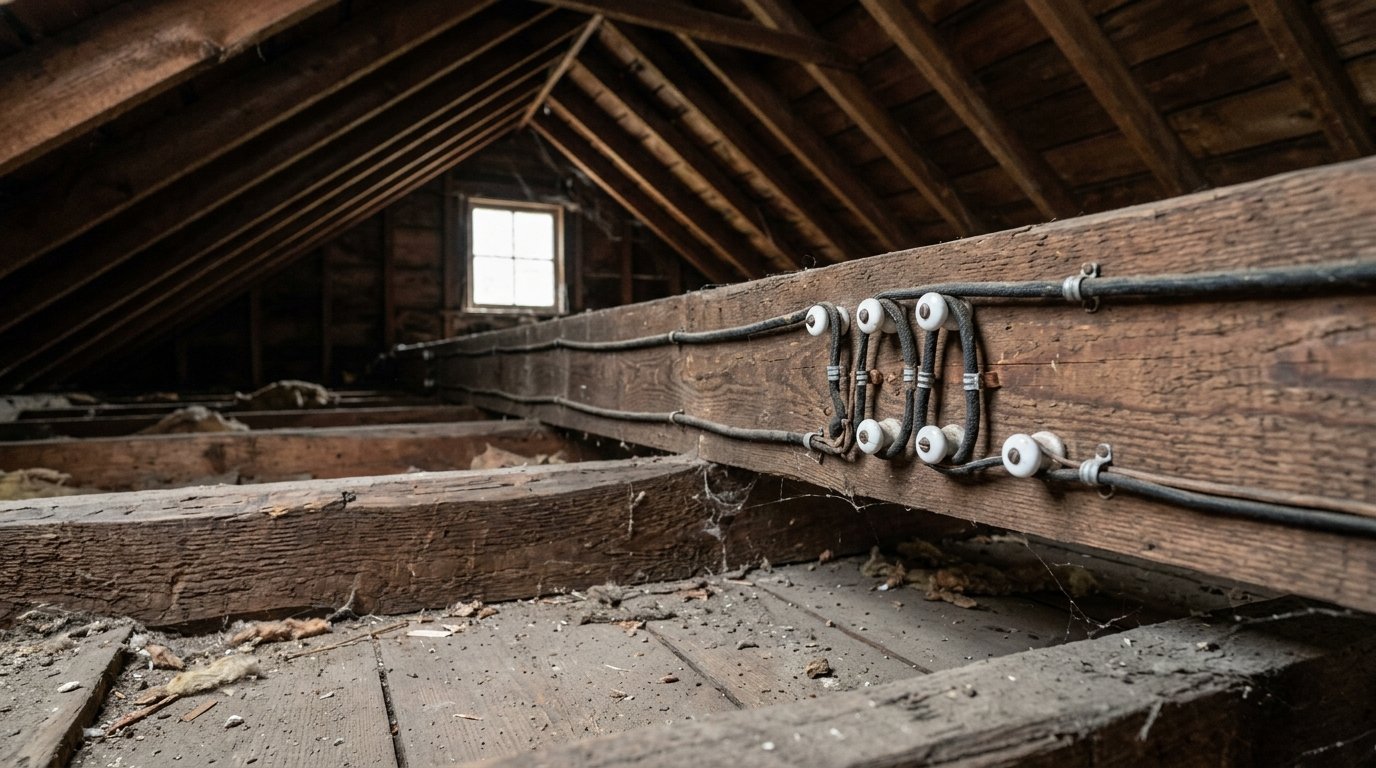
Knob-and-tube and cloth-insulated wiring have outlived the era they were built for.
Signs your home may need rewiring
A few of these together are a strong reason for a professional assessment.
Knob-and-tube or cloth wiring
If your home still has its original knob-and-tube or cloth-insulated wiring, it has likely outlived its safe service life and is a candidate for rewiring.
Two-prong, ungrounded outlets
Outlets with only two slots have no ground, offering no protection for you or modern electronics. It is a clear sign of outdated wiring.
Frequent trips, flickers, or dimming
Persistent tripping, flickering, or dimming, especially across the home, can mean the wiring is failing or simply cannot keep up.
Warm outlets or a burning smell
Warm or discolored outlets and switches, or any burning odor, point to deteriorating connections and need urgent attention.
Sparking or scorched outlets
Sparks when plugging in, or scorched and blackened outlets, are serious warning signs of failing old wiring.
Too few outlets, or insurance trouble
Living on extension cords because there are too few outlets, or being flagged by an insurer or inspector, both signal wiring overdue for an update.
Knob-and-tube, cloth wiring, and why age matters
The two older wiring systems you find in Dallas homes each have their issues. Knob-and-tube wiring, common before about 1950, runs ungrounded conductors through ceramic knobs and tubes; it was fine for the light loads of its day, but it has no ground, its insulation grows brittle with age, and it is easily, and dangerously, buried under modern insulation. Our knob-and-tube replacement updates it to modern standards.
Cloth-insulated cable, common into the 1960s, is a step newer but ages poorly too. The cloth and early rubber insulation becomes brittle and cracks over the decades, exposing conductors and creating fire and shock risks at exactly the points where it has degraded. We address it with cloth wiring replacement, updating the runs that need it.
Beyond safety, there is capacity. These old systems were built for a few lights and a radio, not central air, modern kitchens, electronics, and EV charging. So even where old wiring is not yet failing, it often simply cannot support how a family lives today, which is why rewiring usually goes hand in hand with modernizing a home.
Wondering what your old home's wiring really needs?
We assess it honestly, tell you whether it is a full or partial job, and give you a clear written quote.
(469) 327-8678Do you need a full rewire, or just part of it?
Here is the question every owner of an older home wants answered: is this a whole-house job or not? Often it is not. When only certain circuits have failing wiring, or when the worst areas can be prioritized, we can rewire in stages, addressing the highest-risk runs first and the rest over time. That makes an older home safer without a single overwhelming bill or project.
A full rewire makes the most sense in a few situations: when knob-and-tube or cloth wiring runs throughout the home and is failing, when you are already remodeling and walls are open, or when the home is being brought fully up to date. In those cases, doing it all at once is more efficient and gives you a completely modern, grounded system. A licensed inspection is the way to know which path fits your home.
Whatever the scope, the craft matters in a Dallas home with character. We fish new grounded circuits through plaster, trim, and historic construction with as little disruption as possible, preserving the woodwork, archways, and details that make these homes special. Updating the wiring should not mean sacrificing the home.
Risky shortcuts vs proper rewiring
Fake fixes hide the hazard. Proper rewiring removes it for good.
DIY or unlicensed
- Swapping two-prong outlets for three-prong with no ground
- Ignoring old wiring because the lights still work
- Patching failing circuits without addressing the cause
- Burying knob-and-tube under new insulation
Licensed electrician
- Inspect and map the wiring to plan the right scope
- Replace old wiring with modern grounded copper
- Fish new circuits with minimal damage to finishes
- Permit, inspect, and document the work
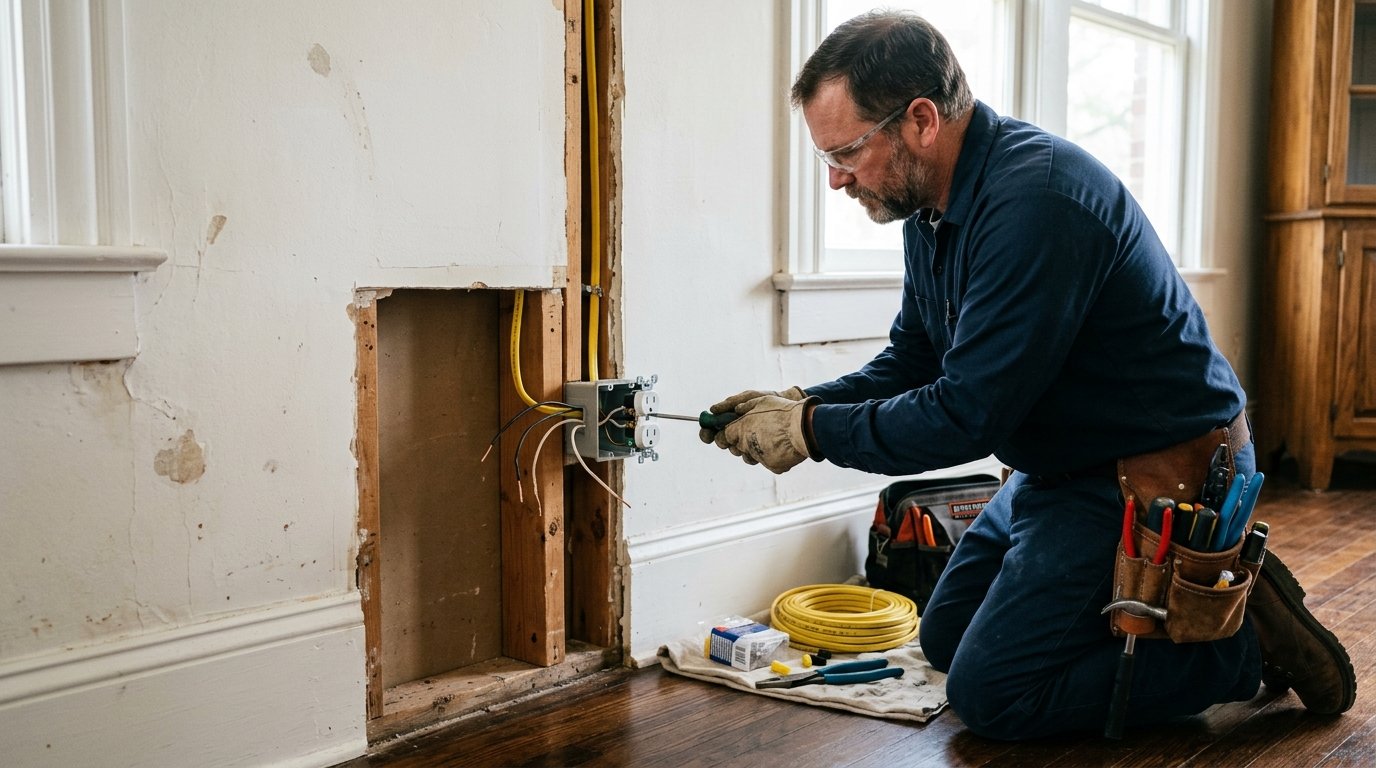
Rewiring updates an old home with modern grounded copper, safely and to code.
What rewiring costs in Dallas
Rewiring cost depends mostly on scope and access. A partial rewire of a few problem circuits is far less than a whole-house job, and the price is shaped by the home's size, the type of wiring being replaced, and how easy it is to reach, an accessible attic and crawlspace are simpler than a slab home with finished plaster everywhere. Doing the work during a remodel, while walls are open, is the most cost-effective time of all.
Two things often go together with rewiring. The first is a panel upgrade, since a home old enough to need rewiring usually has an undersized panel too, and pairing them is efficient. The second is staging: when a full rewire is more than the budget allows at once, we can phase it, making the home safer step by step.
Historic Dallas neighborhoods see this constantly. Homes across the M Streets, Oak Cliff, and Kessler Park are routinely updated with restoration-sensitive rewiring. Because every old home is different, we give a free on-site assessment and an honest written price before any work begins, with no one-size number.
Our rewiring process
A clear, restoration-sensitive path from inspection to a modern, safe home.
Inspect and plan
We examine the wiring, identify the type and condition, and plan the right scope, full or staged.
Clear written quote
You get an honest, itemized price, with staging options if a full rewire is more than you want at once.
Rewire with care
We replace the wiring with modern grounded copper, fishing it through with minimal disruption to finishes.
Inspect and restore
We pull the permit, pass inspection, and leave the home clean, safe, and ready for modern life.
Rewiring FAQs
Common signs include knob-and-tube or cloth-insulated wiring, two-prong ungrounded outlets, frequent trips or flickers, warm or discolored outlets, a burning smell, and reliance on extension cords. Insurance or inspection flags are another. A licensed electrician can confirm with an inspection and tell you the scope.
Knob-and-tube is the earliest residential wiring, common before about 1950, running ungrounded conductors through ceramic supports. It can be safe if undisturbed and intact, but its insulation grows brittle with age, it has no ground, and it is hazardous when buried under insulation or overloaded. It is usually a candidate for replacement.
It can be. Brittle, cracked insulation, ungrounded circuits, and connections that have loosened over decades all create fire and shock risks, and older systems were never built for modern loads. Not every old home is in danger, but old wiring should be assessed by a licensed electrician rather than assumed safe.
Often no. When only some circuits have failing wiring, we can rewire in stages, addressing the worst first. A full rewire makes sense when old wiring runs throughout and is failing, or when you are already remodeling. An inspection tells you which path fits your home.
In most cases, largely yes. We fish new grounded circuits through walls, attics, and crawlspaces with as little disruption as possible, opening only small, strategic access points and protecting plaster, trim, and historic details. Some patching is normal, but we work to preserve the home.
It depends on the home's size, the wiring type, accessibility, and whether it is a full or partial job. A partial rewire is far less than a whole-house one, and doing it during a remodel is most cost-effective. Because every old home differs, we give a free assessment and an honest written price.
It can. Some insurers ask about knob-and-tube or aluminum wiring and may decline, charge more, or require updates. Rewiring, documented by a licensed electrician, addresses the concern and often satisfies the insurer, while also protecting your safety and home value.
Not safely on their own. Swapping a two-prong outlet for a three-prong one without an actual ground is a dangerous fake fix, it looks grounded but is not. The right solution is to add grounding or proper protection, which a licensed electrician handles correctly. We will recommend the safe approach for your wiring.
A partial rewire of a few circuits can be quick, while a whole-house rewire takes longer and may span several days, especially in an occupied home. We give you a realistic timeline with your quote and work to minimize disruption to your daily life.