Cloth Insulation Wiring Replacement in Dallas
Need cloth wiring replaced in Dallas, TX (75247)? High Power Electrical Services safely replaces deteriorating cloth-insulated wiring in older Dallas homes with modern grounded copper, handling the permit and inspection so your home is safe, insurable, and up to code.
Quick Answer
Cloth-insulated wiring, the fabric-wrapped wiring common in homes from roughly the 1920s through the 1950s, becomes a hazard as it ages. The insulation grows brittle, cracks, and crumbles, exposing live conductors, and the wiring usually has no ground. We replace it with modern grounded copper, sized for how you live today, and handle the permit and inspection.
Replace aging cloth wiring before the insulation fails
Cloth-insulated wiring was standard in American homes for decades in the early and middle twentieth century. The conductors were insulated with fabric, often over an inner layer of rubber, and in its day it was perfectly serviceable. The problem is time. After many decades, that cloth-and-rubber insulation dries out, turns brittle, and begins to crack and crumble, and once the insulation is gone, bare energized conductors are exposed.
That deterioration is exactly what makes old cloth wiring dangerous. Exposed conductors raise the risk of shorts, arcing, shock, and fire, and the insulation is often so fragile that simply disturbing the wiring during another project causes it to flake away. On top of that, wiring from this era typically has no ground wire, so it cannot safely serve the three-prong outlets and electronics a modern home depends on.
There is a practical dimension too. Like other outdated wiring, deteriorating cloth insulation is a common flag during home inspections and can complicate insurance, since carriers are wary of aging wiring that no longer has intact insulation. Replacing it removes that obstacle and protects the value and safety of the home.
We treat a cloth-wiring rewire as the careful project it is. We assess how much deteriorated wiring is still in service, plan modern grounded circuits around how your family uses the home, fish new wiring with care for your plaster and finishes, and bring everything to current code with the permit and inspection handled. The result is a safe, modern electrical system in a home worth preserving.
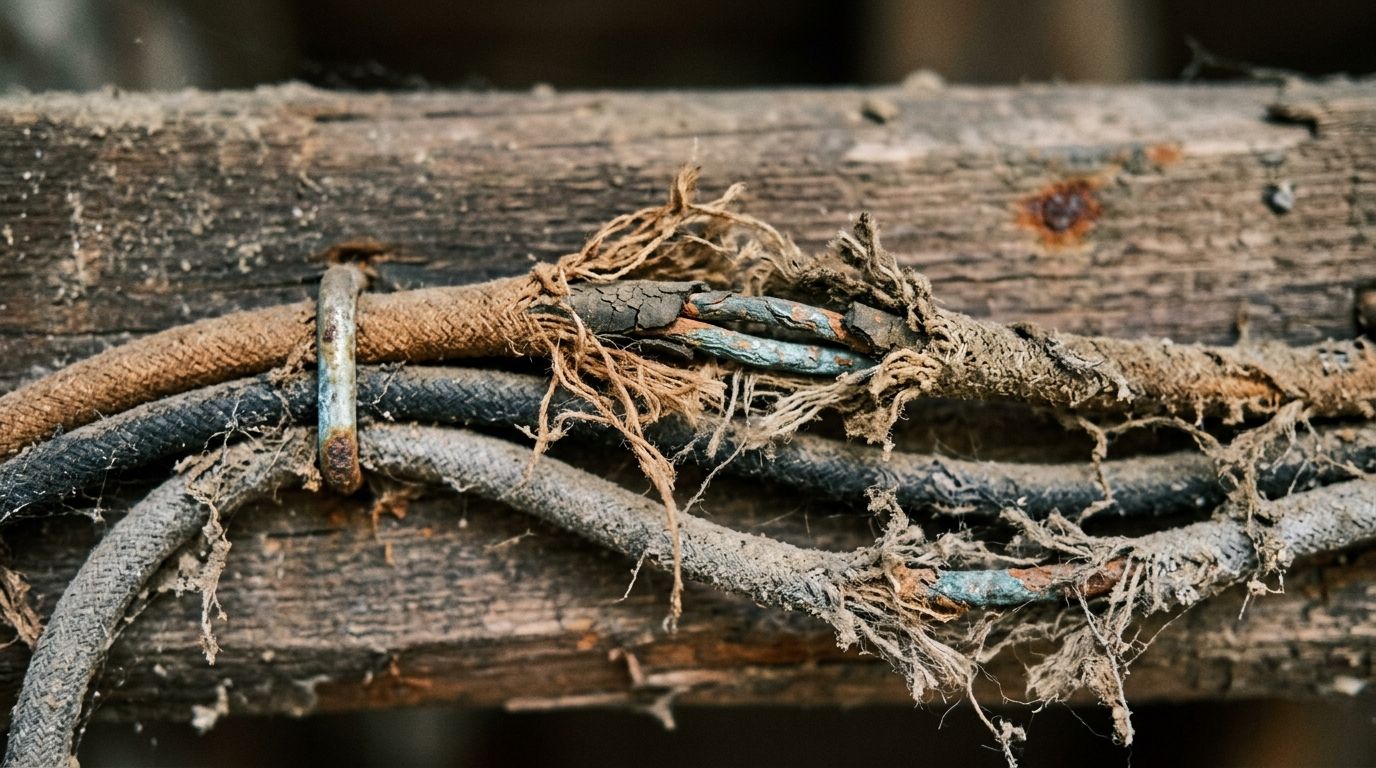
As cloth insulation ages it cracks and crumbles, exposing bare energized conductors.
Signs your home has failing cloth wiring
Aging cloth insulation gives warning signs. If you notice any of these, have it evaluated.
Cracked or crumbling insulation
Fabric insulation that is brittle, flaking, or falling off exposes live conductors and is a real hazard.
Home built 1920s to 1950s
Houses from this era frequently still have original cloth-insulated wiring in walls and boxes.
Two-prong outlets
Ungrounded two-prong outlets throughout point to old wiring with no ground.
Exposed conductors at boxes
Bare wire visible at outlets, switches, or the panel means the insulation has failed.
Warm or scorched devices
Heat or scorching at outlets and switches points to aging connections that need attention.
Insurance or sale flagged it
If an insurer or inspector noted cloth wiring, replacement clears the path forward.
Why replacing cloth wiring is worth it
A rewire removes a real hazard and brings the home up to date. Here is what you gain.
Lower fire and shock risk
Modern insulated copper replaces brittle, failing insulation and exposed conductors.
Real grounding
Grounded three-prong outlets safely serve today's electronics.
Handles modern loads
Right-sized circuits support the demands an old home never anticipated.
Easier to insure
Removing deteriorated cloth wiring clears a common insurer concern.
Protects resale
Updated wiring removes a frequent inspection red flag.
Safe to work on
New wiring can be modified and extended without the insulation crumbling.
Code-compliant
Every new circuit meets current NEC and Dallas requirements.
Peace of mind
Confidence that hidden wiring is safe rather than failing.
Found crumbling old wiring in your home?
We replace deteriorating cloth wiring safely and handle the permit. Get a free on-site assessment.
(469) 327-8678How a cloth wiring rewire works
We begin by tracing how much deteriorated cloth wiring is still in service. Over the decades, parts of a home may have been rewired while others were left original, so we map the active runs, note where wiring is accessible through the attic, basement, or crawlspace, and identify the finished walls that need careful fishing. That plan keeps the project efficient and limits damage to your plaster and trim.
Then we run modern circuits. New grounded copper cable replaces the deteriorated conductors, routed to current code with the right wire gauge and breaker for each circuit. We install grounded outlets, update switches, and tie everything into the panel. Because handling brittle cloth wiring tends to make the insulation crumble further, we remove or safely retire the old runs rather than disturbing and leaving them, which also avoids creating new hazards during the work.
Many older homes with cloth wiring also have an aging panel or service that cannot properly support a modern, fully grounded home, so we address that as part of the plan when it applies. Throughout, we fish wiring through existing cavities wherever possible, make neat access openings only where needed, coordinate on patching, and pull the City of Dallas permit. The work is inspected, so you finish with documentation that the wiring is safe and compliant.
Cloth wiring versus knob-and-tube, and scope
Cloth-insulated wiring and knob-and-tube are both found in older homes and often confused, but they are not the same. Knob-and-tube runs individual conductors through ceramic knobs and tubes with the insulation exposed to air. Cloth wiring refers to conductors insulated with fabric, often in an early cable form, where the fabric insulation itself is what deteriorates. Some older homes actually have both, along with stretches of newer wiring from past updates. We identify exactly what you have, because the right plan depends on it.
Scope is something we are honest about. If previous owners already replaced part of the system, you may only have deteriorated cloth wiring in certain areas, and a phased approach can make sense, with each stage safe and complete on its own. Where a full rewire is the right call for safety and value, we will say so plainly rather than leaving a half-finished hazard. The goal is always a system that is safe as a whole, not a patchwork.
We also coordinate the rewire with any related work that makes sense to do at the same time, like a panel upgrade, new circuits for a remodel, or grounding for a home office. Doing it together saves opening the same walls twice and gives you one coherent, modern electrical system rather than layers of different eras stacked on top of each other.
A cloth wiring rewire
Every High Power rewire is a planned, permitted, code-compliant project, not a patch over failing insulation.
- Free on-site assessment of active cloth wiring
- Circuit-by-circuit rewire plan around your layout
- Modern grounded copper cable to current code
- Grounded three-prong outlets and updated switches
- Correctly sized breakers for each new circuit
- Removal or safe retirement of deteriorated runs
- Panel or service upgrade coordinated when needed
- Careful wire fishing to limit wall and plaster damage
- City of Dallas permit and inspection handled
- Coordination on patching and a clean finished result
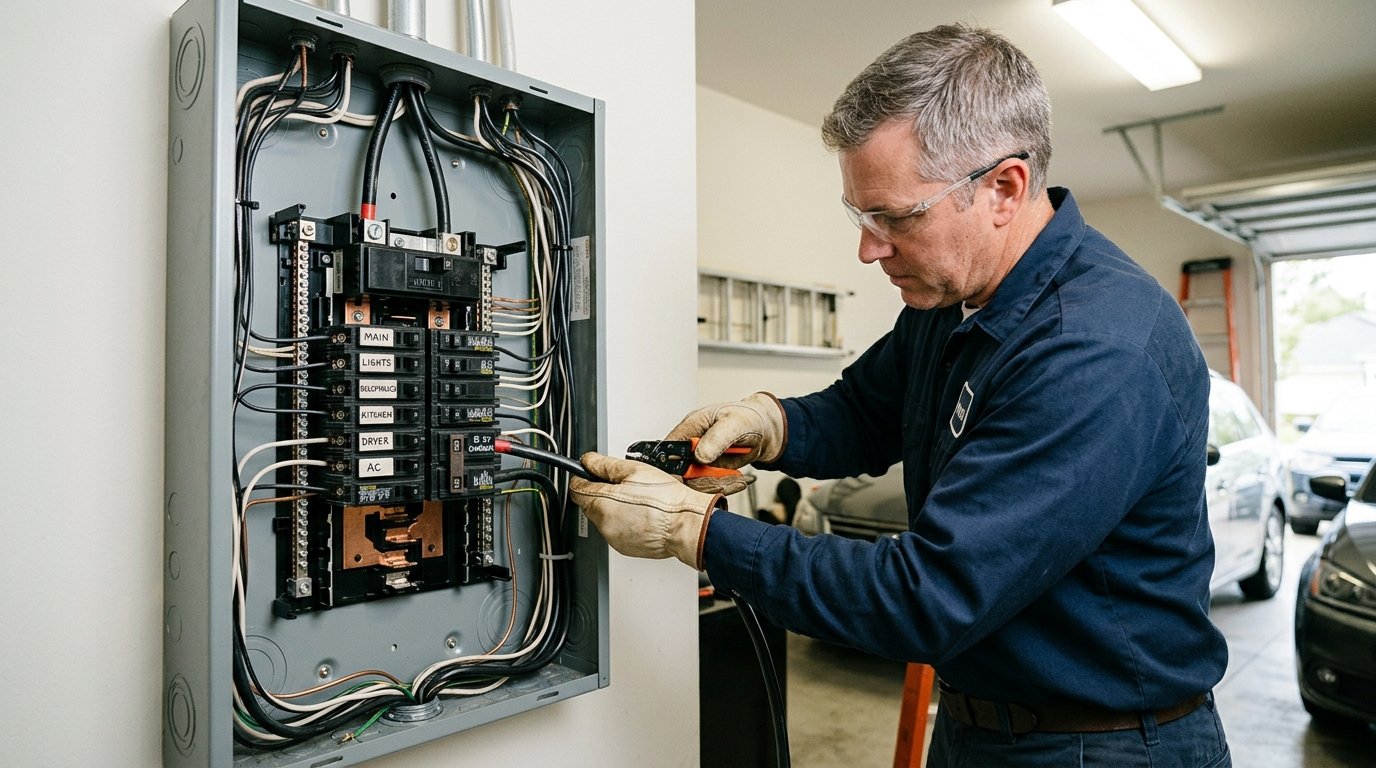
DIY or patching versus a licensed rewire
Brittle cloth insulation crumbles when disturbed, so shortcuts make things worse. Here is the honest comparison.
DIY or unlicensed
- Disturbing brittle wiring so insulation crumbles more
- Splicing modern wire onto failing old conductors
- No ground, so three-prong outlets are unsafe
- Exposed conductors left in walls and boxes
- Unpermitted work that fails inspection and insurance
- Overloaded old circuits never built for modern loads
Licensed electrician
- Deteriorated runs removed or safely retired
- New grounded copper sized for modern loads
- Proper grounding for safe three-prong outlets
- No exposed conductors left behind
- Permitted and inspected work, documented for resale
- Right-sized circuits and panel for how you live now
What affects the cost of a rewire
Rewiring is priced to the home, not a flat number. These are the main factors.
Extent of active wiring
How much deteriorated cloth wiring remains in service is the biggest driver of scope.
Home size and layout
Square footage, the number of circuits, and the floor plan affect the work.
Access to the wiring
Open attics and basements are faster than fishing through finished plaster walls.
Panel or service upgrade
Older homes often need a panel or service upgrade as part of a proper rewire.
Patching and finishes
Coordinating drywall or plaster patching where access was needed adds to the project.
Permit and inspection
City permit fees and inspection are part of a compliant, documented rewire.
These are general planning ranges for the Dallas area, not a quote. Every job is different, so we give you a free on-site assessment and an honest written price before any work starts.
Our cloth wiring replacement process
From the first walkthrough to a safe, modern system, here is how we handle it.
Free assessment
We trace the active cloth wiring and map what needs to be replaced.
Rewire plan
We design modern grounded circuits around how your home is used and accessed.
Honest quote
You get a clear written scope and price, including any panel work, before we start.
Permit filed
We pull the City of Dallas permit so the rewire is documented and inspection-ready.
Run new circuits
We install grounded copper, outlets, and switches, fishing walls to limit damage.
Retire old wiring
We remove or safely retire the deteriorated cloth runs and tie into the panel.
Inspect and finish
We test, pass inspection, coordinate patching, and walk you through the work.
How long it takes and what to expect
Timeline depends on the size of the home and how much active cloth wiring remains, but most whole-home rewires run several days to a couple of weeks, while a partial rewire of a few circuits is much faster. During the assessment we give you a realistic schedule and explain how we will sequence the work to keep the home livable, since we can usually keep parts of the house powered while we work area by area.
We plan around your daily life, protect floors and furnishings, and keep access openings neat and limited. When the work is complete and inspected, you have a fully grounded, modern electrical system with no failing insulation left behind, clear documentation for insurance and resale, and the confidence that the wiring in your walls is safe.
Cloth wiring in Dallas's older homes
Dallas has a deep stock of early and mid-twentieth-century homes, and many of them still carry original cloth-insulated wiring in their walls and attics. Established neighborhoods full of homes from the 1920s through the 1950s are exactly where we find fabric-insulated conductors that have spent decades drying out and growing brittle.
These homes are worth preserving, and a careful rewire is part of keeping them safe for the next generation. The challenge is balancing modern safety with the character of an older home, which means fishing wiring thoughtfully, limiting damage to original plaster and trim, and planning circuits that respect how the house is laid out rather than forcing a one-size approach.
The Texas heat does aging insulation no favors. Hot attics and walls accelerate the drying and cracking of old cloth insulation, so wiring that held up for years can reach a failing, crumbling state, often discovered when a homeowner opens a box for another project or during an inspection. Insurance and resale frequently bring the issue to the surface as well.
Because we work in these older neighborhoods regularly, we know the quirks of period construction, how to tell cloth wiring from knob-and-tube and newer cable, and how to modernize an older home's wiring cleanly, safely, and with respect for what makes it special.
The licensed Dallas team homeowners trust
Licensed pros
Texas TECL #38291 electricians experienced with older Dallas homes.
Upfront pricing
A clear written scope and price, including panel work, before we start.
Code-first
Every new circuit grounded and inspected to NEC and Dallas code.
We answer 24/7
Real people on the phone, with honest guidance on scope.
Cloth wiring replacement FAQs
It becomes dangerous as it ages. The fabric and rubber insulation dries out, cracks, and crumbles, exposing live conductors, which raises the risk of shorts, arcing, shock, and fire. The wiring also usually has no ground. For most homeowners, planning a replacement is the safe long-term move.
Knob-and-tube runs individual conductors through ceramic knobs and tubes with the insulation exposed to air, while cloth wiring refers to conductors insulated with fabric, often in an early cable form, where the fabric itself deteriorates. Some older homes have both. We identify exactly what your home has.
Carriers are increasingly wary of aging wiring with deteriorating insulation, and some will not write or renew a policy until it is addressed. Replacing it commonly removes that obstacle. Policies vary, so check with your insurer, but a documented rewire is what they typically want to see.
Not always. If only part of your home still has active cloth wiring, we can plan a phased approach so each stage is safe and complete on its own. Where a full rewire is the right call for safety and value, we will tell you honestly.
Decades of heat and age dry out the fabric and rubber insulation until it loses all flexibility, so disturbing it, even during another project, makes it crack and flake away. That is exactly why we remove or safely retire the old runs rather than disturbing them and leaving them in place.
No. Old cloth wiring was not built to be grounded that way, and trying to retrofit a ground into deteriorating conductors is unsafe and not code-compliant. Proper grounding comes with new wiring, which is why replacement is the real fix.
A whole-home rewire usually takes several days to a couple of weeks depending on size and how much active wiring remains, while a partial rewire is faster. We give you a realistic schedule during the assessment and sequence the work to keep the home livable.
We work to minimize it. We fish wiring through existing cavities wherever possible and make only neat, necessary access openings, then coordinate on patching so the finished result is clean. Some access is unavoidable in finished walls, and we plan it carefully.
Yes. Rewiring is permitted work in the City of Dallas. We pull the permit and pass inspection so the work is documented and compliant, which is exactly what insurers and future buyers want to see.
Often, yes. Many older homes with cloth wiring also have an aging panel or small service that cannot properly support a modern, fully grounded home. We assess this during the walkthrough and include any needed panel or service work in the plan and quote.
Yes. Deteriorating cloth wiring is a frequent red flag during home inspections and can complicate financing and insurance for a buyer. A documented, inspected rewire removes that obstacle and protects your home's value.
Yes. We provide a free on-site assessment to trace the active cloth wiring and map the work, so you get an accurate written scope and quote before any work begins.