AFCI Breaker Installation in Dallas
Need AFCI breaker installation in Dallas, TX (75247)? High Power Electrical Services installs arc-fault breakers that detect the dangerous arcing behind many electrical fires and cut power before it ignites, wired correctly to code and diagnosed properly when one trips.
Quick Answer
An AFCI, or arc-fault circuit interrupter, is a breaker that protects against fire. It recognizes the erratic electrical signature of dangerous arcing, the sparking that happens in damaged, loose, or aged wiring, and cuts power before it can ignite surrounding materials. Code now requires AFCI protection on most living-area circuits, and a licensed electrician installs them correctly and diagnoses any nuisance tripping.
The breaker that guards against electrical fires
A standard breaker protects against overloads and dead shorts, but it cannot see the slow, sparking arc that develops in damaged or deteriorating wiring. Those arcs reach extremely high temperatures in a tiny space and are a leading cause of electrical fires, often inside a wall where no one notices until it is too late. An arc-fault breaker is built specifically to catch that hazard.
An AFCI works by analyzing the current on the circuit for the distinctive, erratic pattern that arcing produces, distinguishing it from the normal arcing of, say, a switch turning on. When it detects a dangerous arc, it trips and cuts power, stopping the event before it becomes a fire. It is the kind of protection that does its most important work in the situations you never see coming.
Because the risk is in habitable spaces, code has steadily expanded AFCI requirements to cover most living-area branch circuits, including bedrooms, living rooms, hallways, kitchens, and similar rooms. New circuits and panel upgrades are required to include this protection, and older homes that predate the rules are common candidates for adding it.
We install AFCI breakers and dual-function breakers that combine arc-fault and ground-fault protection, match them to your panel, and verify they work. We also handle the flip side: when an AFCI trips, we determine whether it is catching a real arcing fault or reacting to a wiring incompatibility, so the fix is correct rather than just swapping in a non-protective breaker.
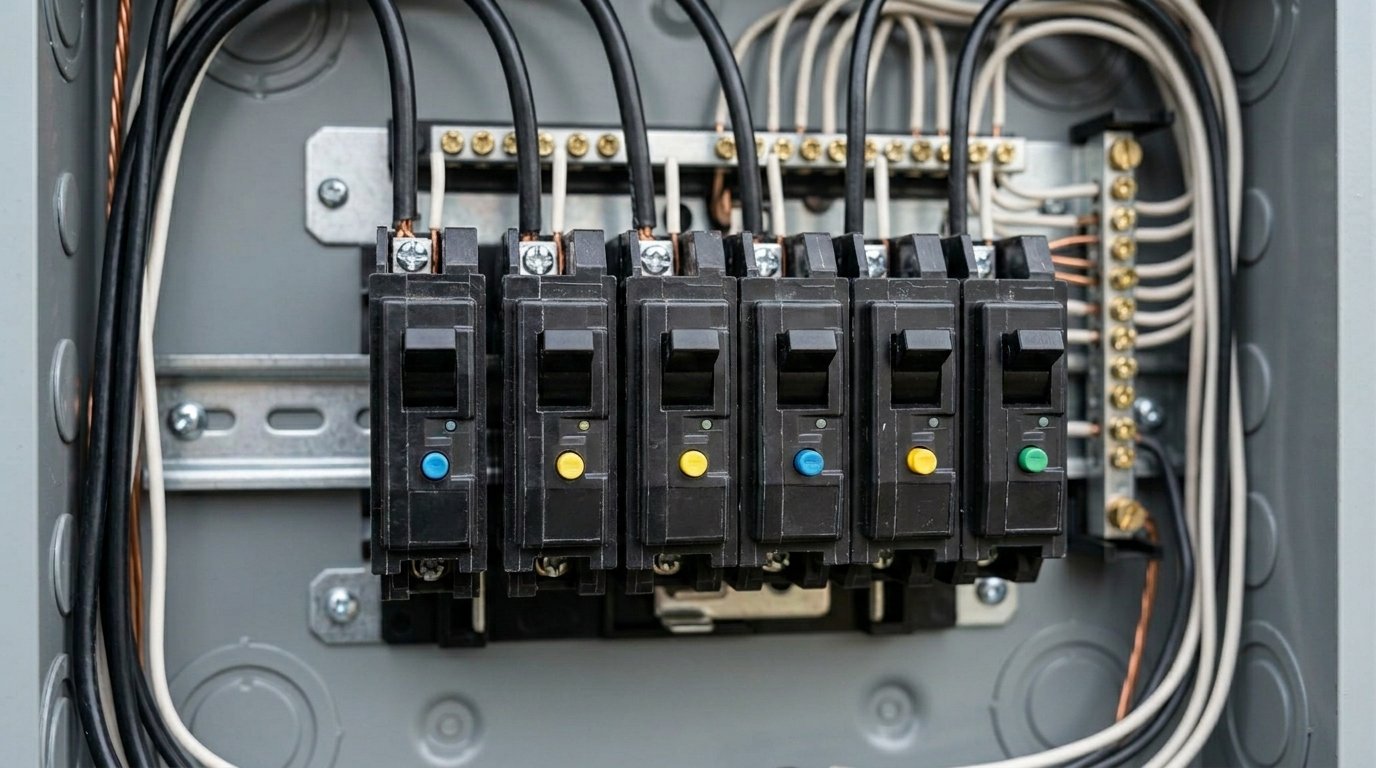
AFCI breakers watch each circuit for the arcing pattern that precedes many fires.
When you need AFCI breakers
If any of these apply, AFCI protection is required, missing, or needs proper diagnosis.
Panel upgrade or new circuits
New work and panel upgrades are required to include AFCI protection on living-area circuits.
Older home without AFCIs
Homes built before the requirements expanded often have no arc-fault protection at all.
An AFCI keeps tripping
Repeated AFCI trips need diagnosis to tell a real arcing fault from a wiring incompatibility.
Remodel or addition
New living-area circuits in a remodel or addition require AFCI protection to pass.
Selling or inspection
Inspections and code reviews increasingly expect AFCI protection where it is required.
You want fire protection
Adding AFCIs is a proactive safety upgrade against a leading cause of electrical fire.
Why AFCI protection matters
Arc-fault protection targets a hazard standard breakers miss. Here is what you gain.
Catches dangerous arcs
Detects the arcing that standard breakers cannot see.
Lowers fire risk
Targets a leading cause of electrical fires in the home.
Meets code
Provides the protection now required on most living-area circuits.
Dual-function option
Combines arc-fault and ground-fault protection in one breaker.
Real diagnosis
We tell whether a trip is a true fault or a wiring issue.
Passes inspection
Clears AFCI items inspectors check on new work and sales.
Whole-circuit coverage
Protects the entire branch circuit from the panel.
Protects where you sleep
Covers bedrooms and living areas where a hidden fire is most dangerous.
Upgrading a panel or fighting AFCI trips?
We install and diagnose arc-fault protection the right way. Get a free assessment and quote.
(469) 327-8678How AFCI breaker installation works
We start with your panel and your circuits. AFCI breakers must match the panel's make and model, just like any breaker, and the right choice may be a standard arc-fault breaker or a dual-function breaker that adds ground-fault protection where a circuit needs both. We identify which living-area circuits require protection, confirm compatibility, and install the correct breakers on the bus, torqued to specification.
Installation is more than dropping a breaker in. AFCIs rely on the circuit's neutral being handled correctly, and shared or mis-wired neutrals, common in older homes, are a frequent reason a freshly installed AFCI trips right away. Part of doing the job properly is making sure each protected circuit is wired in a way the AFCI can monitor correctly, which sometimes means sorting out neutrals that were combined years ago.
Then we test. We confirm each breaker powers its circuit, responds to its test function, and holds under normal load. If a breaker trips during testing, that is information, not a nuisance to bypass. We investigate whether it is detecting a genuine arcing fault in the wiring or reacting to a compatibility issue, and we resolve the real cause rather than defeating the protection.
AFCI, GFCI, dual-function, and nuisance tripping
These devices are easy to mix up, so here is the clean version. An AFCI protects against fire by detecting dangerous arcing in wiring. A GFCI protects against shock by detecting current leaking to ground. A dual-function breaker does both, which is why many circuits today use them. Knowing which protection a given circuit needs is part of getting your home both safe and code-compliant, and it is something we sort out rather than guessing.
Nuisance tripping deserves an honest explanation because it frustrates a lot of homeowners. Sometimes an AFCI trips because it is correctly catching a real arcing fault, which is exactly what you want. Other times it trips due to a wiring incompatibility, such as a shared neutral between two circuits, or interference from certain motors and electronics. The wrong response is to remove the AFCI and lose the protection. The right response is to diagnose why it is tripping and fix that, whether it is separating neutrals, correcting a connection, or addressing a faulty device.
We treat AFCI trips as a diagnostic puzzle with a real answer. Because we understand both the protection and the common causes of false trips, we can keep the fire protection in place and still resolve the tripping, which is the outcome you actually want: a circuit that is both protected and reliable.
AFCI breaker installation
Every High Power AFCI job is matched, wired, and verified, with trips diagnosed rather than bypassed.
- Assessment of which circuits require AFCI protection
- Breakers matched to your panel make and model
- Standard or dual-function breakers as the circuit needs
- Correct neutral handling for reliable operation
- Connections torqued to specification
- Diagnosis of any circuit that trips on test
- Resolution of shared neutrals or wiring issues
- Whole-circuit arc-fault coverage from the panel
- Function test of every breaker installed
- Clear explanation of what is protected and why
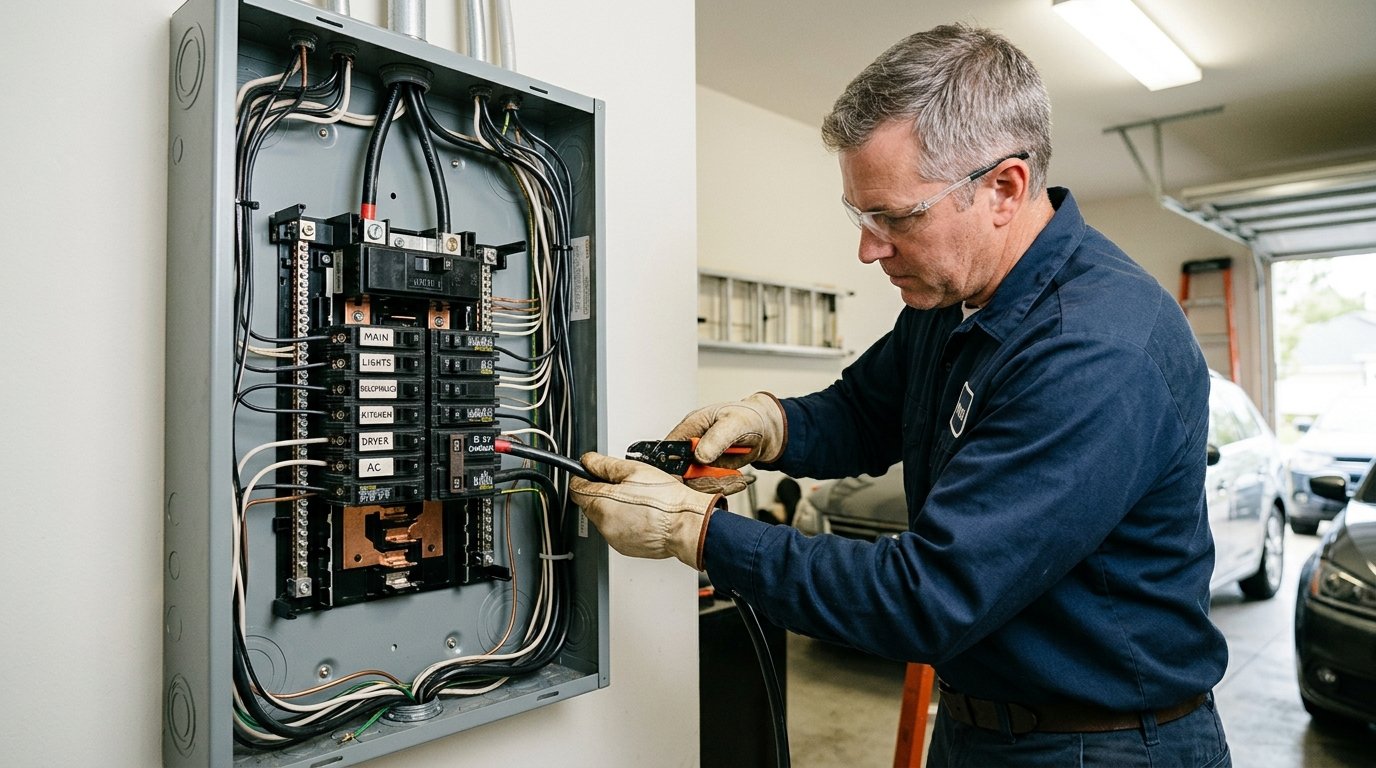
DIY versus a licensed AFCI installation
AFCIs are sensitive to wiring details and live in a dangerous panel. Here is the honest comparison.
DIY or unlicensed
- Working near an energized bus without training
- Wrong breaker for the panel make and model
- Shared neutrals causing immediate nuisance trips
- Removing a tripping AFCI and losing fire protection
- No way to tell a real arc from a wiring issue
- Required living-area circuits left unprotected
Licensed electrician
- Trained work around a safely handled panel
- Breakers matched to your specific panel
- Neutrals corrected for reliable AFCI operation
- Trips diagnosed so protection stays in place
- Real arcing faults distinguished from false trips
- All required circuits properly protected
What affects the cost of AFCI installation
Pricing depends on the circuits and the panel, not a flat fee. These are the main factors.
Number of circuits
Protecting more living-area circuits means more breakers and labor.
Standard or dual-function
Dual-function arc-fault and ground-fault breakers cost more than standard AFCIs.
Panel compatibility
Some panel brands use pricier or harder-to-source AFCI breakers.
Diagnosing trips
Tracing a nuisance trip or a shared-neutral issue adds time.
Wiring corrections
Fixing shared neutrals or connections so AFCIs work reliably can add work.
Permit if required
For larger work a permit may apply, with the fee part of compliant work.
These are general planning ranges for the Dallas area, not a quote. Every job is different, so we give you a free on-site assessment and an honest written price before any work starts.
Our AFCI installation process
From the first call to verified fire protection, here is how we handle it.
Assess circuits
We identify which circuits require AFCI protection and check the panel.
Confirm the breakers
We match standard or dual-function AFCIs to your panel.
Honest quote
You get a clear written price before any work begins.
Install correctly
We seat the breakers, handle neutrals properly, and torque connections.
Test each circuit
We confirm each breaker powers its circuit and holds under load.
Diagnose any trips
If one trips, we find whether it is a real arc or a wiring issue.
Verify and explain
We confirm protection is in place and explain what each covers.
How long it takes and what to expect
Installing AFCI breakers on a set of circuits is often a same-visit job, with timing driven by how many circuits are involved and whether any wiring needs correcting for the AFCIs to work reliably. A clean panel with well-organized circuits goes quickly, while older wiring with shared neutrals takes longer because we resolve those issues rather than ignore them.
Power to the panel is off only briefly while we install. When we finish, the required circuits carry arc-fault protection, every breaker is tested, and if anything tripped we have explained the cause and what we did about it. You end up with fire protection that stays in place and a panel that operates reliably.
AFCI protection in Dallas homes
Because AFCI requirements expanded gradually over successive code cycles, the Dallas housing stock is a patchwork. Newer homes and recently upgraded panels generally have arc-fault protection, while many older homes have little or none. When those older homes get a panel upgrade or a remodel, bringing the living-area circuits up to current AFCI requirements becomes part of the work.
Older wiring is also where nuisance tripping tends to show up. Decades of additions and modifications sometimes left shared neutrals between circuits, which modern AFCIs do not tolerate. That is not a reason to skip the protection, it is a reason to have an electrician who knows how to find and correct the underlying wiring so the AFCIs work properly.
Texas heat and time take their toll on connections too, and arc faults often begin at a loose or deteriorating connection that has quietly worsened for years. An AFCI is designed to catch exactly that kind of developing hazard, which makes it a worthwhile upgrade in homes where the wiring has some age on it.
Because we install and troubleshoot arc-fault protection across the metro, we know how to match breakers to local panels, resolve the wiring quirks that cause false trips, and deliver fire protection that is both compliant and dependable.
The licensed Dallas team homeowners trust
Licensed pros
Texas TECL #38291 electricians who install and diagnose AFCIs.
Upfront pricing
A clear written price before we start, with no surprises.
Code-first
Required circuits protected, wired and torqued to code.
We answer 24/7
Real people on the phone, with fast scheduling.
AFCI breaker FAQs
An AFCI protects against fire. It detects the erratic electrical signature of dangerous arcing, the sparking that occurs in damaged, loose, or aged wiring, and cuts power before it can ignite surrounding materials. Standard breakers cannot see this kind of arc, which is why AFCIs exist.
An AFCI protects against fire by detecting arcing, while a GFCI protects against shock by detecting current leaking to ground. They guard against different hazards. A dual-function breaker combines both, which is why many circuits today use them.
Code now requires AFCI protection on most living-area branch circuits, including bedrooms, living rooms, hallways, kitchens, and similar habitable rooms. New circuits and panel upgrades must include it, and older homes that predate the rules often need it added.
Either it is correctly catching a real arcing fault, which is what you want, or it is reacting to a wiring incompatibility such as a shared neutral, or interference from certain motors or electronics. The right move is to diagnose the cause, not remove the breaker and lose the protection.
No. That removes the fire protection the circuit is required to have and may be masking a real arcing fault. We diagnose why the AFCI trips and fix the actual cause, so you keep the protection and the circuit works reliably.
A dual-function breaker provides both arc-fault and ground-fault protection in a single device. Many modern circuits call for both kinds of protection, and a dual-function breaker covers them in one breaker rather than separate devices.
Yes. We add AFCI breakers to older panels, often as part of a panel upgrade or remodel. Older wiring sometimes needs neutrals sorted out first so the AFCIs operate reliably, which we handle as part of the work.
Many homeowners add them proactively because arc faults are a leading cause of electrical fires and standard breakers do not catch them. Especially in homes with older wiring, AFCI protection is a meaningful safety upgrade.
They must match your panel's make and model, like any breaker. Using the correct compatible AFCI is essential for safe operation, which is one reason this is work for a licensed electrician rather than a guess at the hardware store.
Modern AFCIs are designed to distinguish dangerous arcing from the normal electrical noise of appliances and electronics. Occasional false trips can happen with certain devices or wiring conditions, which is exactly the kind of thing we diagnose and resolve.
Simple breaker swaps may not, while larger work or a panel upgrade does. Where a permit applies, we handle it and the inspection so the work is documented and compliant.
Yes. We provide a free assessment of your panel and circuits, identify what requires AFCI protection, and give you an honest written quote before any work begins.