Electrical Subpanel Installation in Dallas
Need electrical subpanel installation in Dallas, TX (75247)? High Power Electrical Services adds subpanels that expand your circuit capacity for garages, workshops, additions, and big new loads, with the correct feeder, grounding, and a load calculation so it is safe and to code.
Quick Answer
A subpanel is a secondary breaker panel fed from your main panel that adds circuit capacity and distributes power to a specific area, like a garage, workshop, addition, or detached building. It needs a correctly sized feeder, a four-wire connection with separated neutrals and grounds, proper grounding, and a load calculation to confirm your service can support it. That is licensed electrician work.
More circuits and power, exactly where you need them
There comes a point where a main panel simply runs out of room or a part of the home needs its own dedicated supply. Maybe every breaker slot is full, maybe you are finishing a garage into a workshop, building an addition or a guest suite, or adding big loads like an EV charger, a hot tub, or shop tools. A subpanel solves this by extending power from your main panel to a new panel that hosts the additional circuits.
Think of a subpanel as a branch office for your electrical system. It is fed by a single appropriately sized breaker in the main panel, runs through a heavy feeder cable, and then splits back out into the individual circuits for that area. This keeps long home runs short, organizes the circuits for a space, and frees up your main panel, all without rebuilding the entire service.
The details are where safety lives. A subpanel must be fed with a four-wire feeder so that neutrals and grounds are kept separate at the subpanel, the feeder and its breaker must be sized to the load, and the grounding has to be done correctly, with special rules for detached buildings. Get these right and a subpanel is clean and safe. Get them wrong and it becomes a hazard, which is exactly why this is not a DIY project.
Before we add anything, we run a load calculation on your existing service. A subpanel adds distribution, but it still draws from your main service capacity, so we confirm there is room. If your whole service is already maxed out, we will tell you honestly that a service upgrade, not just a subpanel, is the right move.
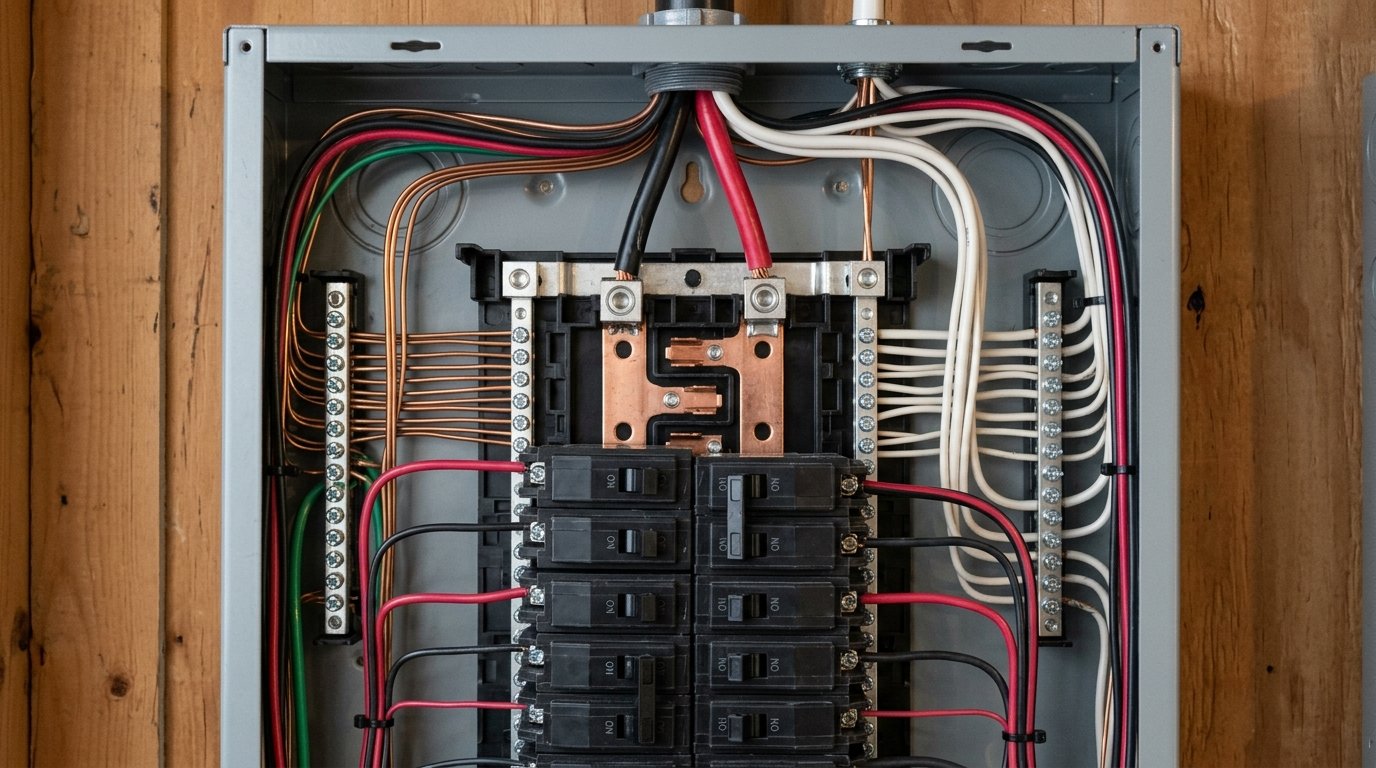
A subpanel keeps neutrals and grounds separated, fed by a properly sized feeder.
Signs you need a subpanel
If any of these describe your situation, a subpanel is often the right answer.
Main panel is full
No open breaker slots left means you cannot safely add circuits without more panel space.
Double-tapped breakers
Two wires crammed onto one breaker is a sign the panel ran out of room and needs proper capacity.
Finishing a garage or shop
A workshop or converted garage needs several dedicated circuits best served by a local subpanel.
Building an addition or ADU
A new room, suite, or guest house is cleaner and safer with its own subpanel.
Adding big loads
An EV charger, hot tub, welder, or shop tools may need a subpanel to host the new circuits.
Powering a detached building
A garage, shed, or studio away from the house is typically fed by a subpanel with its own grounding.
Why a subpanel is the right solution
A well-placed subpanel solves capacity problems cleanly. Here is what you gain.
More circuit capacity
Room to add the circuits a full main panel cannot accommodate.
Power where you need it
Distributes circuits locally to a garage, shop, or addition.
Frees your main panel
Offloads circuits so the main panel is no longer crammed.
Shorter home runs
Local circuits mean shorter wire runs and cleaner organization.
Supports big loads
Hosts heavy circuits for EV charging, HVAC, hot tubs, and tools.
Serves detached buildings
Brings safe, grounded power to a garage, shed, or studio.
Done to code
Four-wire feeder, separated bars, and correct grounding.
Less than a full rebuild
Adds capacity without the cost of replacing the entire service when it is not needed.
Out of breaker space or adding a big load?
We size and install subpanels the right way. Get a free assessment and load calculation.
(469) 327-8678How a subpanel installation actually works
Everything starts with a load calculation. Your main service has a fixed capacity, and a subpanel does not create new power, it redistributes what you already have. We total your existing demand, factor in the new loads the subpanel will carry, and confirm the main service can support it. If it can, we size the subpanel and its feeder to the job, with sensible headroom for the future rather than a panel that is full the day it goes in.
Next we set the feeder. A breaker in the main panel feeds the subpanel through a four-wire feeder, two hot conductors, a neutral, and a separate equipment ground. That fourth wire matters: at the subpanel, the neutral bar and the ground bar must be kept separate and not bonded together, which is one of the most common and dangerous mistakes in DIY subpanel work. We route the feeder cleanly, whether through a finished wall, a garage, or in conduit to a detached structure.
Then we mount the subpanel, land the feeder, and build out the circuits for the space. We confirm the grounding is correct, including the additional grounding electrode that detached buildings require, label everything clearly, and pull the City of Dallas permit so the work is inspected. The result is a tidy, properly grounded panel that expands your system safely.
Subpanel or service upgrade, and detached buildings
A subpanel and a service upgrade solve different problems, and choosing correctly saves you money. A subpanel is the answer when your main service has enough total capacity but you have run out of breaker space or need power distributed to a specific area. A service upgrade is the answer when the whole service is undersized for your demand, often an older one-hundred-amp service trying to support a modern, high-load home. We run the numbers and tell you which one your situation actually calls for, never selling the bigger job by default.
Detached buildings have their own rules worth understanding. Feeding a garage, shed, or studio away from the house with a subpanel means running the feeder underground or overhead to code, and the detached structure generally needs its own grounding electrode system, such as ground rods, rather than relying on the main building's ground. Skipping that step is a classic unpermitted-work failure that we routinely have to correct.
We also plan for trenching, conduit, and weatherproofing when a subpanel serves an outdoor or detached space, so the install holds up to Texas weather. The goal is a subpanel that is not just functional today but safe, inspectable, and ready to expand if your needs grow.
A subpanel installation
Every High Power subpanel is sized, fed, and grounded correctly, with the permit handled.
- Free assessment and load calculation on your service
- Right-sized subpanel and feeder for the load
- Correctly rated feeder breaker in the main panel
- Four-wire feeder with separated neutral and ground
- Clean feeder routing through walls or in conduit
- Proper grounding, including detached-building rules
- Build-out of the new circuits for the area
- Clear labeling of the subpanel and circuits
- City of Dallas permit and inspection handled
- Function test of the feeder and new circuits
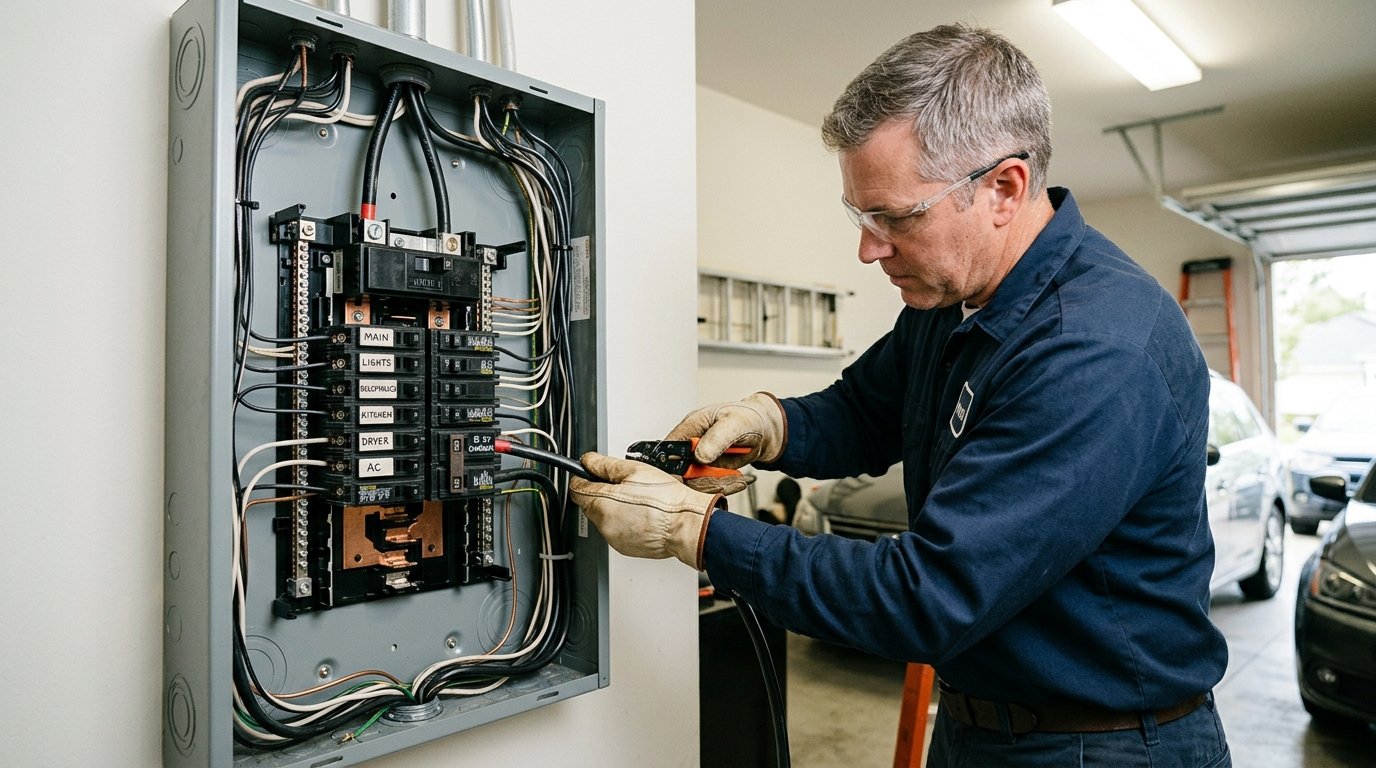
DIY subpanel versus a licensed installation
Subpanels are where small mistakes become real hazards. Here is the honest comparison.
DIY or unlicensed
- Neutrals and grounds wrongly bonded at the subpanel
- Feeder or breaker undersized for the load
- No load calculation, overloading the main service
- Detached building with no proper grounding electrode
- Unpermitted work that fails inspection and resale
- Messy, unlabeled circuits no one can trace later
Licensed electrician
- Neutrals and grounds correctly separated
- Feeder and breaker sized to the load with headroom
- Load calculation confirms the service can support it
- Detached buildings grounded to code
- Permitted and inspected, documented work
- Labeled, organized circuits that are easy to service
What affects the cost of a subpanel
Pricing depends on size, distance, and access, not a flat number. These are the main factors.
Subpanel amperage
A larger subpanel with more capacity needs a heavier feeder and breaker.
Feeder distance
A short run inside the house costs less than a long run to a detached building.
Routing and access
Running through finished walls or in conduit adds labor versus an open garage.
Trenching for detached
Feeding an outbuilding may require trenching and weatherproof conduit.
Service capacity
If the main service is maxed out, an upgrade may be needed instead of or with a subpanel.
Permit and inspection
City permit fees and inspection are part of a compliant install.
These are general planning ranges for the Dallas area, not a quote. Every job is different, so we give you a free on-site assessment and an honest written price before any work starts.
Our subpanel installation process
From the first call to powered circuits, here is how we handle it.
Free assessment
We review what you are adding and where the subpanel should go.
Load calculation
We confirm your service can support the new load before sizing anything.
Honest quote
You get a clear price for the subpanel, feeder, and circuits before we start.
Permit filed
We pull the City of Dallas permit so the work is documented and inspection-ready.
Set the feeder
We install the feeder breaker and run the four-wire feeder to the subpanel.
Mount and wire
We mount the subpanel, separate neutrals and grounds, and build the circuits.
Ground, test, inspect
We verify grounding, test the circuits, label everything, and pass inspection.
How long it takes and what to expect
A typical indoor subpanel install is often completed in a day once the plan and permit are set. Longer feeder runs, trenching to a detached building, or extensive new circuits add time, and we give you a realistic schedule during the assessment. Power to the main panel is interrupted only briefly while we land the feeder breaker.
When we are done, you have a clean, labeled subpanel with room for the circuits you needed and the headroom we planned in. Everything is grounded correctly, tested, and inspected, so you can build on it with confidence whether that is finishing a shop or wiring an addition.
Why Dallas homes add subpanels
Dallas homeowners are doing more with their properties, and that often outgrows the original panel. Converting a garage into a workshop or gym, building a backyard studio or guest suite, and finishing out additions are all common projects across the metro, and each tends to need several dedicated circuits that a full main panel cannot provide on its own.
Big modern loads are the other driver. As families add EV chargers, hot tubs, pool equipment, and high-demand shop tools, a subpanel becomes the clean way to host those circuits without cramming the main panel. In the Texas climate, outdoor and detached installs also have to stand up to heat, sun, and storms, which shapes how we route and weatherproof the feeder.
Older homes add their own wrinkle. Many were built with smaller services and panels that are already full, so the question becomes whether a subpanel is enough or whether the service itself needs upgrading first. That is exactly the kind of call our load calculation answers before any money is spent.
Because we install subpanels throughout Dallas, from attached garages to detached studios, we know the local permitting and inspection expectations and how to deliver a panel that is clean, correct, and ready to grow with your plans.
The licensed Dallas team homeowners trust
Licensed pros
Texas TECL #38291 electricians who size and ground it correctly.
Upfront pricing
A clear written price for the subpanel, feeder, and circuits.
Code-first
Four-wire feeders, separated bars, and grounding to NEC and Dallas code.
We answer 24/7
Real people on the phone, with honest guidance on scope.
Subpanel installation FAQs
A subpanel is a secondary breaker panel fed from your main panel that adds circuit capacity and distributes power to a specific area. People add them when the main panel is full, when finishing a garage or building an addition, or when adding big loads like an EV charger or shop tools.
A subpanel redistributes the capacity your service already has and adds breaker space, while a service upgrade increases the total capacity of your electrical service. If your service is large enough but out of room, a subpanel is right. If the whole service is undersized, you need an upgrade. We run a load calculation to tell you which.
Always. A subpanel draws from your existing service, so we confirm your main service can support the added load before sizing anything. This prevents overloading the service and ensures the subpanel is sized with sensible headroom.
In a subpanel, the neutral and ground bars must be kept separate and not bonded together, with the bonding done only at the main service. Bonding them at the subpanel is a common and dangerous DIY mistake that can put current on the grounding system. Correct separation is part of every install we do.
Yes. Feeding a detached building is one of the most common reasons for a subpanel. It requires running the feeder underground or overhead to code, and the detached structure generally needs its own grounding electrode, such as ground rods, which we install.
It depends on what you are powering. A small workshop needs less than a fully equipped shop or an addition with HVAC. We size the subpanel and feeder to your planned loads with room to grow, based on the load calculation.
Not if it is done right. Because we calculate the load against your service capacity first, we only proceed when the service can support the addition. If it cannot, we recommend a service upgrade instead so nothing is overloaded.
Yes. Subpanel installation is permitted work in the City of Dallas. We handle the permit and the inspection so the work is documented and compliant, which matters for safety and resale.
A typical indoor subpanel is often done in a day. Long feeder runs, trenching to a detached building, or many new circuits add time. We give you a realistic schedule during the assessment.
Yes. Hosting heavy circuits like EV charging, a hot tub, or HVAC is a common reason to add a subpanel. We size the subpanel and feeder to include those loads safely.
Only briefly. We interrupt power to the main panel just long enough to land the feeder breaker safely, then restore it. We let you know the short window in advance.
Yes. We provide a free on-site assessment with a load calculation, so you get an accurate written quote and the right recommendation before any work begins.