Dedicated HVAC Circuit Installation in Dallas
Need a dedicated HVAC circuit installed in Dallas, TX (75247)? High Power Electrical Services wires air conditioners, heat pumps, furnaces, and mini-splits on correctly sized dedicated circuits with the proper breaker and disconnect, so your system runs reliably through the Texas heat.
Quick Answer
A dedicated HVAC circuit serves only your heating or cooling equipment, sized to the unit's nameplate, with the correct breaker, wire gauge, and a disconnect within sight of the equipment as code requires. Whether you are installing a new air conditioner, replacing an older unit, or adding a mini-split, a licensed electrician sizes and wires the circuit so the system runs safely and reliably.
HVAC equipment needs its own correctly sized circuit
In a Texas summer, your air conditioning is the hardest-working system in the house, running for hours at a time through months of heat. That kind of heavy, repeated load demands a circuit built specifically for it. A dedicated HVAC circuit serves only the equipment, with nothing else sharing the line, so the system gets clean, stable power and your other circuits are not affected when the compressor kicks on.
HVAC wiring is also a code matter, not a guess. Air conditioners, heat pumps, furnaces, and mini-splits each list a minimum circuit ampacity and a maximum overcurrent protection on their nameplate, and the wire gauge and breaker have to be matched to those numbers. Code also requires a disconnect within sight of outdoor equipment so a technician can safely cut power for service. We handle all of it.
This work comes up most often with a new system or a replacement. A new, larger, or more efficient unit frequently needs different wiring than the one it replaces, and a mini-split or a second system needs a fresh circuit entirely. When an HVAC company installs the equipment, the electrical side still needs to be done correctly and to code, which is where we come in.
We size the circuit to the equipment, run the right wire, install the breaker and the disconnect, verify grounding, and pull the permit. If your panel does not have room or capacity for the new circuit, we will tell you and lay out the options, which may include a subpanel. The result is HVAC that runs reliably without nuisance trips or strain.
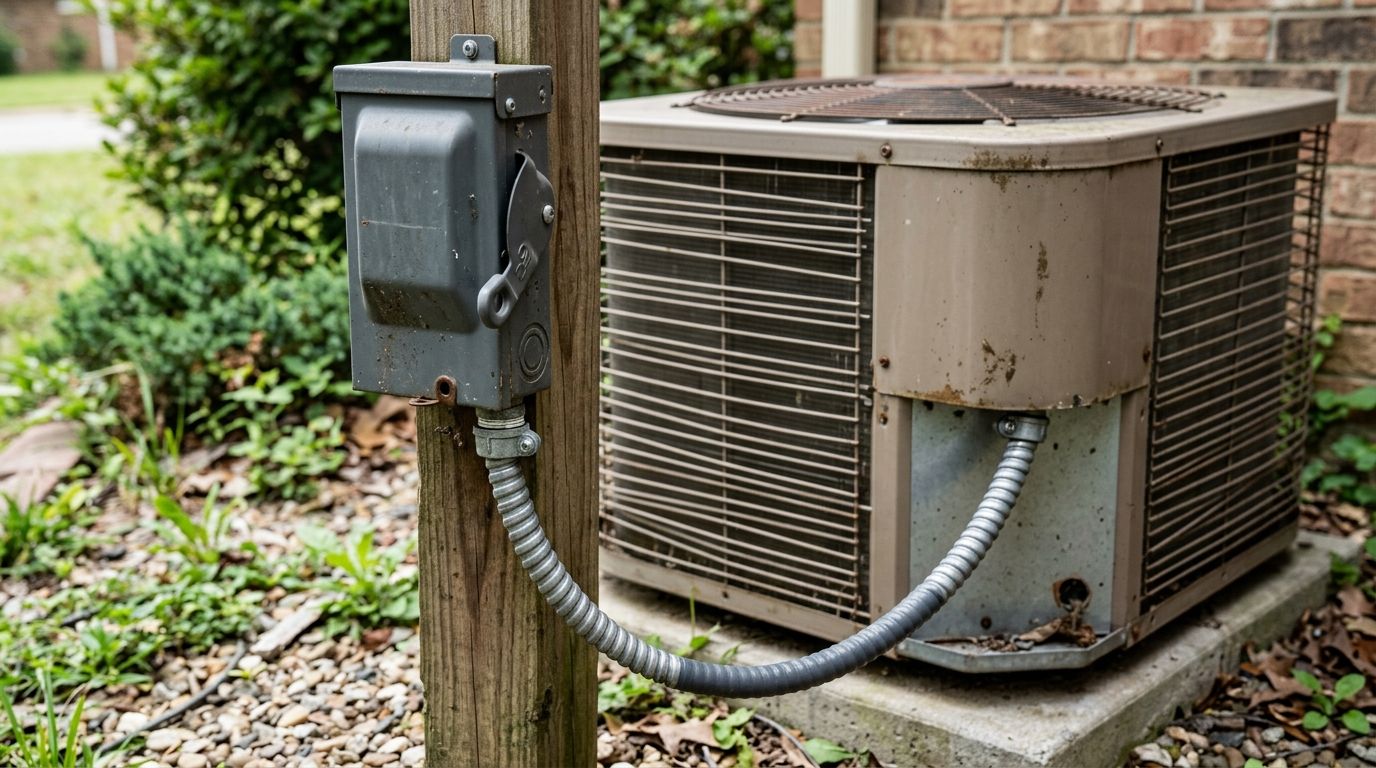
Code requires a disconnect within sight of outdoor HVAC equipment for safe service.
When you need a dedicated HVAC circuit
If any of these apply, the equipment needs a properly sized, dedicated circuit.
New AC or heat pump
A new or replacement cooling or heating system needs a circuit sized to its nameplate.
Adding a mini-split
Ductless mini-splits need their own correctly sized dedicated circuit and disconnect.
Breaker trips on startup
If a breaker trips when the AC starts, the circuit is undersized for the equipment.
HVAC on a shared circuit
Equipment sharing a circuit with other loads is a code and reliability problem.
No disconnect at the unit
Outdoor equipment without a disconnect within sight does not meet code and is unsafe to service.
Upsizing the system
A bigger or higher-efficiency unit often needs heavier wire and a different breaker than the old one.
Why a dedicated HVAC circuit matters
Correct HVAC wiring protects an expensive system and your comfort. Here is what you gain.
Right sizing
Wire and breaker matched to the unit's nameplate ratings.
Protects the compressor
Stable, dedicated power guards the most expensive HVAC component.
No nuisance trips
A circuit built for the load handles startup surge without tripping.
Code-required disconnect
A disconnect within sight lets techs service the unit safely.
Stable home power
Dedicated wiring keeps HVAC startup from dimming the rest of the house.
Passes inspection
Wired to code so the HVAC install and permit clear inspection.
Reliable comfort
Dependable power means the system performs when you need it most.
Ready for the future
Sized with the headroom for the equipment you are installing.
Installing or replacing an HVAC system?
We size and wire the dedicated circuit to code. Get a free assessment and an honest quote.
(469) 327-8678How a dedicated HVAC circuit is installed
The job starts at the nameplate. Every piece of HVAC equipment lists a minimum circuit ampacity, which tells us the smallest wire that can safely feed it, and a maximum overcurrent protection, which sets the largest breaker allowed. We size the wire and breaker to those numbers, not to a rule of thumb, because oversizing the breaker or undersizing the wire is a real hazard. For a new install we confirm these figures against the exact unit going in.
Next we run the circuit. We route the correctly sized conductors from your panel or a subpanel to the equipment, accounting for the distance so voltage drop does not rob the compressor of clean power on a long run. For outdoor condensers we install a disconnect within sight of the unit and connect it with a proper whip, which code requires so a service technician can safely cut power at the equipment. Indoor air handlers and furnaces get their own correctly sized circuit as well.
Then we finish it correctly. We make solid connections, verify grounding, and test the circuit. If your panel does not have an open slot or the capacity for the new load, we address that honestly, whether that means freeing space, evaluating the service, or adding a subpanel. Finally we pull the permit and have the work inspected, which also supports your HVAC installer's permit and warranty.
Sizing to the load, and why dedicated power protects your HVAC
The single most important idea in HVAC wiring is matching the circuit to the equipment. Air conditioners and heat pumps draw a large surge of current the instant the compressor starts, far more than their running load. A circuit that is undersized or shared trips on that surge, and worse, weak or unstable power makes the compressor work harder and shortens its life. Sizing the wire and breaker to the nameplate gives the unit the clean startup and steady run it was designed for.
Distance matters too. On a long run from the panel to a far condenser, undersized wire causes voltage drop, which again stresses the compressor. We calculate the run and choose a gauge that delivers full voltage at the equipment, a detail a careful electrician gets right and a quick hookup often misses.
The disconnect is the safety piece people overlook. Code requires a means to cut power within sight of outdoor equipment so a technician is never servicing a live unit. Beyond compliance, it is simply safer for everyone who works on the system. We install the right disconnect and whip as part of every outdoor circuit, so your HVAC is both reliable and safe to maintain.
A dedicated HVAC circuit
Every High Power HVAC circuit is sized to the equipment and finished to code, not a quick hookup.
- Review of the equipment nameplate ratings
- Wire and breaker sized to MCA and MOCP
- Dedicated circuit from the panel or subpanel
- Correct gauge for the run length and voltage drop
- Disconnect within sight of outdoor equipment
- Proper whip and weatherproof connections
- Separate circuit for the indoor air handler when needed
- Grounding verified and connections torqued
- City of Dallas permit and inspection handled
- Function test of the circuit and disconnect
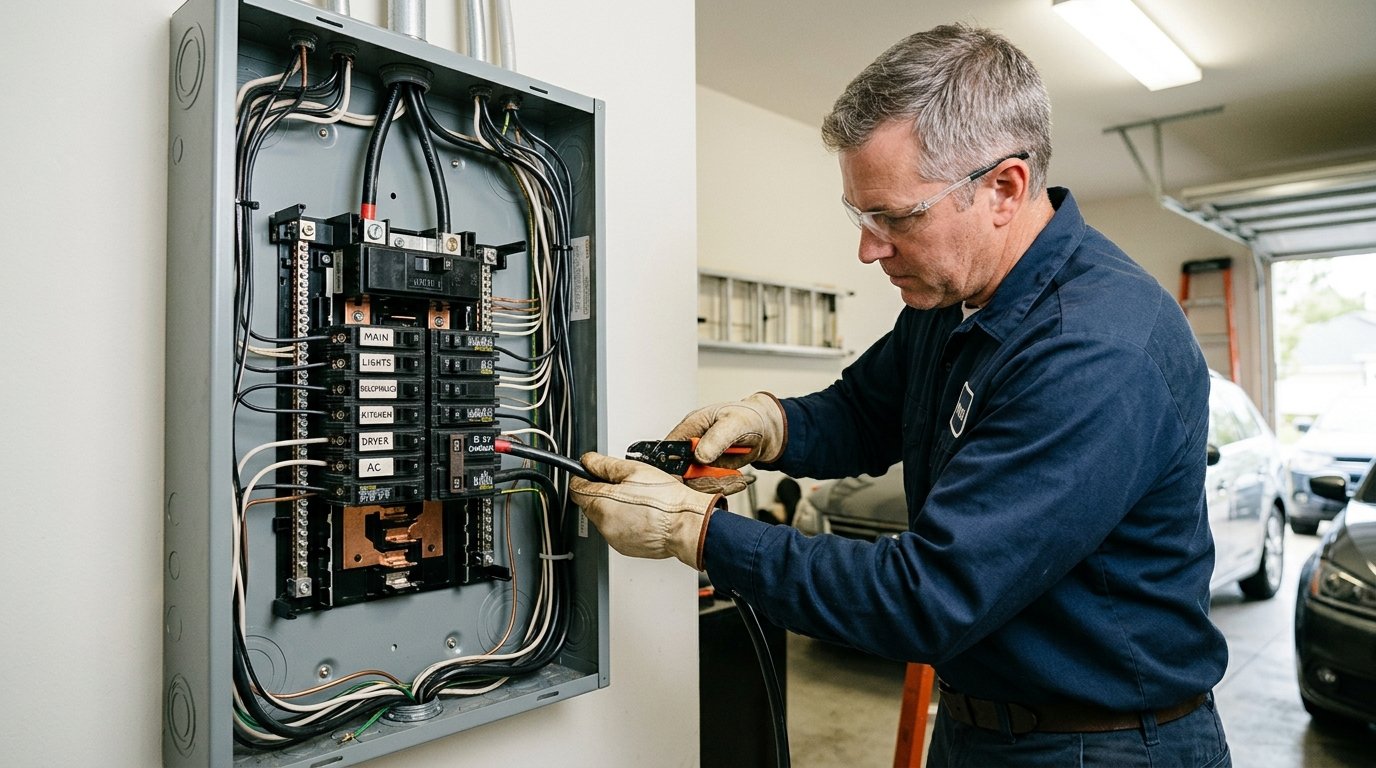
A quick hookup versus a code-correct circuit
HVAC wiring is sized to the nameplate and requires a disconnect. A shortcut risks the equipment and the inspection.
DIY or unlicensed
- Breaker sized by guess instead of the nameplate
- Undersized wire that drops voltage on a long run
- Equipment sharing a circuit it should not
- No disconnect within sight of the unit
- Unpermitted work that complicates the HVAC warranty
- Loose or ungrounded connections at the unit
Licensed electrician
- Wire and breaker matched to MCA and MOCP
- Gauge chosen for the run to avoid voltage drop
- A truly dedicated circuit for the equipment
- Code-required disconnect within sight installed
- Permitted and inspected to support the HVAC warranty
- Solid, grounded, torqued connections
What affects the cost of an HVAC circuit
Pricing depends on the equipment and the run, not a flat fee. These are the main factors.
Equipment size
A larger unit needs heavier wire and a bigger breaker than a small system.
Distance from the panel
A long run to a far condenser uses more wire and labor than a short one.
Panel capacity
If the panel is full or undersized, a subpanel or upgrade may be needed for the circuit.
Disconnect and whip
The disconnect, whip, and weatherproofing are part of an outdoor circuit.
One unit or two
Wiring both an outdoor condenser and an indoor air handler is more than a single circuit.
Permit and inspection
City permit fees and inspection are part of compliant work.
These are general planning ranges for the Dallas area, not a quote. Every job is different, so we give you a free on-site assessment and an honest written price before any work starts.
Our HVAC circuit installation process
From the first call to a running system, here is how we handle it.
Free assessment
We review the equipment, the location, and your panel capacity.
Size to nameplate
We set the wire gauge and breaker to the unit's MCA and MOCP.
Honest quote
You get a clear written price, including any panel work, before we start.
Permit filed
We pull the City of Dallas permit so the circuit is documented and inspection-ready.
Run the circuit
We route the conductors and install the breaker for the dedicated circuit.
Disconnect and connect
We install the disconnect within sight and connect the equipment with a proper whip.
Ground, test, inspect
We verify grounding, test the circuit, and pass the city inspection.
How long it takes and what to expect
Most dedicated HVAC circuits are installed in a few hours to a day, depending on the run length and whether one or two circuits are needed. We coordinate with your HVAC schedule when the equipment is being installed at the same time, so the electrical is ready when the unit goes in. If a subpanel or panel work is required first, we factor that into the timeline and explain it up front.
Power is interrupted only briefly while we land the new breaker. When we finish, the equipment has a clean, properly sized circuit with a code-compliant disconnect, tested and inspected, ready to run through the hottest part of a Texas summer without nuisance trips or strain.
Why HVAC wiring matters so much in Dallas
Few places ask more of an air conditioning system than North Texas. Through a long, punishing summer, cooling equipment runs for months, cycling on and off countless times, each start drawing a heavy surge. A circuit that is even slightly undersized will eventually trip or stress the compressor under that relentless demand, which is why correct sizing is not a nicety here, it is essential.
The volume of HVAC work across the metro is high for the same reason. Systems get replaced and upgraded constantly, and many homeowners add a mini-split for a garage, sunroom, or addition that the central system cannot keep up with. Each of those projects needs proper electrical work behind it, not just a hookup.
Older homes add a familiar wrinkle. Panels that were sized for a smaller cooling load decades ago may not have the room or capacity for a modern, larger system, so an HVAC upgrade can turn into a panel capacity question. We sort that out honestly so you are not surprised mid-project.
Because we wire HVAC systems throughout Dallas, we know how to size for real Texas duty cycles, install disconnects to local code, and coordinate cleanly with HVAC installers so your new system is powered correctly from day one.
The licensed Dallas team homeowners trust
Licensed pros
Texas TECL #38291 electricians who size to the nameplate.
Upfront pricing
A clear written price, including any panel work, before we start.
Code-first
Correct breaker, wire, and disconnect to NEC and Dallas code.
We answer 24/7
Real people on the phone, and we coordinate with your HVAC schedule.
Dedicated HVAC circuit FAQs
Air conditioners, heat pumps, and furnaces draw heavy, repeated loads and a large surge when the compressor starts. A dedicated circuit gives the equipment stable power, prevents nuisance trips, and keeps HVAC startup from affecting the rest of your home. Code also requires dedicated circuits for this equipment.
By the equipment nameplate. Every unit lists a minimum circuit ampacity, which sets the smallest safe wire, and a maximum overcurrent protection, which sets the largest allowed breaker. We size the wire and breaker to those exact numbers rather than to a rule of thumb.
Yes. Code requires a disconnect within sight of outdoor HVAC equipment so a technician can safely cut power at the unit for service. We install the proper disconnect and whip as part of every outdoor HVAC circuit.
That usually means the circuit is undersized for the equipment or the equipment is sharing a circuit it should not. The startup surge exceeds what the breaker can handle. The fix is a correctly sized, dedicated circuit matched to the unit.
Some HVAC installers handle basic hookups, but the electrical needs to be sized and installed to code, with a proper disconnect and a permit. A licensed electrician ensures the circuit is correct, which also supports your equipment warranty and the inspection.
Often, yes. A new or larger unit frequently has different nameplate ratings than the one it replaces, which can require heavier wire or a different breaker. We confirm the new unit's requirements and update the circuit as needed.
Yes. Mini-splits need their own correctly sized dedicated circuit and a disconnect. We wire single and multi-zone mini-splits for garages, additions, sunrooms, and whole-home systems.
We will tell you honestly. The new HVAC circuit needs space and capacity, so if your panel is full we may add a subpanel, and if the whole service is undersized we will discuss an upgrade. We size the solution to your home.
Yes. The electrical for HVAC equipment is permitted work in the City of Dallas. We pull the permit and pass inspection, which also supports the HVAC installer's permit and your warranty.
It can if the wire is undersized. A long run causes voltage drop that stresses the compressor. We calculate the run and choose a gauge that delivers full voltage at the equipment to protect it.
Most HVAC circuits take a few hours to a day, depending on the run and whether one or two circuits are needed. We coordinate with your HVAC schedule so the electrical is ready when the equipment is installed.
Yes. We provide a free assessment of your equipment, the run, and your panel capacity, so you get an accurate written quote before any work begins.