Appliance Circuit Wiring in Dallas
Need an appliance circuit wired in Dallas, TX (75247)? High Power Electrical Services installs dedicated, correctly sized circuits for ranges, dryers, water heaters, and kitchen and laundry appliances, with the right voltage, receptacle, and protection so they run safely.
Quick Answer
Major appliances draw heavy current and code requires most of them to have a dedicated circuit, one appliance per circuit, sized to the appliance and fitted with the correct receptacle. Whether you are adding an electric range, a dryer, a water heater, or kitchen and laundry appliances, a licensed electrician sizes the wire, breaker, and outlet so it runs safely without tripping.
Dedicated circuits sized for the appliances you run
The appliances that run a household, the range, the dryer, the water heater, the dishwasher, the refrigerator, draw far more power than a lamp or a phone charger, and many draw it continuously. Code requires most major appliances to have a dedicated circuit so that one appliance has the whole circuit to itself, which prevents the overloads, nuisance trips, and overheating that come from sharing a line with other loads.
Sizing is everything. Each appliance lists the amperage it needs, and the wire gauge and breaker have to be matched to that load, with the correct receptacle to match. An undersized circuit trips or runs hot, while the wrong receptacle simply will not accept the appliance's plug. We size each circuit to the appliance rather than to a guess, so it powers reliably and safely.
Voltage is the other key factor. Smaller appliances run on standard 120-volt circuits, while heavy hitters like electric ranges, dryers, and electric water heaters run on 240-volt circuits with their own specific outlet types. Adding one of these, or converting from gas to electric, means installing the right 240-volt circuit and receptacle, which is not something to improvise.
We wire dedicated circuits for new and replacement appliances, handle gas-to-electric conversions, update older three-prong outlets to the four-wire receptacles current code requires, add the dedicated kitchen and laundry circuits a remodel needs, and provide the ground-fault protection now required for many appliance locations. Whatever you are installing, we make sure the circuit behind it is right.
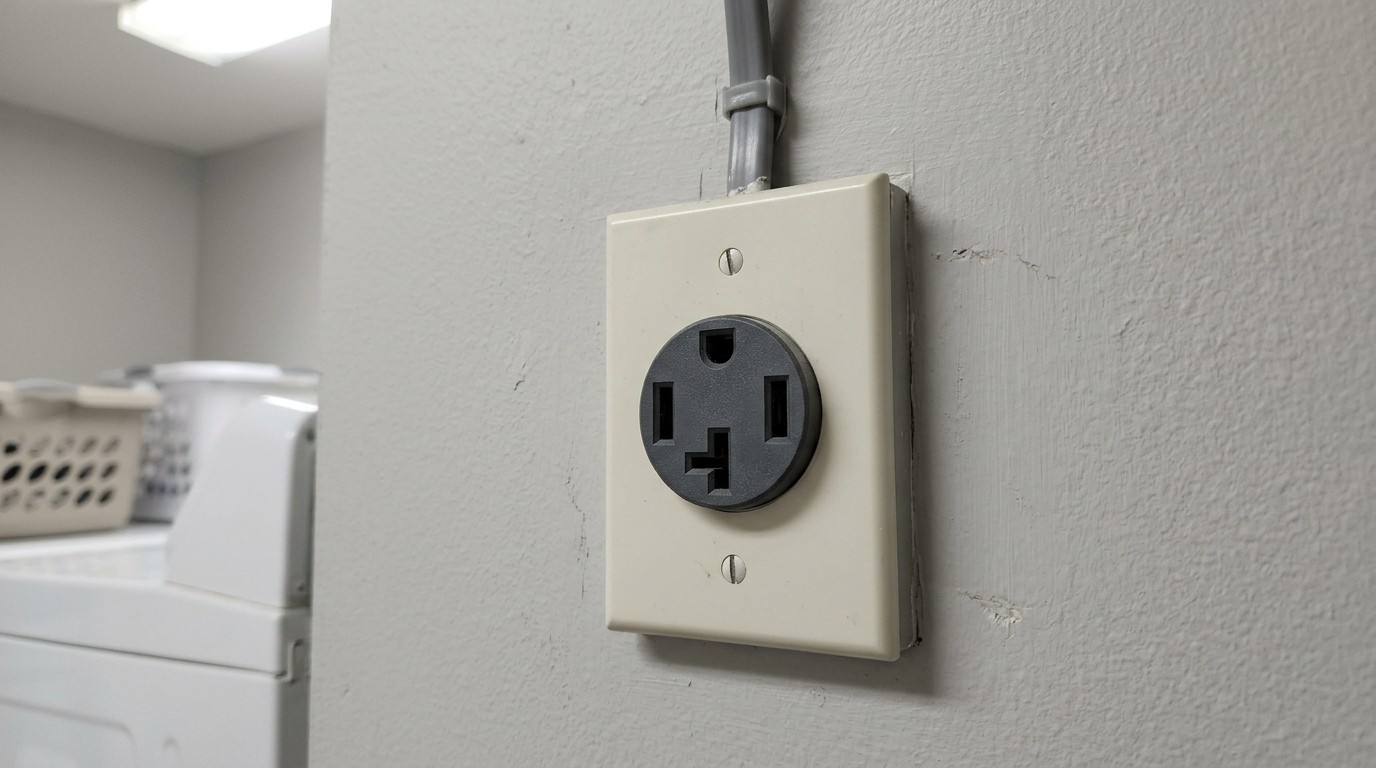
Heavy appliances need a dedicated, correctly sized 240-volt circuit and the right outlet.
When you need an appliance circuit
If any of these apply, the appliance needs a proper dedicated circuit.
New appliance to install
A new range, dryer, or other major appliance needs a circuit sized to it.
Breaker trips when it runs
An appliance that trips the breaker is on an undersized or shared circuit.
Gas-to-electric conversion
Switching a gas range, dryer, or water heater to electric needs a new 240-volt circuit.
Three-prong outlet
An older three-prong dryer or range outlet may need updating to a four-wire receptacle.
Garage fridge or freezer
A second refrigerator or freezer in the garage needs its own dedicated circuit.
Kitchen or laundry remodel
A remodel needs dedicated circuits for the appliances and countertop outlets.
Why proper appliance circuits matter
A circuit built for the appliance protects both the equipment and your home. Here is what you gain.
No nuisance trips
A dedicated circuit handles the appliance without tripping.
Right sizing
Wire, breaker, and outlet matched to the appliance nameplate.
Correct receptacle
The proper outlet type for the appliance's plug and voltage.
Protects the appliance
Stable, dedicated power guards expensive equipment.
Gas-to-electric ready
The right 240-volt circuit for an electric conversion.
Required protection
GFCI where code now calls for it on appliance circuits.
Code-compliant
Wired to current NEC and Dallas requirements.
Remodel-ready
Dedicated kitchen and laundry circuits for a renovation.
Adding or upgrading a major appliance?
We wire the dedicated circuit sized and fitted correctly. Get a free assessment and an honest quote.
(469) 327-8678How appliance circuit wiring works
We start at the appliance nameplate. Every major appliance lists the amperage and voltage it requires, and we size the circuit to those figures, choosing the correct wire gauge and breaker. A range, dryer, or electric water heater needs a 240-volt circuit, while a dishwasher, disposal, or refrigerator runs on a dedicated 120-volt circuit. Matching the circuit to the appliance is what keeps it from tripping or running hot.
Then we run the circuit and fit the right outlet. We route the correctly sized wire from the panel to the appliance location and install the matching receptacle, since heavy appliances use specific outlet configurations, a dryer outlet differs from a range outlet, and both differ from a standard plug. For appliances that hardwire rather than plug in, like many water heaters and disposals, we make a proper hardwired connection. We also add the dedicated kitchen and laundry circuits code requires, including the countertop small-appliance circuits a kitchen needs.
Finally we add required protection and verify it works. Recent code requires ground-fault protection on many appliance locations, and we provide it where it applies. If your panel lacks an open slot or the capacity for the new circuit, we will tell you and lay out the options, which may include a subpanel. We test the circuit and confirm the appliance runs correctly before we are done.
120 volt versus 240 volt, outlets, and three to four prong
Understanding voltage clears up most appliance circuit questions. Standard outlets and many appliances, like dishwashers, disposals, microwaves, and refrigerators, run on 120-volt circuits. Heavy appliances that produce a lot of heat or motion, electric ranges and ovens, electric dryers, and electric water heaters, run on 240-volt circuits, which deliver more power. Adding one of these, or converting an appliance from gas to electric, requires installing a proper 240-volt circuit, not adapting a 120-volt one.
Receptacles are matched to the appliance for a reason. A dryer outlet, a range outlet, and a standard outlet are all different physical configurations so that an appliance can only be plugged into a circuit that suits it. When you buy a new range or dryer, the plug may not match your existing outlet, which is a common reason for a service call, and we install the correct receptacle for the appliance.
The three-prong to four-prong change trips up a lot of homeowners. Current code requires four-wire circuits for new ranges and dryers, with a separated ground, while many older homes still have three-prong outlets. When you replace an appliance or move into a home with the older style, the safe answer is usually updating to the proper four-wire receptacle and circuit, which we handle correctly rather than forcing a mismatched adapter.
Appliance circuit wiring
Every High Power appliance circuit is sized to the appliance, fitted correctly, and code-compliant.
- Review of the appliance nameplate ratings
- Wire and breaker sized to the appliance load
- Dedicated 120-volt or 240-volt circuit as required
- The correct receptacle type for the appliance
- Hardwired connections where the appliance requires
- Three-prong to four-prong receptacle updates
- Dedicated kitchen and laundry circuits for remodels
- GFCI protection where code now requires it
- Subpanel coordination if the panel lacks capacity
- Function test of the circuit and appliance
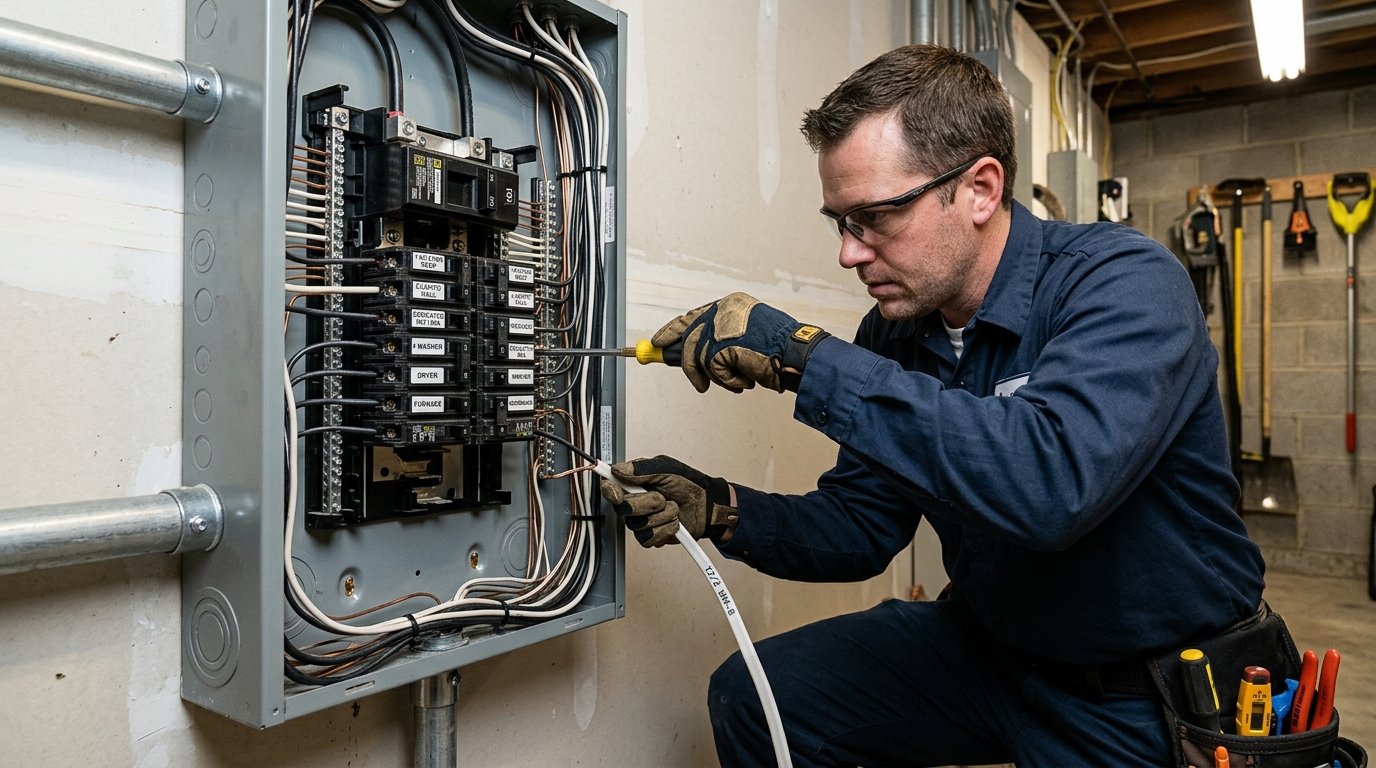
DIY versus a licensed appliance circuit
Appliance circuits involve heavy loads and 240-volt wiring. Here is the honest comparison.
DIY or unlicensed
- An appliance sharing a circuit it should not
- Wire or breaker undersized for the load
- The wrong receptacle for the appliance plug
- A mismatched adapter on a three-prong outlet
- 240-volt wiring attempted without training
- Missing GFCI protection where code requires it
Licensed electrician
- A dedicated circuit for the appliance
- Wire and breaker sized to the nameplate
- The correct receptacle for the appliance
- A proper four-wire receptacle and circuit
- 240-volt circuits wired safely and to code
- GFCI protection where it is required
What affects the cost of appliance circuits
Pricing depends on the appliance and the run, not a flat fee. These are the main factors.
Appliance load
Higher-amperage appliances need heavier wire and a larger breaker.
120 or 240 volt
A 240-volt circuit for a range or dryer differs from a 120-volt circuit.
Distance from the panel
A longer run from the panel to the appliance uses more wire and labor.
Panel capacity
If the panel is full, a subpanel or upgrade may be needed for the circuit.
Receptacle or hardwire
The outlet type or a hardwired connection is part of the work.
GFCI and permit
Required protection and any permit are part of compliant work.
These are general planning ranges for the Dallas area, not a quote. Every job is different, so we give you a free on-site assessment and an honest written price before any work starts.
Our appliance circuit process
From the first call to a running appliance, here is how we handle it.
Free assessment
We review the appliance, its location, and your panel capacity.
Size to nameplate
We set the wire, breaker, and voltage to the appliance ratings.
Honest quote
You get a clear written price, including any panel work, before we start.
Run the circuit
We route the correctly sized wire and install the breaker.
Fit the outlet
We install the correct receptacle or make a hardwired connection.
Add protection
We provide GFCI protection where code requires it.
Test the appliance
We confirm the circuit and the appliance run correctly.
How long it takes and what to expect
Most appliance circuits are installed in a few hours to a day, depending on the run length and whether the panel has room for the new circuit. A simple receptacle update is quick, while running a new 240-volt circuit across the house, or adding a subpanel because the panel is full, takes longer. We give you a realistic estimate during the assessment.
Power is interrupted only briefly while we land the new breaker. When we finish, the appliance has a dedicated, correctly sized circuit with the right outlet and any required protection, tested and ready to run. You can install or use the appliance with confidence that the circuit behind it is built for the job.
Appliance circuits in Dallas homes
Kitchen and laundry remodels are constant across the Dallas area, and each one tends to involve appliance circuits, whether adding dedicated countertop circuits, wiring a new range or dryer, or updating outlets to current standards. As homeowners upgrade to larger or higher-end appliances, the existing circuits often need to be resized to match.
Gas-to-electric conversions are increasingly common as well. Homeowners switching a gas range, dryer, or water heater to an electric model need a proper 240-volt circuit installed where there may only have been a gas line and a small outlet. That is a job that has to be sized and wired correctly, and it frequently raises a panel-capacity question we sort out up front.
Older homes bring the three-prong to four-prong issue to the surface. Many still have the older three-wire range and dryer outlets, and when an appliance is replaced or a home changes hands, updating to the proper four-wire receptacle and circuit is the safe path. It is a routine correction for us and a common surprise for homeowners.
Because we wire appliance circuits throughout the metro, we know how to size for the appliances people are actually installing, handle 240-volt circuits and conversions safely, and bring older outlets up to current standards. The goal is appliances that run reliably on circuits built specifically for them.
The licensed Dallas team homeowners trust
Licensed pros
Texas TECL #38291 electricians who size to the nameplate.
Upfront pricing
A clear written price, including any panel work, before we start.
Code-first
Correct circuits, receptacles, and protection to code.
We answer 24/7
Real people on the phone, with easy scheduling.
Appliance circuit FAQs
Major appliances draw heavy current, often continuously, and code requires most to have their own circuit so one appliance has the whole circuit to itself. This prevents the overloads, nuisance trips, and overheating that come from sharing a line, and it is how the appliance gets stable, reliable power.
Standard outlets and many appliances run on 120-volt circuits, while heavy appliances like electric ranges, dryers, and electric water heaters run on 240-volt circuits that deliver more power. Adding one of those, or converting from gas to electric, requires installing a proper 240-volt circuit, not adapting a 120-volt one.
Appliance outlets come in specific configurations matched to the appliance, so a new range or dryer may have a plug that does not fit your existing receptacle. The correct fix is installing the proper outlet for the appliance, which we do, rather than forcing a mismatched adapter.
Current code requires four-wire circuits for new ranges and dryers, with a separated ground, while many older homes still have three-prong outlets. When you replace an appliance or move into an older home, updating to the proper four-wire receptacle and circuit is the safe answer, which we handle correctly.
We handle the electrical side. Switching a gas range, dryer, or water heater to an electric model requires a new, properly sized 240-volt circuit and the correct outlet or hardwired connection. We install that, and address any panel-capacity needs as part of the project.
Usually because the appliance is on an undersized or shared circuit that cannot handle its load. The fix is a dedicated circuit sized to the appliance. We confirm the cause and install the correct circuit so it runs without tripping.
Generally yes. Dishwashers and garbage disposals are typically on dedicated circuits, and recent code requires ground-fault protection for many of these locations. We wire them correctly, including the protection code now calls for.
Yes. A second refrigerator or freezer in the garage runs best on its own dedicated circuit so it is not sharing with other garage loads. We add a properly sized circuit and the right outlet.
That comes up often, especially with 240-volt appliances. If the panel is full or lacks capacity, we may add a subpanel or discuss a service upgrade. We assess this up front so it does not surprise you mid-project.
A kitchen needs several dedicated circuits, including countertop small-appliance circuits and individual circuits for appliances like the range, dishwasher, disposal, and refrigerator. We wire the dedicated circuits a kitchen or remodel requires to code.
We do not recommend it. A 240-volt circuit involves higher voltage, specific receptacles, correct sizing, and code requirements, and a mistake is both a fire and shock hazard. This is work for a licensed electrician who will wire and protect it correctly.
Yes. We provide a free assessment of the appliance, the run, and your panel capacity, so you get an accurate written quote before any work begins.