Landscape Lighting Wiring in Dallas
Want landscape lighting in Dallas, TX (75247)? High Power Electrical Services designs and wires low-voltage LED landscape lighting, path lights, uplighting, and accent fixtures, with the right transformer, cable, and controls to bring your yard to life at night.
Quick Answer
Landscape lighting uses a low-voltage system, a transformer that steps household power down to a safe 12 volts, buried cable, and LED fixtures, to light paths, trees, and architecture beautifully at night. Done well it takes real design and proper wiring: the right transformer size, cable gauge to avoid dim distant fixtures, and weather-rated parts. A licensed electrician plans and installs it.
Bring your yard and home to life after dark
The right landscape lighting transforms a property at night. Soft uplighting on trees and the front of the house, gentle path lights along walkways, and accent fixtures on features turn a yard that disappears at dusk into something that looks intentional and inviting. It is one of the highest-impact upgrades for curb appeal, and it makes paths, steps, and entries safer to use in the dark.
Most landscape lighting is low-voltage, and for good reason. A transformer steps your 120-volt power down to 12 volts, which is safer to work around, gentler on the landscape, and flexible to adjust as plantings grow. Paired with efficient LED fixtures, a low-voltage system can light an entire yard beautifully while drawing very little power and lasting for years.
The craft is in the design and the wiring. Good lighting design uses techniques like uplighting, moonlighting from above, and careful path spacing to create depth and warmth without glare or an over-lit runway look. The wiring side is just as important: the transformer has to be sized with headroom, and the cable has to be gauged and routed so distant fixtures are not dim, a common problem called voltage drop that we engineer around from the start.
We design and install complete systems, path and step lighting, uplighting for trees and facades, spotlights, well lights, hardscape and deck lighting, and water-feature lighting, with automated timers, photocells, or smart control. We also repair and expand existing systems. Everything is weather-rated and wired to last through the Texas seasons.
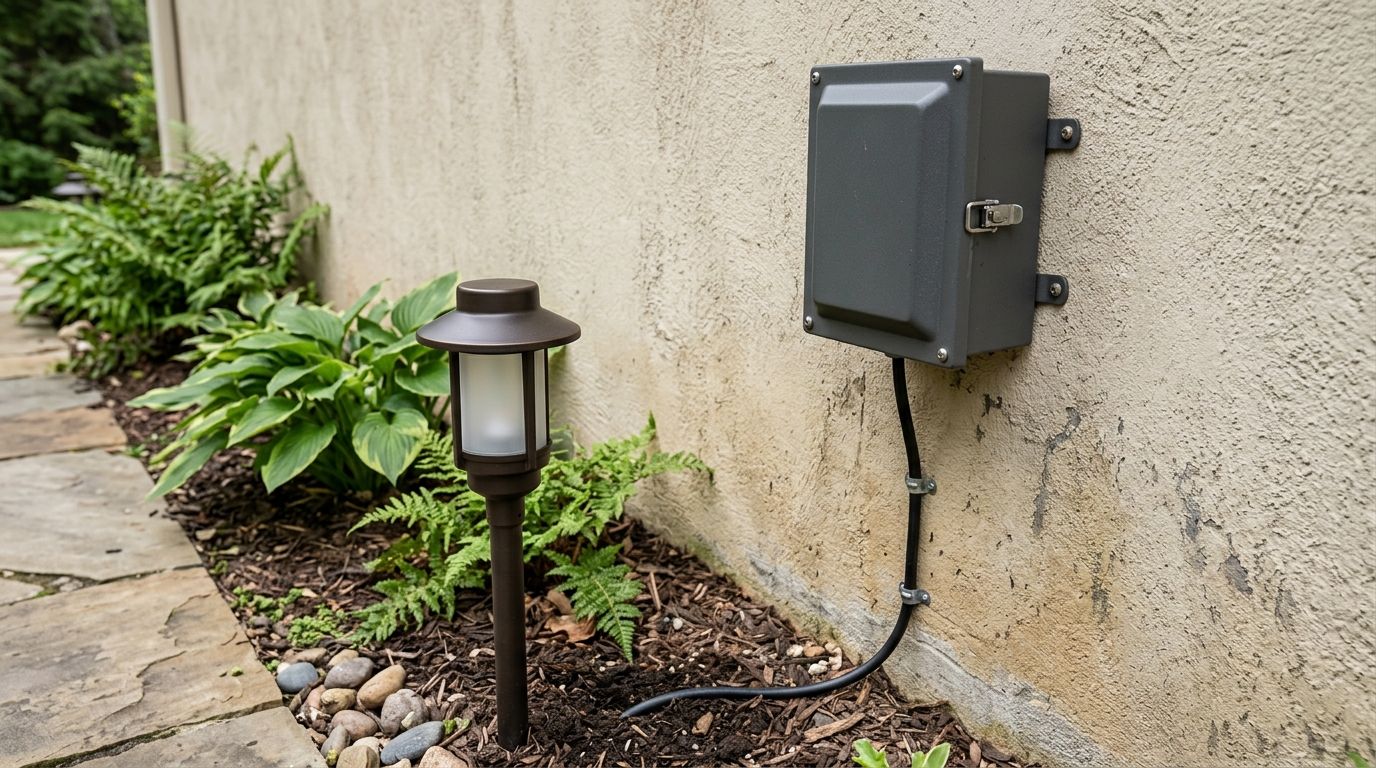
A properly sized transformer and buried cable power a safe 12-volt lighting system.
When landscape lighting is worth it
If any of these describe your property, a designed lighting system pays off.
Yard disappears at night
Landscaping you invested in vanishes after dark without lighting to show it off.
Want more curb appeal
Uplighting the facade and trees dramatically improves how your home looks at night.
Dark paths and steps
Walkways, steps, and entries are safer and more welcoming with gentle path lighting.
Features to highlight
Specimen trees, water features, and architecture deserve to be seen at night.
New landscaping or hardscape
A fresh landscape or patio is the ideal time to design lighting in.
Existing lights are dim or dead
An older system with dim, failed, or yellowed fixtures can be repaired or upgraded to LED.
Why a designed system matters
A planned, properly wired system looks far better and lasts far longer than a box-store kit. Here is what you gain.
Stunning curb appeal
Layered light makes your home and yard look their best at night.
Safer footing
Lit paths and steps prevent missteps in the dark.
Highlighted features
Trees, architecture, and water features become focal points.
Extended outdoor living
A lit yard invites you to enjoy it long after sunset.
Efficient LED
Low-voltage LED fixtures sip power and last for years.
Low-voltage safety
A 12-volt system is safe and gentle on the landscape.
Automated control
Timers, photocells, and smart control run it for you.
Adds value
Quality lighting is a visible, lasting improvement.
Want your home to glow at night?
We design and install low-voltage landscape lighting. Get a free assessment and an honest quote.
(469) 327-8678How landscape lighting wiring actually works
It begins with design. We look at your home and yard, the trees and features worth highlighting, the paths and steps that need light, and the look you want, then plan fixture types and placement to create depth and warmth. Good design is as much about shadow and restraint as brightness, using uplighting, downlighting from above for a moonlit effect, and measured path spacing so the result feels elegant rather than over-lit.
Then we engineer the system. We size the transformer to the total fixture load with headroom for future additions, and we choose the cable gauge and routing to manage voltage drop, the effect where fixtures far from the transformer dim if the wiring is undersized. Techniques like proper gauge, hub wiring, and multi-tap transformers keep every fixture bright, near and far. We bury the low-voltage cable neatly and connect a GFCI-protected line-voltage circuit for the transformer.
Finally we install, aim, and automate. We set each fixture, aim uplights and spots for the effect we planned, and fine-tune at night, because landscape lighting is only truly designed once you see it after dark. We add the control you want, a timer, a dusk-to-dawn photocell, or smart control with zones and scenes, then walk you through it. The result is a system that looks designed, not assembled.
Design techniques, voltage drop, and controls
A few techniques do most of the work in landscape lighting. Uplighting places fixtures low and aims them up to graze a tree trunk or wash a facade, downlighting or moonlighting mounts fixtures high to cast soft, natural light and shadow downward, and path lighting spaces low fixtures to guide the eye without a runway effect. Warm color temperatures flatter plantings and brick, and we balance all of it so the scene has depth instead of flat brightness. Restraint matters: the best systems light what deserves attention and let the rest fall into shadow.
Voltage drop is the technical pitfall behind most disappointing systems. On a low-voltage run, fixtures far from the transformer receive less voltage and glow dimmer if the wiring is undersized or poorly routed. We design around it with the correct cable gauge, smart routing such as hub or home-run wiring, and multi-tap transformers that let us deliver the right voltage to distant fixtures. The payoff is consistent brightness across the whole yard.
Controls turn a nice system into an effortless one. A timer or dusk-to-dawn photocell means the lights come on every evening on their own, and smart controllers add zones, scenes, scheduling, and phone access so you can shift the mood or light only part of the yard. We set up the level of control you want and make sure it is reliable.
Landscape lighting wiring
Every High Power landscape system is designed, engineered, and installed to look and last, not a kit in the dirt.
- A lighting design planned around your home and yard
- The right fixtures for paths, uplighting, and accents
- Transformer sized with headroom for the load
- Cable gauge and routing engineered against voltage drop
- Neatly buried low-voltage cable
- GFCI-protected line-voltage circuit for the transformer
- Weather-rated LED fixtures suited to the climate
- Timer, photocell, or smart control with zones
- Nighttime aiming and fine-tuning of every fixture
- Walkthrough of the controls and settings
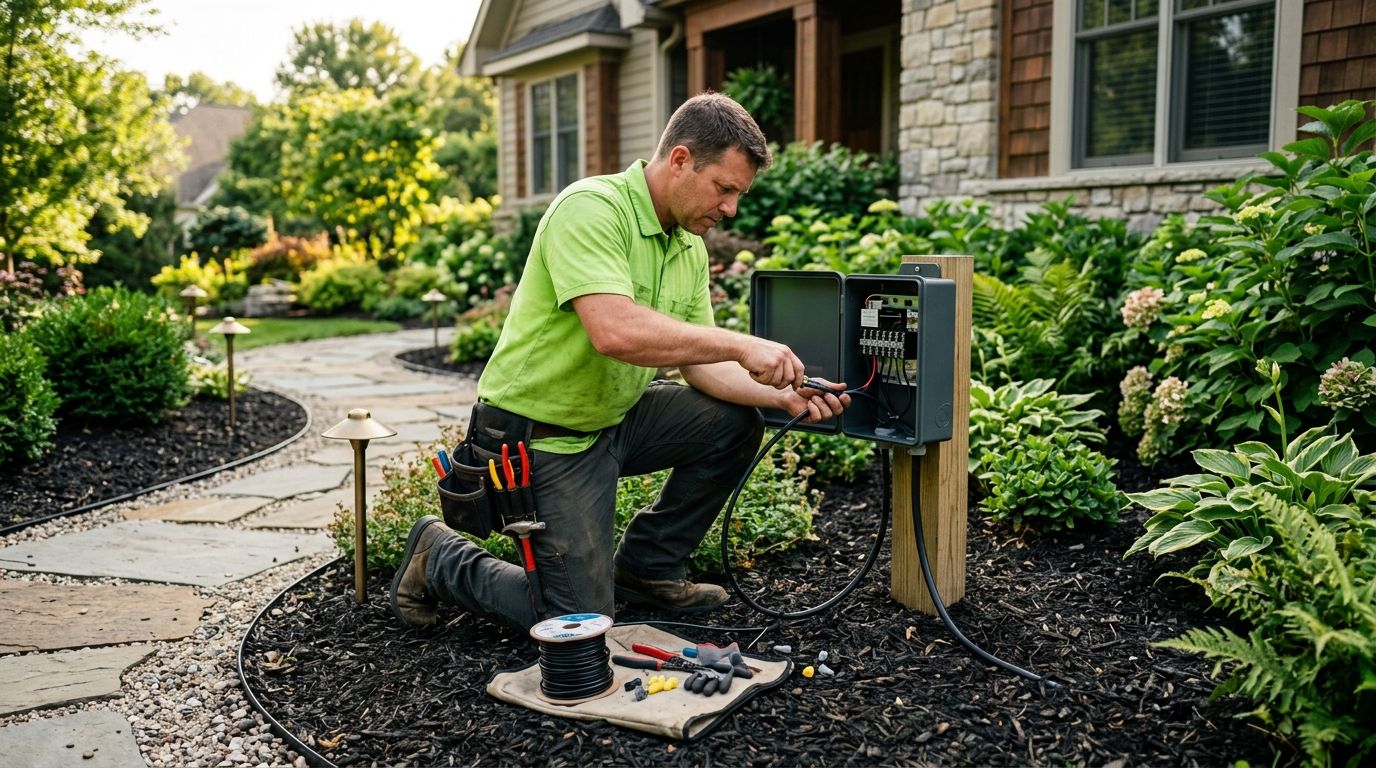
A box-store kit versus a designed system
Landscape lighting lives or dies on design and wiring. Here is the honest comparison.
DIY or unlicensed
- A kit with too few fixtures and a weak transformer
- Distant fixtures dim from voltage drop
- Random placement with glare and dark gaps
- Cheap fixtures that fade or fail in a season
- Cable laid on the surface to be cut or tripped on
- No automation, so lights get left off
Licensed electrician
- A planned design with the right fixtures and effects
- Wiring engineered so every fixture stays bright
- Placement that creates depth without glare
- Weather-rated LED fixtures built to last
- Cable neatly buried and protected
- Timer, photocell, or smart control that runs it
What affects the cost of landscape lighting
Pricing depends on the design and the system, not a flat fee. These are the main factors.
Number and type of fixtures
More fixtures and specialty lights like well or hardscape lights add to the system.
Transformer size
A larger system needs a higher-capacity, often multi-tap, transformer.
Cable runs and routing
Long runs and voltage-drop engineering affect wire and labor.
Controls
Timers, photocells, and smart zoned control add capability and cost.
Line-voltage circuit
Providing a GFCI-protected circuit for the transformer adds to the scope.
Design complexity
An elaborate, layered design takes more planning and fixtures than a simple path.
These are general planning ranges for the Dallas area, not a quote. Every job is different, so we give you a free on-site assessment and an honest written price before any work starts.
Our landscape lighting process
From the first call to a yard that glows, here is how we handle it.
Free assessment
We review your home, yard, and the features you want lit.
Design the system
We plan fixtures, placement, and effects for depth and warmth.
Honest quote
You get a clear written price for the design and controls before we start.
Engineer the wiring
We size the transformer and gauge the cable against voltage drop.
Install and bury
We set fixtures, bury the cable, and power the transformer safely.
Aim at night
We fine-tune the aiming and brightness after dark for the planned look.
Automate and explain
We set timers or smart control and walk you through it.
How long it takes and what to expect
A modest path-and-accent system can often be installed in a day, while a larger designed system with many fixtures, long cable runs, and zoned controls takes longer. Coordinating with new landscaping or hardscape can also shape the schedule. We give you a realistic estimate during the assessment and plan the routing to keep your yard tidy.
Because landscape lighting is a visual art, we do the final aiming and adjustment at night, which is the only way to truly see the effect. When we finish, the system is buried neatly, every fixture is bright and aimed, the controls run it automatically, and your home and yard look their best from the moment the sun goes down.
Landscape lighting for Dallas homes
Outdoor living is a big part of life in the Dallas area, and landscape lighting extends it well past sunset. After the heat of a Texas day, evenings in a beautifully lit yard are exactly when people want to be outside, and the right lighting makes patios, gardens, and entertaining areas inviting rather than dark.
Curb appeal is the other big draw. Homeowners invest heavily in landscaping, mature trees, and architectural details, and quality lighting is what lets all of that be seen at night. Uplit oaks and a softly washed facade make a striking impression, and in neighborhoods that take pride in their exteriors, it sets a home apart.
The climate shapes the install. Heat, sun, humidity, and storms are hard on outdoor fixtures and connections, so we use weather-rated LED fixtures and properly buried, protected wiring built to last here. The region's expansive clay soil also moves with moisture, which we account for when routing and burying cable so the system holds up.
Because we design and wire landscape lighting throughout the metro, we know how to light different home styles and yards, engineer the wiring so every fixture stays bright, and build it to handle local weather. The goal is a yard that looks designed and a system that simply works every night.
The licensed Dallas team homeowners trust
Licensed pros
Texas TECL #38291 electricians who design and wire it right.
Upfront pricing
A clear written price for the design and controls before we start.
Built to last
Weather-rated LED fixtures and properly buried, protected wiring.
We answer 24/7
Real people on the phone, with easy scheduling.
Landscape lighting FAQs
It is a system where a transformer steps your 120-volt household power down to a safe 12 volts to run the lights. Low voltage is safer to work around, flexible to adjust as plantings grow, and very efficient with LED fixtures, which is why it is the standard for landscape lighting.
That is usually voltage drop. On a low-voltage run, fixtures far from the transformer receive less voltage and glow dimmer if the wiring is undersized or poorly routed. We design around it with the right cable gauge, smart routing, and multi-tap transformers so every fixture stays bright.
Plenty. Common techniques include uplighting trees and the facade, downlighting from above for a moonlit effect, path lighting along walkways, accent lighting on features and water elements, and deck or hardscape lighting. We design a layered scene rather than just scattering lights.
For results that last and look intentional, yes. Box-store kits often have too few fixtures and a weak transformer, leading to dim, uneven light that fades fast. A designed system uses the right fixtures, engineered wiring, and proper placement for a look and durability a kit cannot match.
Very little. Low-voltage LED fixtures are highly efficient, so even a full yard of lighting draws modestly and the bulbs last for years. Adding a timer or photocell also ensures the lights only run when you want them.
Yes. We install timers, dusk-to-dawn photocells, or smart controllers so the lights come on every evening on their own. Smart control adds zones, scenes, scheduling, and phone access if you want to shift the mood or light only part of the yard.
Yes. The fixtures run on safe 12-volt power, and we bury the low-voltage cable neatly. The transformer connects to a GFCI-protected line-voltage circuit, and we use weather-rated parts throughout, so the system is safe and durable outdoors.
Yes. We repair systems with dim, failed, or yellowed fixtures, correct voltage-drop and transformer issues, upgrade older fixtures to LED, and expand a system to add fixtures or zones. We can often improve an existing setup significantly.
When the right hardware is used, yes. We install weather-rated LED fixtures and bury and protect the wiring to handle the heat, sun, humidity, and storms here, and we account for soil movement when routing cable so the system lasts.
It depends on your yard and the effect you want, not a set number. We plan the design during a walkthrough so the lighting has depth and covers what matters without over-lighting, and we give you an honest fixture count and quote.
Yes. Landscape lighting is a visual art, and the only way to truly see the effect is after dark. We do the final aiming and brightness adjustments at night so the scene looks the way we designed it.
Yes. We provide a free on-site assessment to plan a design and recommend fixtures and controls, so you get an accurate written quote before any work begins.