Pool and Spa Electrical Wiring in Dallas
Need pool or spa electrical wiring in Dallas, TX (75247)? High Power Electrical Services wires pool and spa equipment, lighting, and hot tub circuits with the bonding and GFCI protection that strict pool code requires, because around water, the electrical work is a life-safety matter.
Quick Answer
Pool and spa wiring is governed by some of the strictest rules in the electrical code, because water and electricity together can be deadly. The work centers on two things: equipotential bonding, which ties all the metal around the pool to the same electrical potential so there is no voltage a swimmer can feel, and GFCI protection on equipment, lights, and receptacles. This is licensed, inspected, life-safety work.
Around water, the wiring is a life-safety system
A backyard pool or spa is one of the few places in a home where an electrical mistake can be immediately fatal. Water conducts electricity, and a small fault that would be a minor issue indoors can energize the water or the metal around a pool, where people are wet, barefoot, and vulnerable. That is why pool and spa wiring follows its own demanding section of the electrical code and why it is firmly licensed-electrician territory.
The heart of pool safety is equipotential bonding. We connect all the metal in and around the pool, the shell reinforcement, the pump and motor, ladders and rails, the deck, and other metal parts, together with a bonding conductor so they all sit at the same electrical potential. When everything is at the same potential, there is no difference for current to flow across, which is what protects a swimmer from a dangerous shock. Bonding is different from grounding, and both have to be right.
The second pillar is ground-fault protection. Pool pump motors, underwater lights, and the receptacles around a pool all require GFCI protection so power cuts instantly if current starts to leak. Add in rules about how far receptacles and switches must be from the water, disconnects within sight of equipment, and proper wiring methods, and you have a system designed top to bottom to keep water and electricity safely apart.
We wire new pools and spas, install and circuit hot tubs, run pool and landscape lighting, connect pumps, heaters, and automation, and bring older pools that were never properly bonded up to a safe standard. Every job is permitted and inspected, because around water there is no acceptable shortcut.
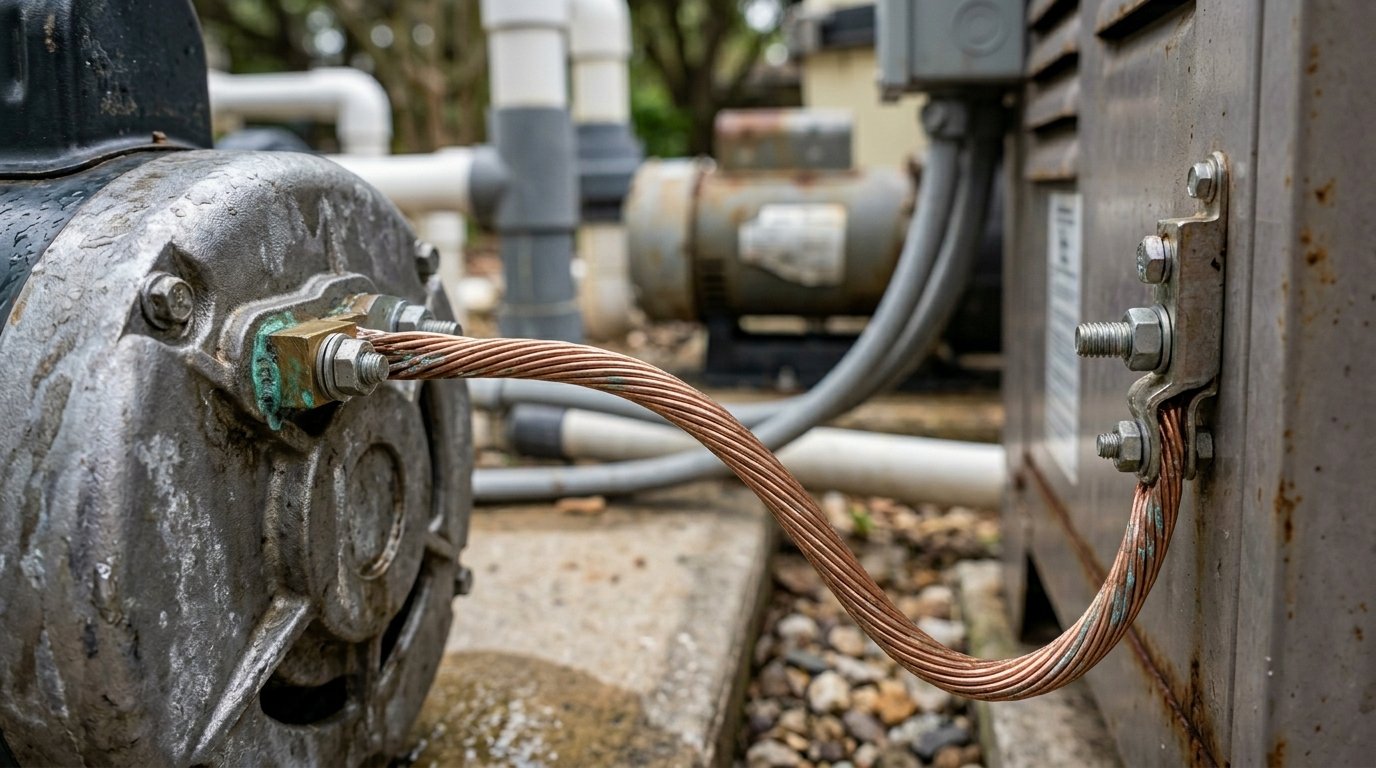
Bonding ties pool metal to one potential so there is no voltage a swimmer can feel.
When you need pool and spa wiring
Some of these are upgrades and some are urgent. If you feel anything in the water, treat it as an emergency.
Shocks or tingles in the water
Any tingle or shock in or near the water is an emergency. Keep everyone out and call immediately.
New pool or spa
A new pool or spa needs complete wiring, bonding, and GFCI protection from the start.
Adding a hot tub
A hot tub needs a dedicated GFCI-protected circuit and a disconnect placed to code.
Pool light out or unsafe
A failed or non-GFCI pool light should be replaced with proper protection.
GFCI trips on equipment
A pump or heater that trips its GFCI needs diagnosis, not a bypass.
Older pool never bonded
Many older pools were never properly bonded and need a retrofit to be safe.
Why proper pool wiring matters
This is the work that keeps a fun backyard from becoming a tragedy. Here is what you gain.
No dangerous voltage
Bonding removes the voltage differences that can shock a swimmer.
GFCI on everything
Pumps, lights, and receptacles cut power instantly on a fault.
Code-compliant
Wired to the strict pool and spa section of the code.
Passes inspection
Bonding and protection verified by city inspection.
Safe hot tub power
Dedicated, protected circuits with proper disconnects.
Safe lighting
Underwater and landscape lighting installed with proper protection.
Equipment ready
Pumps, heaters, and automation circuited correctly.
Older pools made safe
Retrofit bonding brings an older pool up to standard.
Building, upgrading, or worried about a pool?
We wire pools and spas to strict code, including bonding and GFCI. Get a free assessment.
(469) 327-8678How pool and spa wiring actually works
Every pool project is built around the safety code that governs water and electricity. We design the wiring to meet those rules from the start: a complete equipotential bonding grid, GFCI protection on the required equipment and circuits, disconnects within sight of the pump and any hot tub, and strict attention to how far receptacles, switches, and lighting must be from the water. None of this is optional, and all of it is inspected.
Bonding is the part that takes the most care. We run a bonding conductor that ties together the metal that makes up and surrounds the pool, including the structural steel, the pump motor, metal ladders and handrails, and other conductive parts, often including a defined area of the deck. Done correctly, this network holds everything at the same potential so there is no path for a dangerous current to flow through a swimmer. It is invisible when it is right and catastrophic when it is missing.
Then we wire the equipment and protection. Pumps, heaters, salt systems, and automation get correctly sized, GFCI-protected circuits, often from a dedicated subpanel near the equipment pad. Underwater lights are installed with the required protection, and every receptacle around the pool is GFCI protected and placed to code. We pull the permit and have the bonding and wiring inspected, because verification is part of doing this safely.
Bonding versus grounding, and why older pools need attention
Bonding and grounding sound alike but do different jobs, and pool safety depends on both. Grounding gives fault current a safe path back to the source so a breaker or GFCI can trip. Bonding ties conductive parts together so they share the same potential and there is no voltage difference between them. Around a pool, bonding is what keeps a swimmer from becoming the path between two metal objects at slightly different voltages. A pool can be grounded and still be dangerous if it is not properly bonded.
This is exactly why older pools deserve a close look. Bonding requirements have been refined over the years, and many older pools were built before today's standards or have had equipment replaced without re-establishing the bond. The bonding wire can also corrode or break over decades in the ground. An older pool that has felt fine for years can still have a bonding gap that only reveals itself as a tingle in the water, which is a serious warning.
When we evaluate an existing pool, we check the bonding and protection rather than assume they are intact. If we find gaps, we lay out a retrofit to bring the pool up to a safe standard. It is not the most visible upgrade a pool owner can make, but it is one of the most important, because it directly protects the people in the water.
Pool and spa electrical wiring
Every High Power pool job is bonded, protected, and inspected, because around water there is no shortcut.
- Assessment of bonding, protection, and equipment needs
- Complete equipotential bonding of pool metal
- GFCI protection on equipment, lights, and receptacles
- Dedicated circuits for pumps, heaters, and automation
- Hot tub and spa circuits with proper disconnects
- Underwater and landscape lighting wired safely
- Receptacles and switches placed to code distances
- Equipment subpanel near the pad when it makes sense
- City of Dallas permit and inspection handled
- Verification of bonding and protection before use
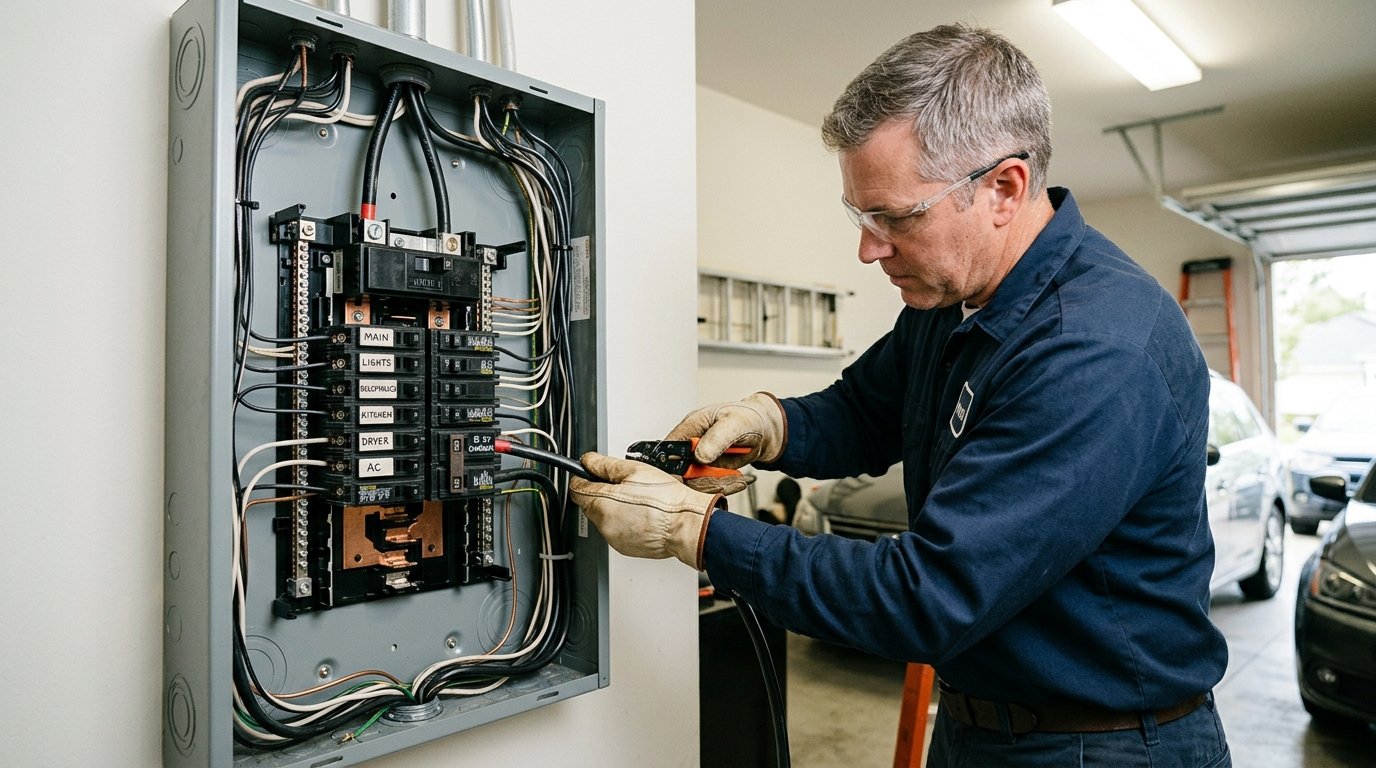
DIY versus licensed pool wiring
Pool wiring is the clearest case where a mistake can kill. This is not a DIY project.
DIY or unlicensed
- Missing or incomplete equipotential bonding
- Pool equipment without required GFCI protection
- Receptacles and switches too close to the water
- Hot tub wired without a proper disconnect
- Unpermitted work with no bonding verification
- A pool that feels fine but hides a lethal gap
Licensed electrician
- A complete bonding grid tying pool metal together
- GFCI protection on equipment, lights, and outlets
- Receptacles and switches placed to code distances
- Hot tub circuits with disconnects within sight
- Permitted work with bonding inspected and verified
- A pool made genuinely safe for the people in it
What affects the cost of pool wiring
Pricing depends on the scope and the pool, not a flat fee. These are the main factors.
New wiring or retrofit
Wiring a new pool differs from retrofitting bonding on an existing one.
Equipment count
Pumps, heaters, salt systems, lights, and automation each add circuits.
Hot tub circuit
A spa needs its own dedicated, protected circuit and disconnect.
Distance and trenching
Long runs to the equipment pad may require trenching and conduit.
Subpanel needs
A dedicated subpanel near the pad may be the cleanest way to feed equipment.
Permit and inspection
Pool electrical permits and inspection are part of compliant work.
These are general planning ranges for the Dallas area, not a quote. Every job is different, so we give you a free on-site assessment and an honest written price before any work starts.
Our pool and spa wiring process
From the first call to a safe, inspected pool, here is how we handle it.
Free assessment
We review the equipment, the bonding, and the protection your pool needs.
Design to code
We plan the bonding, GFCI protection, circuits, and clearances to pool code.
Honest quote
You get a clear written price for the full scope before we start.
Permit filed
We pull the City of Dallas permit so the work is documented and inspection-ready.
Bond and wire
We install the bonding grid, equipment circuits, lighting, and disconnects.
Protect and test
We confirm GFCI protection and test the bonding and circuits.
Inspect and verify
We pass the city inspection and verify the pool is safe before use.
How long it takes and what to expect
Timeline depends heavily on scope. Wiring a brand new pool with full bonding, equipment circuits, and lighting is a multi-step project coordinated with the pool build, while a hot tub circuit or a bonding retrofit on an existing pool is much shorter. We give you a realistic schedule during the assessment and coordinate with your pool builder when the work is part of a new installation.
Throughout, the priority is getting the safety elements right and verified, not rushing. When the work is complete and inspected, your pool or spa has proper bonding, GFCI protection on everything that requires it, and equipment circuits that are sized and protected correctly, so the backyard is safe for everyone who uses it.
Pool and spa wiring across Dallas
With the long, hot Texas summer, pools and spas are everywhere in the Dallas area, from new backyard builds to decades-old pools that have been part of a property for generations. That mix means we do both new wiring and a steady amount of safety retrofitting on older pools that were built to earlier standards.
Older pools are where the most important work often hides. Bonding practices have been refined over the years, and many older pools were under-bonded from the start or lost part of their bond as equipment was replaced or the bonding wire corroded underground. Because the danger is invisible until something goes wrong, evaluating and correcting bonding on an older pool is one of the most valuable things an owner can do.
New pools come with their own coordination. We work alongside pool builders to set the bonding grid during construction, wire the equipment pad, and handle lighting and automation, all timed to the build and the inspection. Getting the electrical right during construction is far easier than correcting it later.
Because we wire pools and spas throughout the metro, we know the local inspection expectations and the specific code requirements that keep water and electricity safely separated. The goal is simple and serious: a pool that is as safe electrically as it is enjoyable.
The licensed Dallas team homeowners trust
Licensed pros
Texas TECL #38291 electricians who know pool and spa code.
Upfront pricing
A clear written price for the full scope before we start.
Safety first
Complete bonding and GFCI protection, inspected and verified.
We answer 24/7
Real people on the phone, and we treat water shocks as emergencies.
Pool and spa wiring FAQs
Because water conducts electricity and people around a pool are wet, barefoot, and vulnerable. A fault that would be minor indoors can be deadly at a pool. The code dedicates a demanding section to pools and spas, centered on bonding and GFCI protection, to keep water and electricity safely apart.
Bonding ties all the metal in and around the pool, the structure, pump, ladders, rails, and more, together so they share the same electrical potential. With no voltage difference between them, there is no path for a dangerous current to flow through a swimmer. It is the core safety feature of pool wiring.
Grounding gives fault current a safe path back so a breaker or GFCI can trip. Bonding ties conductive parts together so they sit at the same potential. A pool needs both, and it can be grounded yet still dangerous if it is not properly bonded. The two jobs are different and both must be correct.
Treat it as an emergency. Keep everyone out of the water and away from metal pool parts, and call a licensed electrician right away. A tingle is a warning sign of an electrical problem, often a bonding or fault issue, that needs immediate professional attention.
It may. Many older pools were built before current bonding standards or lost part of their bond as equipment was replaced or the wire corroded. Because the danger is invisible until something goes wrong, an evaluation is worthwhile, and we can retrofit bonding to bring it up to a safe standard.
Yes. Pool pump motors, underwater lights, and the receptacles around a pool all require GFCI protection so power cuts instantly if current starts to leak. This is a code requirement and a key part of keeping the pool safe.
Yes. A hot tub needs a dedicated, GFCI-protected circuit sized to the unit and a disconnect placed within sight at the code-required distance. We wire spas and hot tubs to code, whether standalone or as part of a pool.
Code sets minimum distances for receptacles, switches, and lighting around a pool, and outlets within range must be GFCI protected. We place and protect everything to those requirements so the area around the water is safe.
Yes. Pool and spa electrical work is permitted in the City of Dallas, and the bonding and protection are inspected. We pull the permit and pass inspection, because verification is an essential part of doing this safely.
Yes. For new pools we work alongside the builder to set the bonding grid during construction and wire the equipment, lighting, and automation, timed to the build and inspection. Handling the electrical correctly during construction is far easier than fixing it later.
No. A GFCI tripping on pool equipment is detecting current leaking to ground, which around water is exactly the hazard it guards against. Bypassing it removes life-safety protection. We diagnose why it trips and fix the real cause.
Yes. We provide a free on-site assessment of your pool or spa, the bonding, and the equipment needs, so you get an accurate written quote before any work begins.