Short Circuit Diagnostics in Dallas
Tripping breaker or a circuit fault in Dallas, TX (75247)? High Power Electrical Services traces short circuits and ground faults to their exact source with proper testing, then repairs the cause, instead of just resetting a breaker that keeps tripping.
Quick Answer
A short circuit is an unintended path that lets current bypass the load, causing a surge of current that trips the breaker instantly. Finding it means systematically isolating whether the fault is in the wiring, a device, or an appliance, and exactly where. We use proper testing to pinpoint the cause and repair it, rather than resetting a breaker that is warning you of a real hazard.
A tripping breaker is a symptom, so we diagnose the cause
When a breaker trips the instant you reset it, or a circuit goes dead and will not come back, something on that circuit has faulted. The breaker is doing exactly what it should, cutting power to protect you. The problem is that the fault is usually hidden, inside a wall, behind a device, or within an appliance, and the only way to fix it for good is to find precisely what and where it is.
That is what diagnostics are for. We do not swap parts and hope, and we never just force a breaker back on. We work the circuit methodically, separating the wiring from the devices from the plugged-in loads, and we use meters and testing to narrow the fault down to its source. Done right, we can tell you not just that the circuit is faulted, but the specific cause, which is what makes the repair reliable.
The faults we trace usually fall into a few families. A short circuit is a hot conductor contacting a neutral. A ground fault is a hot conductor contacting a ground or grounded surface. An overload is simply too much load for the circuit. They look similar from the breaker panel but have different causes and fixes, and part of diagnosis is telling them apart.
Common culprits include damaged or pinched wiring, a nail or screw driven into a cable, failed outlets and switches, water or rodent damage, loose connections that arc, and faulty appliances or cords. We identify which one you have, make the situation safe, and repair the cause so the circuit holds.
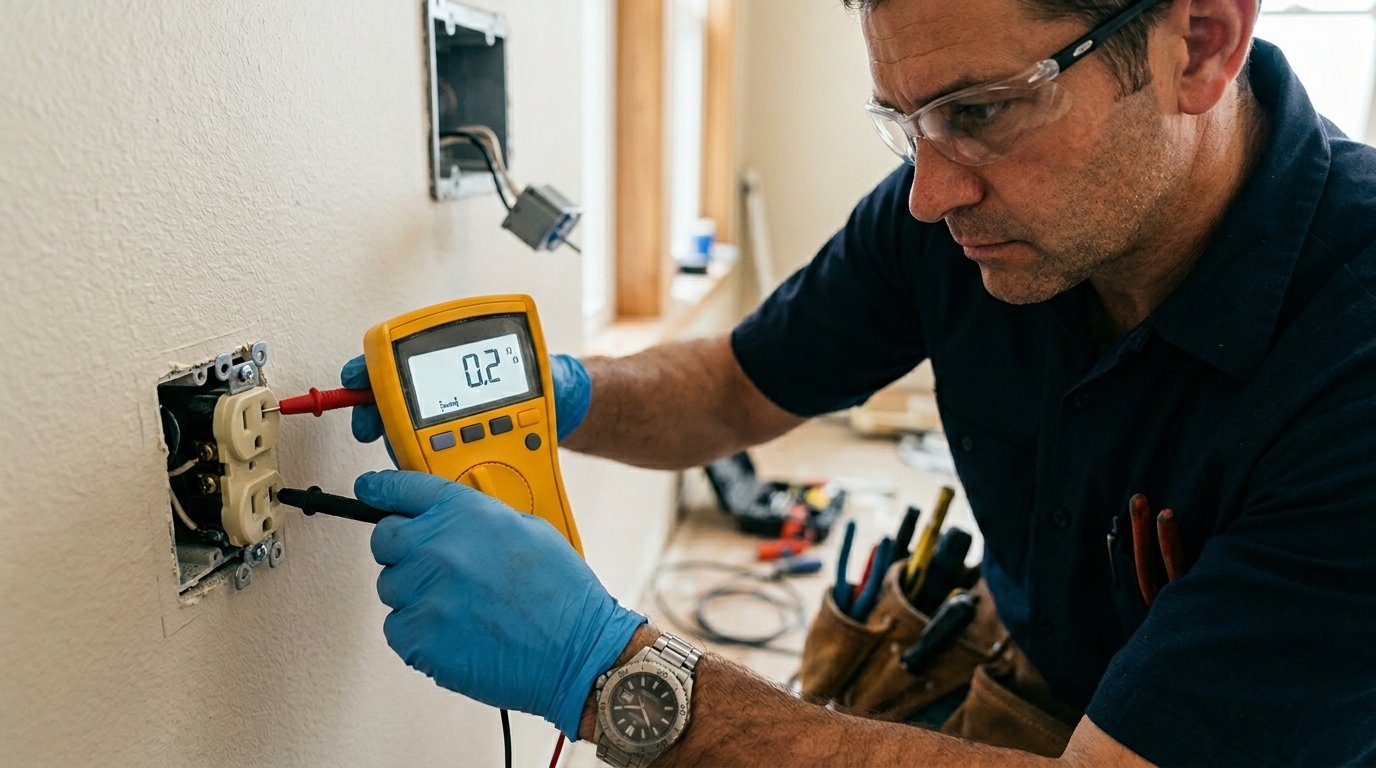
Proper testing isolates whether the fault is in the wiring, a device, or an appliance.
Signs of a short circuit or ground fault
These point to a fault that needs diagnosis, not another reset. If you see them, have it traced.
Breaker trips instantly on reset
A breaker that trips the moment you reset it is responding to a dead short, not a temporary overload.
Burning smell at a device
A scorched smell at an outlet or switch means heat and arcing from a fault.
Sparks or a pop
A spark or popping sound when a device is used signals a short that needs immediate attention.
Dead circuit
A circuit that suddenly goes dead and will not reset usually has a fault somewhere on the line.
GFCI keeps tripping
A GFCI that will not reset is detecting a ground fault, which needs to be located, not ignored.
Intermittent tripping
A circuit that trips now and then often has a degrading connection or a fault that comes and goes.
Why proper diagnostics matter
Finding the real cause protects your home far better than another reset. Here is what you gain.
Root cause found
We locate the actual fault, not just the symptom at the panel.
Hazard removed
A short or ground fault is an ignition and shock risk we make safe.
Targeted repair
Pinpointing the fault means a precise fix, not guesswork or rewiring everything.
Wiring vs device vs appliance
We tell you whether it is your wiring, a device, or a plugged-in item.
No more resetting
Once the cause is fixed, the breaker holds and the circuit works.
Lower fire risk
Arcing faults are a leading fire cause, and we eliminate them.
Proper test equipment
Meters and testing methods find faults that a visual check would miss.
Code-compliant repair
Whatever the cause, the repair meets NEC and Dallas requirements.
Breaker keeps tripping no matter what you do?
Stop resetting it and let us find the fault. Get a same-day diagnosis and an honest quote.
(469) 327-8678How short circuit diagnostics actually works
We start by making the situation safe and gathering the story: which circuit, what was happening when it tripped, and whether there is any heat, smell, or sparking. Then we begin isolating. By dividing the circuit and removing loads, we determine whether the fault clears when everything is unplugged, which points to an appliance, or whether it persists with nothing connected, which points to the wiring or a device. That single test eliminates a huge amount of guesswork.
From there we narrow it down. We open and inspect outlets, switches, and junction boxes along the circuit, looking for the telltale signs of a fault: scorched terminals, pinched or nicked wires, loose connections, and water or rodent damage. We use meters to test continuity and resistance and, where needed, insulation testing to find a breakdown hidden inside the cable. The goal is to move from the whole circuit down to the one spot that is faulting.
Once we find it, we make it safe and repair the cause, whether that is replacing a failed device, repairing or replacing damaged wiring, tightening and correcting a connection, or identifying a faulty appliance for you to address. Then we test the circuit under load to confirm the fault is gone and the breaker holds. You leave knowing exactly what was wrong and that it is genuinely fixed.
Short circuit, ground fault, or overload
These three get confused constantly, and telling them apart is central to a correct diagnosis. A short circuit is when a hot conductor touches a neutral, creating a near-instant surge of current that trips a standard breaker immediately. A ground fault is when a hot conductor touches a ground or a grounded surface, which is what a GFCI is built to catch quickly to prevent shock. An overload is different entirely: the wiring is fine, but too much load is drawing more current than the circuit is rated for, so the breaker trips after a delay.
Why does the distinction matter? Because the fix is different for each. A short or ground fault means something is damaged or failed and must be located and repaired. An overload often means the circuit simply has too much on it, and the answer may be redistributing loads or adding a circuit rather than chasing a fault that is not there. Misreading one for the other wastes time and money.
Modern protection adds another layer worth understanding. Arc-fault breakers, known as AFCI, are designed to catch the dangerous arcing that can occur in damaged wiring before it starts a fire, and ground-fault devices catch shock hazards. When we diagnose, we also consider whether the right protective devices are in place, since the correct breaker is part of a safe circuit.
A short circuit diagnosis
Every High Power diagnosis is methodical and complete, ending in a real answer, not a reset.
- Review of the symptom and circuit history
- The situation made safe before testing
- Systematic isolation of wiring, devices, and loads
- Inspection of outlets, switches, and junctions
- Meter testing for continuity and resistance
- Insulation testing where a hidden fault is suspected
- Identification of the exact fault and its cause
- Clear explanation of wiring, device, or appliance
- Repair of the cause with your approval
- Load test to confirm the circuit holds
Resetting it yourself versus a real diagnosis
Forcing a faulted breaker back on does not fix anything and can be dangerous. Here is the honest comparison.
DIY or unlicensed
- Repeatedly resetting a breaker that keeps tripping
- Guessing which outlet or device is to blame
- Swapping parts hoping one fixes it
- No way to find a fault hidden in the wiring
- Mistaking an overload for a short, or the reverse
- Leaving an arcing fault that can start a fire
Licensed electrician
- The breaker left off while the cause is found
- Systematic isolation to the exact fault
- Targeted repair of the confirmed cause
- Meter and insulation testing for hidden faults
- Short, ground fault, and overload correctly told apart
- Arcing and shock hazards eliminated
What affects the cost of diagnostics
Pricing depends on how hard the fault is to find and fix, not a flat fee. These are the main factors.
Diagnosis difficulty
An obvious fault is faster to find than an intermittent one hidden in the walls.
Intermittent faults
A fault that comes and goes takes more time to catch and confirm.
Access
Reaching devices and junctions behind furniture or in finished walls affects the work.
Wiring, device, or appliance
A failed outlet is a quick fix, while damaged in-wall wiring is a larger repair.
The repair itself
Once found, the parts and labor to fix the cause drive the repair price.
Permit if required
Where a repair needs a permit, the fee and inspection are part of compliant work.
These are general planning ranges for the Dallas area, not a quote. Every job is different, so we give you a free on-site assessment and an honest written price before any work starts.
Our diagnostic process
From a tripping breaker to a circuit you can trust, here is how we handle it.
Make it safe
We secure the situation and gather what happened before testing.
Isolate the circuit
We divide the circuit and remove loads to narrow the source.
Inspect and test
We check devices and junctions and use meters to find the fault.
Pinpoint the cause
We confirm whether it is wiring, a device, or an appliance, and where.
Explain and price
We tell you exactly what is wrong and quote the repair honestly.
Repair the cause
With your approval we fix the fault at its source.
Test and verify
We load-test the circuit to confirm the breaker holds and it is safe.
How long it takes and what to expect
Many short circuit and ground fault diagnoses are completed in a single visit. A clear, accessible fault can be found and repaired quickly, while an intermittent fault or one hidden inside finished walls takes longer to isolate with confidence. We are upfront about that, and we focus on finding the true cause rather than rushing to a guess that leaves the hazard in place.
Once we locate and repair the fault, we test the circuit under load so you can see that the breaker holds and the circuit works normally. You finish with a clear explanation of what was wrong, what we did, and whether anything else on that circuit deserves attention.
Common fault causes in Dallas homes
The mix of housing across Dallas means we see the full range of fault causes. In older homes, decades of heat-aged insulation, brittle wiring, and generations of modifications create more places for a short or ground fault to develop. Connections that were fine for years finally loosen and arc, or old insulation cracks and lets conductors touch.
Texas heat accelerates all of it. Months of heavy load and high attic and wall temperatures stress insulation and connections, which is why faults often surface in the depths of summer. Water is another frequent trigger, since storms and leaks can reach a circuit and create a ground fault where none existed before.
Pests play a surprising role too. Rodents chew wiring in attics and walls, and that damage is a classic hidden cause of a circuit that suddenly faults with no obvious explanation. Tracing these requires methodical testing rather than a quick look, which is exactly how we approach them.
Because we diagnose faults across the metro constantly, we know the patterns that show up in different kinds of Dallas homes and how to isolate them efficiently. The goal is always the same: find the real cause, make it safe, and fix it so the circuit holds.
The licensed Dallas team homeowners trust
Licensed pros
Texas TECL #38291 electricians who diagnose, not guess.
Real testing
Meters and methodical isolation to find the true cause.
Safety first
We make the fault safe before anything else.
We answer 24/7
Real people on the phone, with same-day availability.
Short circuit diagnostics FAQs
A short circuit is an unintended path where a hot conductor contacts a neutral, letting current bypass the load. That creates a near-instant surge of current, which is why a standard breaker trips immediately. It needs to be located and repaired, not reset.
A short circuit is a hot conductor touching a neutral, while a ground fault is a hot conductor touching a ground or a grounded surface. Ground faults are a shock hazard, which is what GFCI devices are built to catch quickly. Both trip protection, but the cause and fix differ, so we diagnose which it is.
An instant trip on reset almost always means a dead short or ground fault on the circuit. The breaker is protecting you. Forcing it back on does not help and can be dangerous, so the right move is to leave it off and have the fault traced.
No. Repeatedly resetting a breaker that trips on a fault can lead to arcing, overheating, and fire. The breaker is warning you. Leave it off and call for a diagnosis so the actual cause can be found and fixed.
Common causes are damaged or pinched wiring, a nail or screw through a cable, failed outlets or switches, loose connections that arc, water intrusion, rodent damage, and faulty appliances or cords. Diagnosis is about finding which one you have and where.
We isolate the circuit by section and remove loads to narrow where the fault is, inspect accessible devices and junctions, and use meters and insulation testing to locate a breakdown inside the wiring. That methodical approach finds faults a visual check would miss.
Often, yes. One of the first things we determine is whether the fault clears when everything is unplugged, which points to an appliance, or persists with nothing connected, which points to the wiring or a device. We tell you exactly which.
A GFCI trips on a ground fault, which is related but not the same as a short circuit. It is detecting current leaking to ground, which is a shock hazard. We locate the source, whether it is a device, the wiring, or a connected item, and repair it.
A short is a fault where current bypasses the load and trips the breaker instantly. An overload is simply too much load on a healthy circuit, which trips the breaker after a delay. The fixes differ, so part of diagnosis is telling them apart.
Often, yes. Many faults are found and repaired in one visit, especially accessible ones. An intermittent or deeply hidden fault can take longer to isolate, and we are honest about that rather than rushing to a guess.
We consider it. Arc-fault breakers catch the dangerous arcing in damaged wiring that can start fires, and ground-fault devices catch shock hazards. If your circuit would benefit from updated protection, we will explain where it is required or worthwhile.
Yes. We answer the phone around the clock and offer same-day availability, since a faulting circuit can be both disruptive and a safety concern. Call and describe what is happening and we will help.