Why Do My Lights Flicker? Causes, Fixes, and When to Worry
From a simple dimmer to a loose connection, here is what makes lights flicker, and how to tell a harmless flicker from a warning sign.
Quick Answer
Flickering lights range from harmless to serious, and the pattern tells you which. A single dimmable bulb flickering is usually just the bulb or the dimmer. But lights that flicker across the whole house, dim hard when a big appliance starts, or flicker alongside warm outlets, buzzing, or a burning smell can signal a loose connection, an overloaded circuit, or a failing panel, which are real hazards. If the flickering is widespread, sudden, or paired with other warning signs, have it checked.
What flickering lights are really telling you
Almost every homeowner sees a light flicker now and then, and most of the time it means nothing. But flickering is also one of the ways your electrical system signals that something is wrong, sometimes seriously wrong, so it is worth knowing how to tell an innocent flicker from a warning. The secret is in the pattern.
Ask yourself three questions. Is it one fixture or many? Does it happen occasionally or constantly? And is it alone, or joined by other signs like warm outlets, buzzing, or a burning smell? A single bulb flickering on its own is almost always trivial. Many lights flickering together, or flickering with any other symptom, deserves attention.
Below we walk through the causes of flickering lights from the most harmless to the most serious, how to tell them apart, and the point at which a flicker stops being an annoyance and becomes a reason to call an electrician.
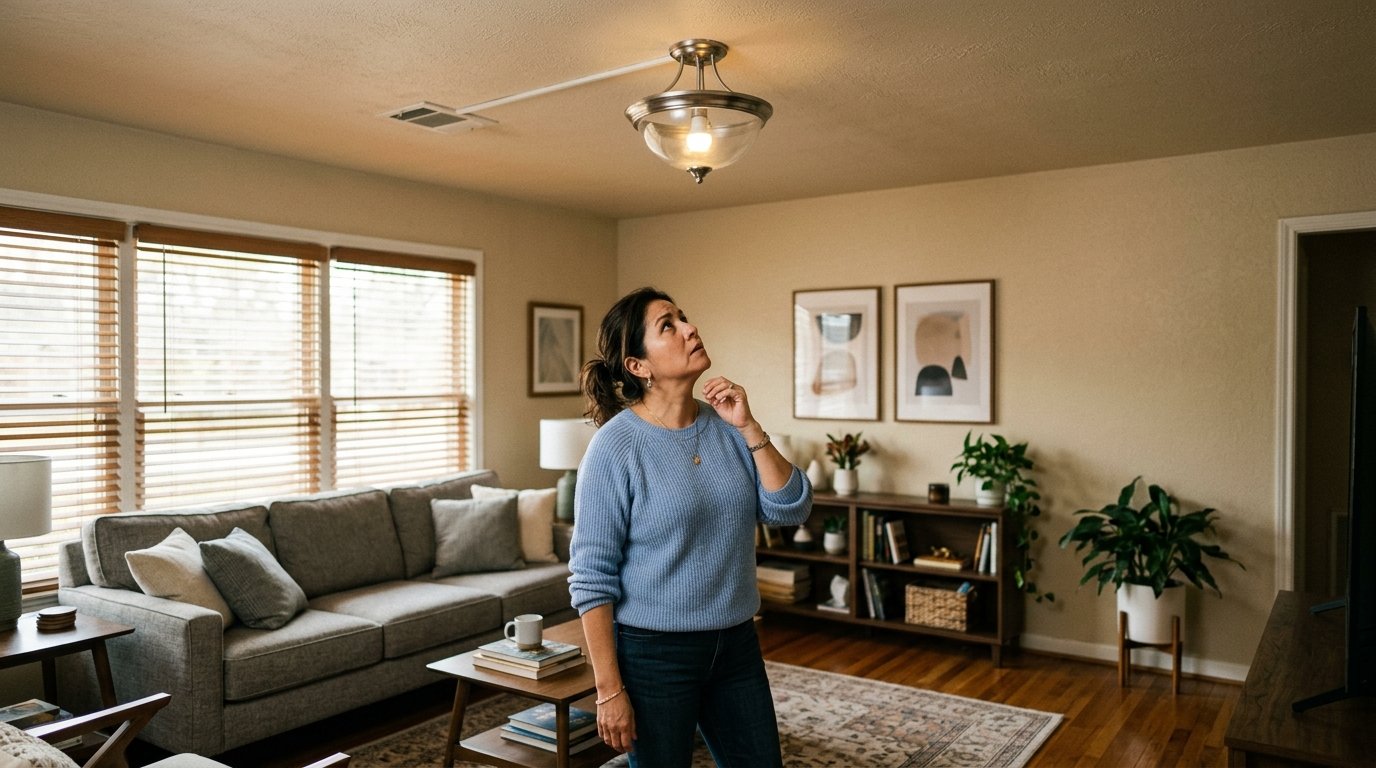
The pattern of a flicker, one light or many, occasional or constant, tells you how worried to be.
Common reasons lights flicker
From the harmless to the serious, here is what is usually behind a flicker.
A loose or wrong bulb
The most common and harmless cause: a bulb that is loose in its socket, or an LED paired with a dimmer it is not compatible with.
A failing dimmer or switch
An aging dimmer or a worn switch can make the lights it controls flicker. Replacing it usually solves it.
A large appliance starting
A brief dip when the AC, dryer, or a pump kicks on is often normal, but a strong, repeated dim can mean the circuit or service is strained.
An overloaded circuit
Too much demand on one circuit can make its lights flicker. It is a sign you may need the load spread out or more capacity.
A loose wiring connection
A loose connection at an outlet, switch, fixture, or the panel makes lights flicker, and it can arc and overheat. This one is a genuine fire concern.
A service or utility issue
Flickering across the whole home can point to a loose service connection or a utility-side problem, which needs prompt professional attention.
Harmless flickers vs warning signs
At the harmless end, a single light flickering usually comes down to the bulb or its control. A loose bulb, an LED on an incompatible dimmer, or a worn switch are easy, inexpensive fixes, and if tightening the bulb or changing the dimmer solves it, you are done. A brief, occasional dip when a large appliance starts is also often normal, simply the momentary draw of a motor coming to life.
The picture changes when flickering is widespread or persistent. Many lights flickering together, lights that dim hard and often when the AC or dryer runs, or flickering that is getting worse can mean an overloaded or failing panel or a strained service. These are not emergencies on their own, but they are telling you the system is under stress and should be evaluated.
And some flickers are urgent. Flickering paired with warm or discolored outlets, a buzzing sound, or a burning smell points to a loose, arcing connection, which is a fire risk. If you notice those signs, treat it seriously: stop using the affected circuit and call for emergency troubleshooting rather than waiting.
Lights flickering across your home?
We track down the real cause, from a simple dimmer to a loose connection, and fix it safely. Reach out anytime.
(469) 327-8678The dangerous one: loose connections and arcing
Of all the causes of flickering, a loose connection is the one to respect. Wherever wires join, at an outlet, a switch, a fixture, or inside the panel, the connection is meant to be tight. When it loosens, from age, vibration, heat, or poor original work, current jumps the tiny gap in tiny arcs. Those arcs flicker your lights, and they also generate heat exactly where you do not want it.
Over time that heat scorches insulation, damages the connection further, and can ignite surrounding material. It is the mechanism behind a real share of electrical fires, and it is why a flicker that comes with warmth, buzzing, or odor is never something to live with. The difficulty is that the loose connection can be anywhere on the circuit, hidden in a wall or box.
This is precisely why chasing a serious flicker is not a do-it-yourself job. Finding a loose or arcing connection safely means working methodically through a live system, and a professional diagnosis locates the fault without putting you at risk. Once found, the fix is usually straightforward; finding it safely is the skilled part.
Chasing a flicker yourself vs a proper diagnosis
A serious flicker can hide a fire risk. Finding it safely is skilled work.
DIY or unlicensed
- Swapping bulbs over and over without finding the cause
- Ignoring flickering that comes with heat or a smell
- Opening outlets or the panel to probe live wiring
- Assuming a whole-house flicker will sort itself out
Licensed electrician
- Diagnose the pattern to narrow down the cause
- Safely locate a loose or arcing connection
- Check the circuit, panel, and service for strain
- Fix the real cause and confirm it is resolved

A loose, arcing connection can hide anywhere on a circuit and is best found by a professional.
Flickering in older Dallas homes
Older Dallas homes flicker more than newer ones, for understandable reasons. Decades-old connections work loose, original panels are often undersized for modern demand, and some homes still have aluminum wiring or aging cloth wiring whose connections are more prone to trouble. In these homes, widespread flickering is often the system asking for attention.
Summer makes it more noticeable. When the air conditioning runs hard through a Texas heat wave, the added load reveals weak connections and strained panels, so the flicker you shrugged off in spring becomes a nightly event in July. If that sounds familiar, it is worth a look before the problem grows.
Whatever your home's age or neighborhood, the approach is the same: we diagnose the true cause rather than guess, fix it properly, and tell you honestly whether it was a simple dimmer or a sign of something that needed addressing. We serve every Dallas neighborhood and answer the phone around the clock for the flickers that cannot wait.
How we track down a flicker
A methodical path from symptom to a flicker that is truly fixed.
Listen and inspect
We ask what you are seeing and where, then inspect the affected fixtures, circuits, and panel.
Diagnose the cause
We work methodically to pinpoint whether it is a bulb, dimmer, overload, connection, or service issue.
Fix the real cause
We correct the actual problem, from a worn dimmer to a loose connection, safely and to code.
Test and confirm
We verify the flicker is gone under load and explain plainly what it was.
Flickering lights FAQs
Causes range from a loose bulb or an incompatible dimmer, to a large appliance starting, to an overloaded circuit, a loose wiring connection, or a service issue. A single light flickering is usually trivial, while many lights flickering together, or flickering with other signs, deserves a closer look.
Often not, but sometimes yes. A single bulb or dimmer flickering is harmless, but flickering paired with warm outlets, buzzing, or a burning smell can mean a loose, arcing connection, which is a fire risk. Widespread or worsening flickering should be evaluated by an electrician.
Large appliances draw a surge of current at startup, which can briefly dim the lights. An occasional, slight dip is usually normal, but a strong or frequent dim can mean the circuit is undersized or your panel and service are strained, which is worth checking.
Whole-home flickering points to something shared by all circuits, often a loose connection at the panel or service, an overloaded or failing panel, or a utility-side issue. Because it involves the main service, it should be evaluated promptly by a licensed electrician.
Yes. A loose connection lets current arc across a tiny gap, generating heat that can scorch insulation and ignite surrounding material. It is behind a real share of electrical fires, which is why flickering with heat, buzzing, or odor should never be ignored.
Most often because the LED is paired with a dimmer not designed for it, or with an older dimmer. Using LED-compatible dimmers and quality bulbs usually solves it. If LED flickering is widespread or joined by other signs, though, the cause may be in the wiring.
A brief, occasional flicker in one light, or a slight dip when a big appliance starts, is usually nothing. Worry when flickering is widespread, constant, worsening, or accompanied by warm outlets, buzzing, or a burning smell. Those patterns warrant a professional look.
Call when flickering affects many lights or the whole home, when it is sudden or getting worse, or whenever it comes with warm outlets, buzzing, or a burning smell. Those are signs of a real electrical problem rather than a simple bulb or dimmer.
Sometimes. A loose connection on the service or a neighborhood-wide issue can cause flickering that is not inside your home. An electrician can determine whether the problem is on your side or the utility's and advise you accordingly.