Why Does My Breaker Keep Tripping? A Dallas Electrician's Guide
Tripping breakers are common, fixable, and occasionally a warning. Here is how to tell the difference, and what to do about it.
Quick Answer
Your breaker trips to protect you, so it is doing its job, not failing at it. The usual causes are an overloaded circuit, a short circuit, a ground fault, or a worn-out breaker or appliance. An occasional trip after you plug in too much at once is normal. A breaker that trips repeatedly, trips the instant you reset it, or trips for no clear reason needs a licensed electrician, because it can point to a real hazard.
Your breaker is a safety device, not the problem
A tripping breaker is one of the most common reasons Dallas homeowners call an electrician, and it is also one of the most misunderstood. The breaker is not the villain here. It is a safety device whose entire purpose is to cut power the moment a circuit draws more current than its wiring can safely carry, stopping wires from overheating and starting a fire. When it trips, it is protecting your home exactly as designed.
That is why the goal is never to force a breaker to stay on. A breaker that keeps tripping is telling you something on that circuit needs attention, whether that is too much plugged in, a fault in the wiring or a device, or a panel that has simply reached the end of its service life. The job is to find out which, and to fix the cause rather than silence the symptom.
Below, we walk through the common reasons breakers trip, how to tell them apart, the warning signs that mean you should stop and call a professional right away, and why older homes and brutal Texas summers make this such a frequent problem across Dallas. Where a problem is genuinely yours to handle, we will say so. Where it is not, we will explain why.
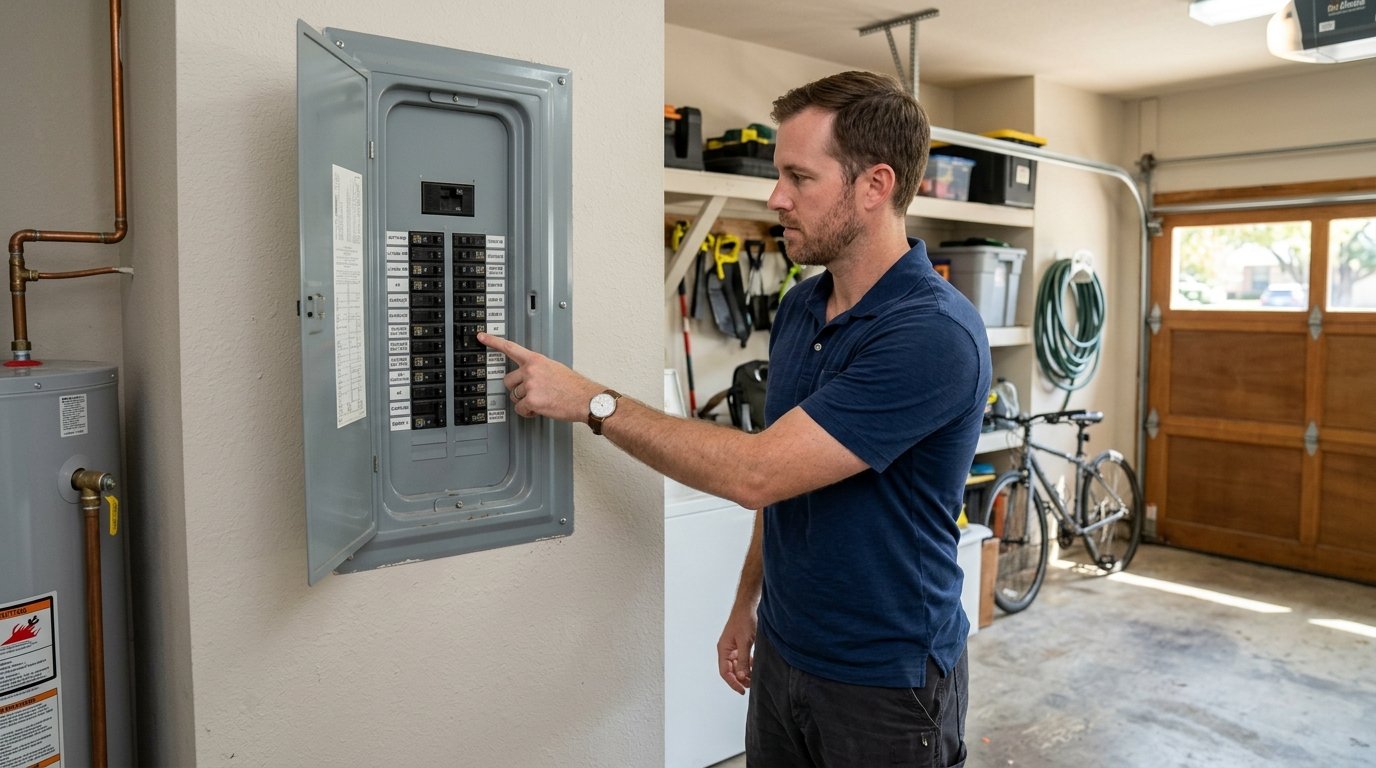
A breaker that resets and holds is different from one that trips again immediately.
The most common reasons a breaker trips
Nearly every tripping breaker comes down to one of these six causes.
Overloaded circuit
The most common cause. Too many devices on one circuit draw more current than it is rated for, so the breaker trips. Common when space heaters, hair dryers, or a window unit share a circuit.
Short circuit
A hot wire touches a neutral or another hot wire, causing a sudden surge of current. This trips a breaker instantly and is a genuine hazard that needs a professional diagnosis.
Ground fault
A hot wire contacts a grounded part or moisture, common in kitchens, baths, and outdoors. GFCI protection and breakers trip to prevent shock, and repeated trips point to a real fault.
Worn-out breaker
Breakers wear with age and heat. An old or weak breaker can trip at less than its rated load or fail to reset, and on some older or recalled panels this is a known safety concern.
Faulty appliance or device
A failing appliance, frayed cord, or bad motor can draw too much current or short out, tripping the breaker every time it runs. The fix is the device, not the breaker.
Undersized or aging panel
Homes built decades ago often have panels too small for modern central air, electronics, and EV charging. The panel trips because it was never built for today's load.
How to tell which problem you have
You can learn a lot before anyone picks up a tool, simply by watching how the breaker behaves. If it trips only when several power-hungry things run at once, then resets and holds, that points to an overloaded circuit. The cure is to spread the load across more circuits, or, if it keeps happening, to add a dedicated circuit for the heavy appliance.
If the breaker trips the instant you reset it, with nothing obvious turned on, treat that as a short circuit or a serious fault and stop resetting it. Repeatedly forcing a shorted circuit back on is how wiring overheats. This is exactly the kind of problem our short circuit diagnostics are built to track down safely.
If the trips happen on kitchen, bathroom, garage, or outdoor circuits, a ground fault is likely, and the device tripping may be a GFCI outlet rather than the breaker itself. And if a breaker trips with almost nothing on the circuit, or will not reset at all, the breaker or the panel may be the problem. A safe first step is to unplug everything on that circuit and try one reset. If it holds, add devices back one at a time to find the culprit. If it trips again right away, leave it off and call a licensed electrician.
A breaker that keeps tripping? We will find the real cause.
Our licensed Dallas electricians diagnose and fix tripping breakers safely, day or night, with honest pricing.
(469) 327-8678When a tripping breaker is a real danger
Most tripping breakers are an inconvenience, but some are an early warning of a fire risk, and knowing the difference matters. Stop using the circuit and call a licensed electrician right away if you notice any of these alongside the tripping: a burning or melting-plastic smell, a breaker or outlet that is warm, discolored, or scorched, a buzzing or crackling sound from the panel, or sparks when you plug something in.
Two behaviors also deserve urgency on their own. A breaker that trips the moment you reset it, every time, is signaling a short or fault that should not be re-energized. And a breaker that will not reset at all, or that feels loose or hot, may be failing internally. On certain older and recalled panel brands still found in Dallas homes, breakers can fail to trip when they should, which is the more dangerous failure of all.
In any of these situations, the safest move is to leave the breaker off and get a professional out quickly. Our emergency troubleshooting line is answered around the clock for exactly this reason, because electrical hazards do not keep business hours.
Should you reset it yourself or call a pro?
Some steps are safe to try at home. Anything inside the panel is licensed work.
DIY or unlicensed
- Reset a tripped breaker once, fully off then on
- Unplug devices on the circuit and try again
- Replace a faulty appliance or damaged cord
- Move some devices to a different circuit
Licensed electrician
- Diagnose the true cause with proper test equipment
- Track down hidden shorts and ground faults in the wiring
- Replace a worn or unsafe breaker with the correct type
- Upgrade an undersized panel or add circuits, to code with a permit
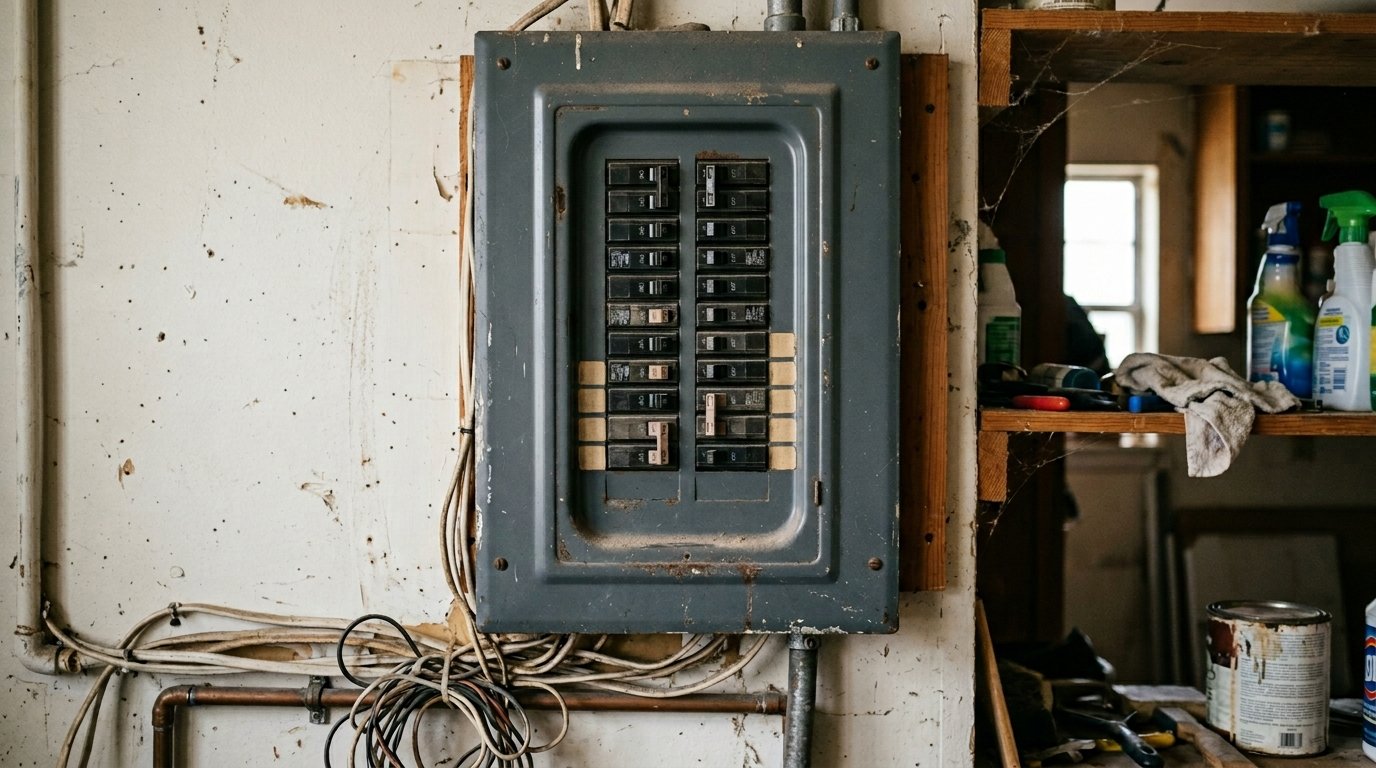
Older Dallas panels were never sized for central air, electronics, and EV charging.
Why breakers trip more often in Dallas homes
Dallas puts unusual demands on home electrical systems, starting with the heat. Through a North Texas summer, air conditioning runs hard for months, and a central or window unit is one of the largest loads in the house. Add a few more appliances on the same circuit and a marginal breaker trips, which is why AC-related trips spike every July and August.
The city's housing stock is the other factor. Dallas is full of beloved older homes, the 1920s Tudors of the M Streets, mid-century ranches across the north and southeast, and historic cottages in Oak Cliff, many with panels and wiring that were sized for a very different era. An original panel never planned for central air, a modern kitchen, electronics, and EV charging will trip simply because it is out of room and out of capacity.
Aging components add to it. Worn breakers, brittle wiring in older homes, and aluminum branch wiring from the late 1960s and 1970s all create loose, overheating connections that trip breakers and warrant attention. When a home keeps tripping despite a sensible load, the answer is often a panel or breaker upgrade, or added capacity through a subpanel, rather than another reset.
What we do when you call us
A clear, safe path from the first call to a fix that lasts.
Listen and assess
We ask what trips, when, and what else you have noticed, so we arrive ready and you stay safe in the meantime.
Test and isolate
On site, we use proper meters to find whether the cause is a load, a device, the wiring, the breaker, or the panel.
Fix at the source
We repair the real cause, a faulty circuit, a worn breaker, or an overloaded panel, rather than just resetting it.
Verify and prevent
We test the repair under load, check the rest of the panel, and recommend any upgrades that prevent it recurring.
Tripping breaker FAQs
Often the tripping itself is the breaker safely doing its job, but repeated tripping always means something needs attention. It becomes dangerous when you also notice a burning smell, a warm or discolored breaker or outlet, buzzing, or scorch marks, or when a breaker trips the instant you reset it. In those cases, stop using the circuit and call a licensed electrician right away.
Air conditioning is one of the largest electrical loads in a home, and a startup draws even more current. If the AC shares a circuit with other devices, or the circuit or panel is undersized, that surge trips the breaker. The fix is usually a correctly sized dedicated circuit for the equipment, and sometimes a panel upgrade.
A breaker that trips the instant you reset it, with nothing turned on, is signaling a short circuit or serious fault. Do not keep resetting it, because re-energizing a shorted circuit can overheat the wiring. Leave it off and have a licensed electrician diagnose it.
Resetting once is fine. If it holds, you are likely fine to continue, ideally after unplugging some devices. If it trips again right away, or you find yourself resetting it repeatedly, stop. Repeated resets on a faulty circuit are a fire risk, and the breaker is telling you to call a professional.
If a breaker trips with little or nothing on the circuit, the problem is usually in the wiring, the breaker, or the panel rather than your devices. This can be a hidden short, a ground fault, or a worn-out breaker. It needs a proper diagnosis, not another reset.
Not always, but sometimes. If your home keeps tripping despite a reasonable load, has an undersized or aging panel, or is on a panel brand known to be unreliable, an upgrade may be the real solution. We evaluate your panel honestly and only recommend an upgrade when it is genuinely warranted.
You can safely reset a breaker once, unplug devices, replace a faulty appliance or cord, and spread your load across circuits. Anything inside the panel, or diagnosing shorts, ground faults, and wiring, is licensed work for good reason, because the risks of shock and fire are real. When the simple steps do not solve it, call a pro.
It depends entirely on the cause. Tracking down and clearing a simple fault is a modest job, replacing a single breaker is small, and replacing or upgrading the whole panel is a larger investment. Because every situation is different, we give you a free assessment and an honest written price before any work begins, with no surprises.
We answer the phone around the clock and prioritize genuine electrical emergencies, dispatching across Dallas as fast as we safely can. If you notice a burning smell, heat, or sparking along with the tripping, call right away and leave the circuit off until we arrive.