Summer Electrical Safety Tips for Your Dallas Home
How to keep your home safe, cool, and powered through the heat, storms, and heavy AC load of a North Texas summer.
Quick Answer
A Texas summer puts more strain on your home's electrical system than any other season, mostly through air conditioning. The big risks are overloaded circuits and tripping breakers, an old panel that cannot keep up, power surges from summer storms, and overworked AC wiring. The fixes are straightforward: avoid overloading circuits, add surge protection, make sure your AC has a proper dedicated circuit, and have an aging panel checked before the worst of the heat arrives.
Why summer is hard on your home's electrical
In North Texas, summer is the real test of a home's electrical system. Air conditioning runs hard for months, often near-constantly through the hottest stretches, and it is by far the largest electrical load in most homes. Stack a few more appliances on the same circuits, and a system that coasted through spring starts tripping breakers and showing its age.
Summer also brings the weather that damages electrical systems. Severe thunderstorms send power surges down the lines that can fry AC electronics, appliances, and devices, and they cause the outages that leave homes without cooling when it is most dangerous. The same heat that drives demand also stresses connections, wiring, and panels that are already working overtime.
The good news is that a few sensible steps prevent most summer electrical trouble, and the time to take them is before peak heat, not during a July emergency. Below are the practical tips that keep a Dallas home safe, cool, and powered all summer long.
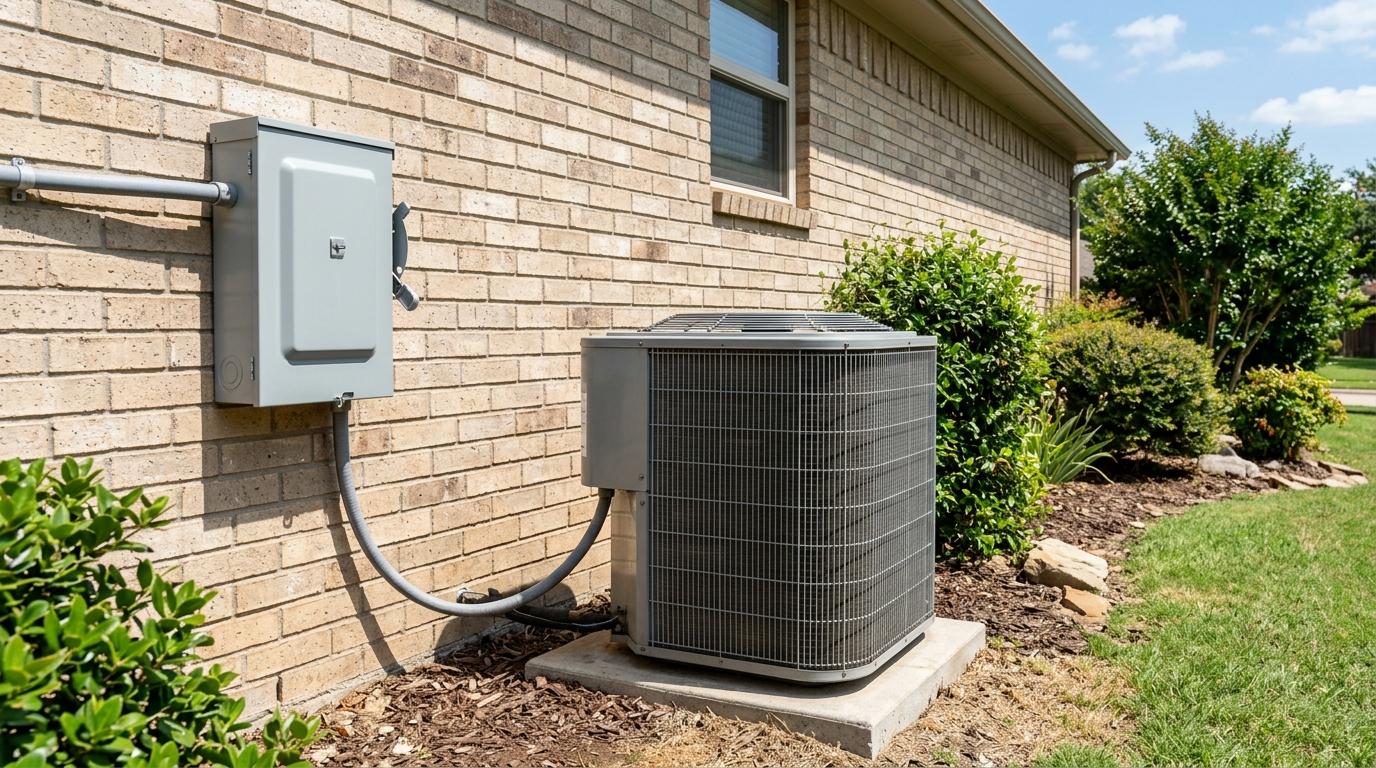
Air conditioning is the largest summer load, and it depends on a sound dedicated circuit.
Summer warning signs to watch for
Heat makes weak points show. Watch for these as the temperature climbs.
Breakers tripping in the heat
If breakers start tripping once summer hits, your circuits or panel may be overloaded by the added air conditioning demand.
AC that keeps cutting out
An air conditioner that trips its breaker or shuts off can point to an electrical fault in the circuit, disconnect, or wiring, not just the HVAC unit.
Lights dim when the AC starts
A noticeable dip in lights each time the AC kicks on suggests the system is straining your service or a circuit is undersized.
A burning smell near outlets or the AC
A hot-plastic or burning odor at an outlet, panel, or the AC disconnect is serious. Shut it off and call an electrician right away.
Flickering during storms
Flickering or brief drops during summer storms can be the grid, but persistent issues can also mean a loose connection worth checking.
Outdoor outlets without GFCI
Outlets by the pool, patio, or yard that lack ground-fault protection are a shock hazard, especially in summer when they get the most use.
Air conditioning: the heart of summer electrical strain
Your air conditioner is the single biggest reason summer is hard on your electrical system. It draws a large, sustained load, and starting up draws an even bigger surge, so it needs a correctly sized dedicated circuit and a proper disconnect to run safely. When an older home adds or upgrades AC without addressing the circuit, trouble follows fast.
An important warning: if your AC trips its breaker, do not just keep resetting it. A breaker that trips on the air conditioner repeatedly is signaling a real problem, an overloaded circuit, a failing connection, or a fault, and forcing it back on can overheat the wiring. The safe move is to have the circuit and breaker checked rather than fight it.
It also pays to spread your load. Running several heavy appliances on the same circuit as a window unit, or leaning on extension cords for cooling, is how summer overloads happen. If you find yourself juggling what you can run at once, that is a sign your home could use added circuits or, in many older homes, more capacity overall.
Want your electrical ready before peak heat?
We check your AC circuit, panel, and surge protection so summer does not catch you off guard. Reach out anytime.
(469) 327-8678Summer storms, surges, and outages
North Texas summer storms are hard on electronics. A nearby lightning strike or a grid event sends a voltage surge through your wiring that can quietly damage AC control boards, appliances, and the devices you rely on. The best defense is whole-house surge protection at the panel, an affordable safeguard that guards everything downstream at once, and it is one of the smartest summer upgrades a Dallas home can make.
Storms also cause outages, and losing power in extreme heat is more than an inconvenience; it is a safety concern. If reliable cooling through an outage matters to you, it is worth planning backup power before summer, whether a battery for short outages or a generator for longer ones. Our guide to backup power options walks through the choices.
And when a storm has already done damage, we are here for it. Our storm damage repair restores service masts, panels, and wiring after high winds and lightning, around the clock, so you are not left without power in the heat.
Outdoor and pool electrical safety
Summer means outdoor living, and that brings its own electrical safety needs. Every outlet outdoors, on a patio, or in a garage should have ground-fault protection, because moisture and electricity are a dangerous mix. If your outdoor and GFCI outlets are old or missing, summer is the time to add them.
Pools and spas demand even more care. Pool electrical work is governed by strict code for bonding, grounding, and GFCI protection precisely because water, people, and electricity together leave no margin for error. If you have a pool, having the pool's bonding and GFCI checked before the season is a genuine safety step, not a formality.
Finally, take stock of how you power summer fun. Long runs of extension cords for fans, lighting, or appliances are a stopgap, not a solution, and they overheat. Proper outdoor outlets, landscape lighting, and dedicated circuits make outdoor living both safer and easier.
Coping with the heat vs fixing the cause
Summer workarounds add risk. The right fixes keep you safe and cool.
DIY or unlicensed
- Resetting the AC breaker again and again
- Running window units and appliances on one circuit
- Powering outdoor fun with long extension cords
- Ignoring a warm panel or hot outlet in the heat
Licensed electrician
- Add a dedicated, correctly sized circuit for the AC
- Install whole-house surge protection at the panel
- Add proper outdoor and GFCI-protected outlets
- Check and upgrade an overworked panel before peak heat
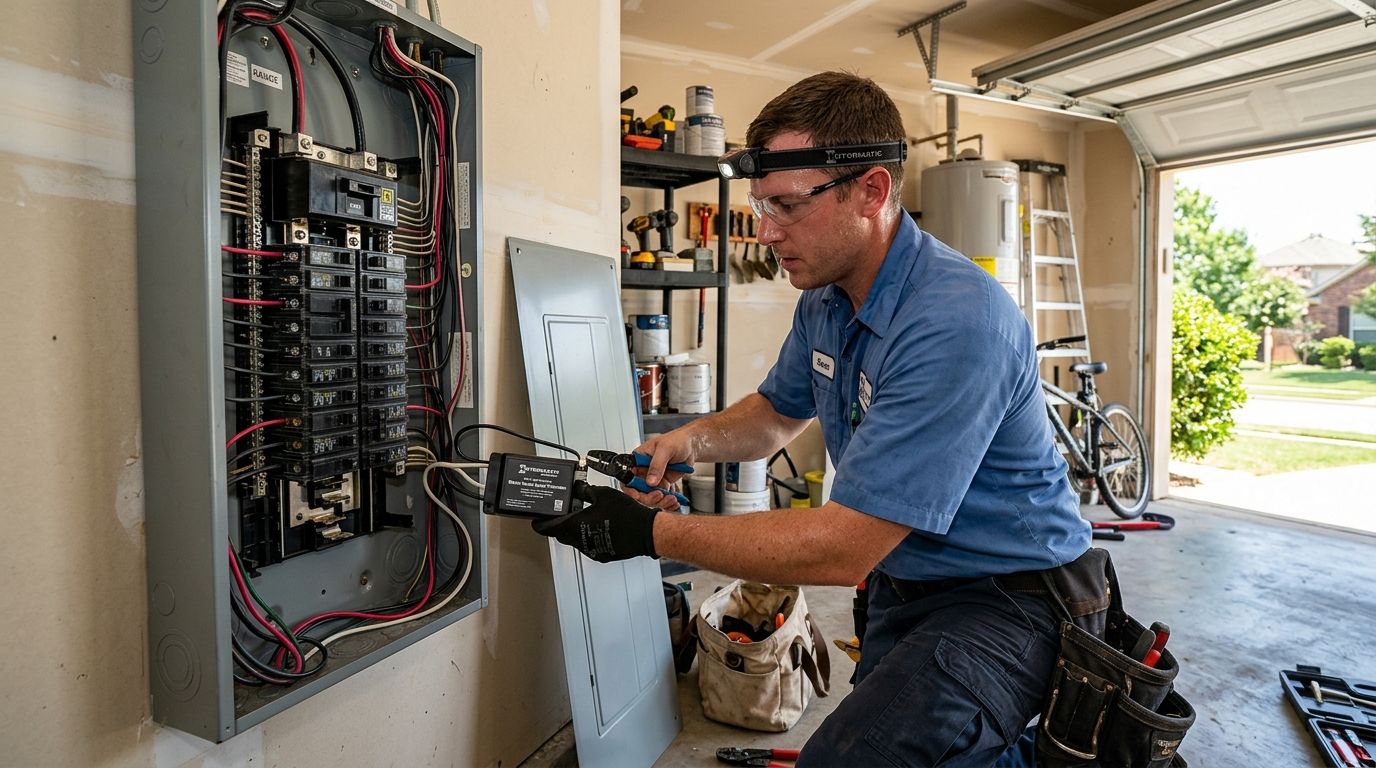
Surge protection and a sound panel are summer's best, most affordable safeguards.
Get ahead of the heat: a pre-summer check
The single best thing a Dallas homeowner can do is be proactive. An electrical problem that surfaces in a July heat wave, a tripping AC, a failing panel, becomes an urgent, uncomfortable emergency, while the same issue caught in spring is a simple, scheduled fix. A quick pre-summer check of your panel, AC circuit, and surge protection prevents most of it.
Older Dallas homes especially benefit. Houses across the city's established neighborhoods often run on undersized panels and aging wiring that struggle most when the AC runs hardest, which is why our guides to panel upgrades and aluminum wiring matter even more in summer. If your home is older, a check before the heat is well worth it.
And if summer does bring trouble, we are ready. We answer the phone around the clock across every Dallas neighborhood we serve, because an electrical emergency in dangerous heat cannot wait. Whether you want to prepare ahead or need help now, we keep your home safe and cool.
How we help you stay powered all summer
A simple plan to get ahead of the heat and stay powered.
Summer safety check
We assess your panel, AC circuit, surge protection, and outdoor outlets for the season ahead.
Fix the weak points
We repair overloaded circuits, worn breakers, and faulty connections before they fail in the heat.
Add protection
We install surge protection, dedicated AC circuits, and GFCI outlets to prevent summer trouble.
On call in a heat wave
If something fails when it is hottest, we answer around the clock and respond fast.
Summer electrical FAQs
Air conditioning is the largest load in most homes, and running it for months on end, alongside other appliances, pushes circuits and older panels to their limits. If breakers start tripping when summer hits, your circuits or panel are likely overloaded, and it is worth having checked.
The AC draws a large surge of current at startup. If it shares a circuit, the circuit is undersized, or the panel is strained, that surge trips the breaker. Do not keep resetting it, since repeated trips can signal a fault. The fix is usually a correctly sized dedicated circuit.
Yes. An air conditioner should run on its own correctly sized dedicated circuit with a proper disconnect, so it starts and runs reliably without overloading other circuits. If your AC was added or upgraded without addressing the circuit, it is worth correcting.
Very much. Summer storms and lightning send voltage surges through home wiring that can damage AC electronics, appliances, and devices. Whole-house surge protection at the panel guards everything at once and is one of the most affordable, worthwhile summer upgrades.
A panel may be slightly warm under heavy load, but a panel that is hot to the touch, buzzing, or smells of hot plastic is not normal and needs prompt professional attention. In summer, a strained panel is working its hardest, so do not ignore these signs.
A brief dip can be normal, but a strong, repeated dim when the AC kicks on suggests the system is straining your service or a circuit is undersized. It is worth having an electrician evaluate your panel and AC circuit.
They should have ground-fault protection, because moisture and electricity are dangerous together. Pools also require proper bonding and grounding by code. If your outdoor outlets lack GFCI protection or your pool electrical has not been checked, summer is the time to address it.
It is one of the smartest things you can do, especially for an older home. A quick check of your panel, AC circuit, and surge protection in spring prevents the urgent, uncomfortable emergencies that strike during a July heat wave.
Losing cooling in extreme heat is a safety concern. Check whether it is an outage or a tripped main, stay cool and hydrated, and call us if the problem is on your side. If reliable cooling through outages matters to you, consider backup power before summer.